AC Repair
AC repair in Denver for warm air, short cycling, frozen coils and leaks. Clear diagnosis and pricing from MoJo's Aurora and Wheat Ridge locations.
An air conditioner rarely quits without warning. Most systems drop hints first: air at the vents that feels cool but not cold, a compressor that starts and stops every few minutes, a steady hum from the outdoor unit while the fan blade sits still. On a repair call, the job is to trace those hints back to the part that is actually failing, then tell you plainly what we found before any work starts.
Signs Your Air Conditioner Needs a Technician
Warm or lukewarm air from the supply vents while the thermostat is set to cool.
Short cycling: the system runs in quick bursts and never reaches the set temperature.
Ice on the copper line at the outdoor unit, or frost on the indoor coil.
Water around the furnace or air handler, usually from a clogged condensate drain.
Humming, buzzing or clicking at the condenser with no fan movement.
Uneven rooms, such as upstairs bedrooms that stay several degrees warmer than the main floor.
A power bill that jumps even though your thermostat habits have not changed.
Any one of these is worth a visit. A weak capacitor or a dirty coil caught in June is a far smaller job than a compressor that overheated all through July. If the house is heating up quickly or someone at home does not handle heat well, see what to do when your AC quits on a hot day, including the safe checks worth trying before a technician arrives.
What Happens During a Repair Visit
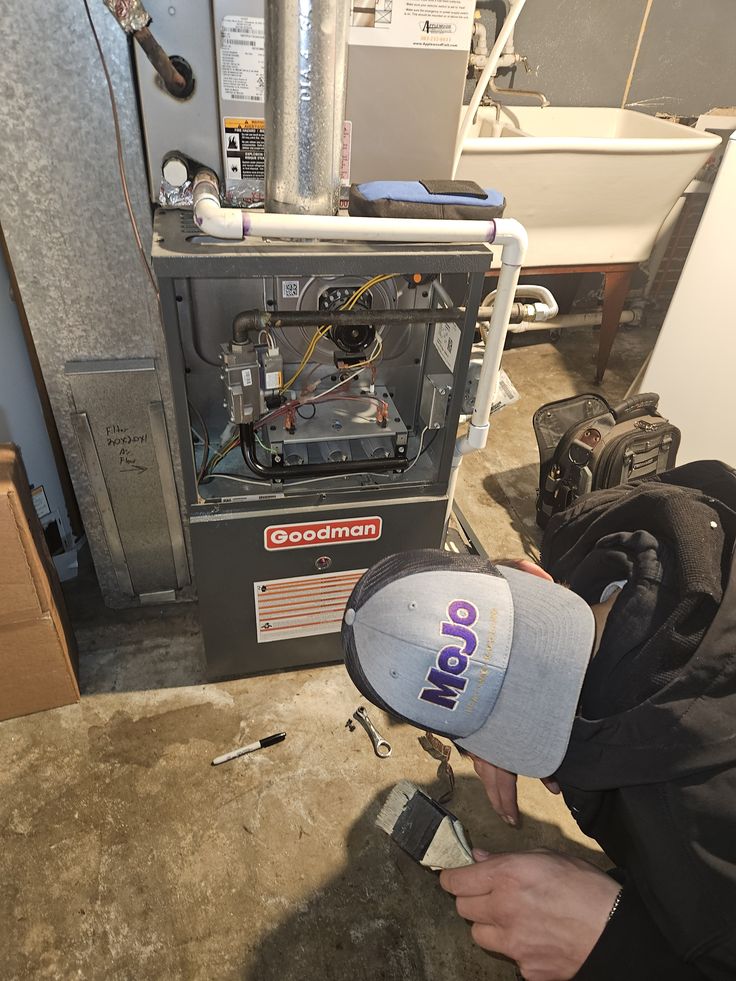
Depending on where you live, the technician comes out of our Aurora location on the east side or our Wheat Ridge office on the west side, which keeps the drive short when the house is already warming up. They start with your complaint and confirm the thermostat is actually calling for cooling. From there they measure the temperature drop across the indoor coil, look at the filter and blower, and test the electrical side of the outdoor unit: capacitor, contactor, fan motor and compressor amperage. If the readings point to a refrigerant problem, the next step is finding the leak, not just adding refrigerant. Topping off a leaking system buys a few weeks at most.
Before anything is replaced you get an explanation of the failed part, the fix and the price, plus a heads-up if another component looks close to the end of its life. Most AC repair visits take one to three hours. Capacitors, contactors and condenser fan motors are often swapped on the first trip, while coil replacement and leak work can need a second visit once parts arrive.
The Problems We See Most
Warm air from the vents. Common causes are a failed capacitor, a tripped breaker or blown fuse at the outdoor disconnect, low refrigerant from a leak, or a condenser coil matted with dust and cottonwood fluff. Cottonwood season along the Front Range plugs condenser fins on a lot of homes, and a choked coil makes the compressor run hot and lose capacity.
Short cycling. An oversized unit, a thermostat mounted in a sunny spot or next to a register, a clogged filter, or low charge tripping a pressure switch can all cause it. Left alone, constant starts wear out the compressor and leave some rooms noticeably warmer than others.
A frozen evaporator coil. Restricted airflow or a refrigerant shortage pushes the coil below freezing until ice builds up. If you see ice, turn the cooling off at the thermostat and let it melt before the visit, because running a frozen system can damage the compressor.
Refrigerant leaks. Leaks tend to show up at brazed joints, in the indoor coil, or at service valves. Systems that still use R-22 are a special case: that refrigerant is no longer manufactured, so a major leak on an older R-22 unit usually shifts the conversation toward replacement.
How Altitude and Dry Air Change Things
Denver sits at about 5,280 feet, and the thinner air there carries less heat per cubic foot than the sea-level conditions used for equipment ratings. The outdoor coil and the indoor blower have to move more air to do the same work, so a system that is slightly undersized, dirty or short on airflow shows it first on a 95-degree afternoon. The dry climate helps in one way, since most of the load is heat rather than humidity, and it explains why so many older homes still run swamp coolers. Those coolers lose ground when summer storms raise the humidity, which is often when homeowners start asking about central air.
Repair or Replace?
A sound system should be repaired, and most are. Replacement starts to make sense when the unit is 15 years old or more, still runs on R-22, needs a new compressor, or the repair would cost more than half the price of new equipment. When it reaches that point, your technician can walk you through replacement and installation options, including high-efficiency systems that may qualify for Xcel Energy rebates. Program rules change from year to year, so we confirm what applies when we write the quote. For bigger repairs or a new system, financing options are available.
AC repair across the Denver metro
Elevation, permitting authority and housing stock all change from town to town, and so does the diagnosis. Each page below is written for that specific city — its own elevation, its own derate, its own county.
Jefferson County
Applewood, Arvada, Dakota Ridge, Edgewater, Evergreen, Genesee, Golden, Green Mountain, Ken Caryl, Lakewood, Morrison, Wheat Ridge
Arapahoe County
Aurora Highlands, Aurora Hills, Bow Mar, Centennial, Denver Tech Center, Englewood, Foxfield, Glendale, Greenwood Village, Littleton, Murphy Creek
Adams County
Aurora, Bennett, Brighton, Commerce City, Henderson, Larkridge, Northglenn, Northwood Acres
Denver County
Central Park, Denver, Green Valley Ranch, Hampden, Montbello, Park Hill
Boulder County
Boulder, Eldorado Springs, Erie, Lafayette, Longmont
Douglas County
Castle Pines, Castle Rock, Highlands Ranch, Lone Tree
Weld County
Fort Lupton, Frederick, Hudson, Lochbuie
City and County of Broomfield
Clear Creek County

Why Neighbors Trust Us
★★★★★ on Google & Nextdoor
5-star rated by Denver Metro homeowners
Fast response times
Same-day service on most calls
Licensed & insured
NATE & EPA certified technicians
Workmanship warranty
We stand behind every repair & install
Family & locally owned
Serving your neighborhood since 2009
Heating and Cooling Service
Plumber
Air conditioning service
Water heater service
Air quality tester
(720) 807-4050
Schedule Online 24/7
www.MoJoYourHomes.com
support@mojoyourhomes.com
FREE AC Service Consultation
Schedule Your Service or Request a Free Quote Today

Why MoJo Home Services?
Trusted AC Technicians — delivering comfort, honesty, and reliable results for over 16 years.


Industry-Leading HVAC Brands
Heating & Cooling Brands We Work With
At MoJo Home Services, we proudly partner with the most reputable names in the HVAC industry to bring reliable, energy-efficient comfort solutions to Colorado homes. Our experienced team installs, maintains, and repairs systems from top-tier brands you know and trust — ensuring every home we service gets lasting quality and performance.
Help Center
Frequently Asked Questions: AC Repair in Denver, CO
Why is my AC running but blowing warm air?
Start with the simple checks: make sure the thermostat is set to cool and below room temperature, replace a clogged filter, and look for a tripped breaker. If those are fine, the cause is usually a failed capacitor, a dirty condenser coil, or low refrigerant from a leak. Our article on why an AC runs without blowing cold air walks through each one, and a technician can confirm which it is with a few measurements.
How much does an air conditioner repair cost?
It depends on the part. Capacitors, contactors and drain clogs sit at the low end, while compressor failures, coil replacements and leak repairs cost considerably more. Your technician explains the problem and gives you the price before any work starts, so you can decide with the full picture.
Why does my air conditioner turn on and off every few minutes?
That is short cycling. It usually comes from an oversized unit, a dirty filter, a thermostat in a poor location, or a safety switch tripping because of low refrigerant. It is worth fixing early, since frequent starts are hard on the compressor.
Does Denver's altitude affect my air conditioner?
Yes. Thinner air at 5,280 feet carries less heat, so equipment loses some of its rated capacity here. Clean coils, a fresh filter and correct airflow matter more in Denver than at sea level, and a system that was undersized from the start will struggle on the hottest days.
Does the brand of my air conditioner change the repair?
Less than most people expect. Capacitors, contactors, fan motors and refrigerant work are similar across the major residential brands. The age of the unit, the refrigerant it uses and whether parts are still made for an older model matter more to the repair plan than the name on the cabinet.
We Service Your Location
Reliable HVAC Repair Service When You Need It Most
Experience the difference of working with a 5-star rated team that has served over 5,000 happy neighbors. Whether you need a seasonal HVAC tune-up or a high-efficiency system upgrade, we deliver honest assessments and guaranteed results backed by nearly two decades of industry expertise.
Plus surrounding areas within 50 miles of Denver, Colorado


