Welcome, Neighbors of
Pheasant Run
AC Repair in Pheasant Run, CO
Pheasant Run homes sit on generous lots, which sounds lovely until you notice how far the outdoor unit can end up from the equipment inside. That distance matters more than most people expect. Family owned, licensed and insured, five star rated, and working here since 2009.
5-star rated · Local & Family-owned since 2009
Licensed & Insured
Family Owned
NATE Certified
EPA Certified
BBB Accredited
Serving Denver Metro

See your neighbor deals
MoJo Home Services
Out in your neighborhood · Denver Metro
AC Repair in Pheasant Run, Colorado
The pair of copper lines running between the outdoor unit and the indoor coil is a component of the system, not plumbing that connects two components. Its length, its vertical rise, its insulation and its diameter all change how much cooling arrives at the register. On Pheasant Run properties, where the condenser is often a long way from the air handler, that is where a persistent capacity shortfall frequently starts. MoJo Home Services, Arapahoe County since 2009: 720-807-4050.
Why does the distance between the two units matter here?
Because the factory charge in a condenser only covers a standard line length, commonly around 15 feet, and anything beyond that has to be added by measurement. A 3/8-inch liquid line holds roughly 0.6 ounces of refrigerant per foot, so a 50-foot run needs about 35 feet accounted for, which is around 21 additional ounces. When that adjustment was skipped at installation, the system is undercharged from its first day and behaves like a slow leak that never gets worse. At 5,768 feet, where the air is already about 15.8% less dense than at sea level, there is no spare capacity to absorb that.
What does vertical rise do to a Pheasant Run system?
It complicates oil return. Compressor oil circulates with the refrigerant and has to be carried back up any vertical riser by vapour velocity. When the condenser sits well below the indoor coil, or well above it, the line sizing and any traps required by the manufacturer become part of whether the compressor stays lubricated over years of operation. Line sets that were simply run the shortest way through a wall, without reference to the installation instructions, are where this shows up, usually as a compressor that fails earlier than it should have.
What happens when the line insulation degrades?
Capacity leaves before the system does. The large suction line is insulated because refrigerant inside it is still absorbing heat on its way back to the compressor; bare copper in the sun picks up heat that should have come from the house. The result is elevated superheat, reduced capacity and a line that sweats and drips where it enters the building. Sun exposure and rodent damage are the two usual causes, and both are visible from the ground. We record suction and liquid line temperatures at the condenser on every call for exactly this reason.
What if the condenser was replaced and the line set reused?
Then three questions apply. Whether the existing line diameters match what the new equipment specifies, since a line set sized for older equipment may be wrong for its replacement. Whether the old oil residue is compatible with the new system's oil, which decides whether the lines need flushing or replacing. And whether a new liquid-line filter drier went in, which is not optional after opening a system. A reused line set is often the right call, but it is a decision with conditions attached rather than a default.
What does 5,768 feet mean on this side of Arapahoe County?
Gas-fired equipment derates 15.1% at this elevation under the NFPA 54 convention of 4% per 1,000 feet above 2,000. For cooling, the air density deficit of about 15.8% sets the airflow requirement at roughly 475 CFM per ton instead of the 400 CFM per ton in standard tables, which is near 1,425 CFM on a three-ton system. A charge shortfall from an unaccounted line-set length lands on top of that, and the two together explain a lot of systems that have never really performed.
What gets measured on a Pheasant Run service call?
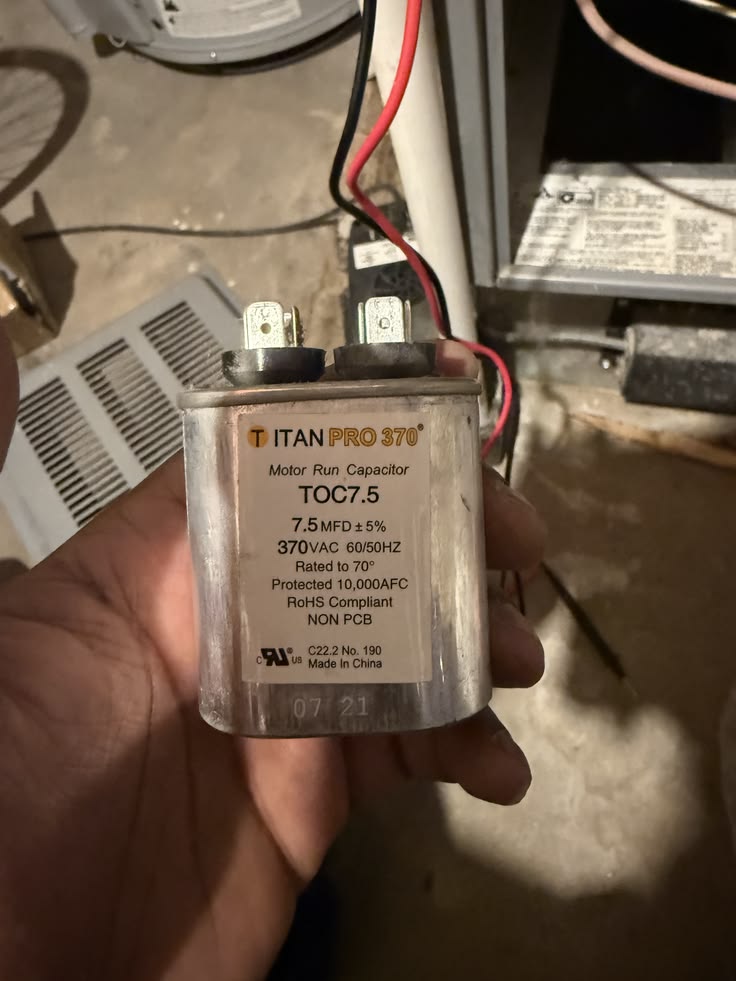
Line set length and rise, first, because they set the correct charge. Then suction and liquid line temperatures at the condenser, superheat and subcooling read together, condenser approach against entering air, static pressure and delivered airflow, capacitor values and amp draw against the nameplate. A system that is genuinely low on refrigerant and a system that was never charged for its line length produce similar gauge readings and require completely different work.
Can a Pheasant Run line set be run underground?
It can, with conditions, and those conditions are where buried runs go wrong. The lines need protection from soil contact and from anything that might crush them, and the suction line insulation has to stay dry, because waterlogged insulation conducts heat instead of resisting it and the capacity loss is permanent until it is replaced. The other consequence is diagnostic: a leak in a buried section cannot be swept with a detector or watched for bubbles, so isolating and pressure-testing each section becomes the only practical way to find it. Where the property allows an above-ground route, that is nearly always the better decision.
Arapahoe County communities nearby
The same routes cover Foxfield, Centennial to the west, and Aurora Highlands to the northeast.
Nearby towns we cover
We work AC repair in Foxfield, AC repair in Aurora Highlands, AC repair in Centennial, AC repair in Saddle Rock Ridge, AC repair in Tallyn's Reach, AC repair in Watkins out of the same dispatch.
The opposite season has its own failure list: furnace repair in Pheasant Run.
More on the service itself: AC repair.

Pheasant Run
Home Of The $39 Diagnosis
Book your diagnostic today!
The $39 diagnostic service is a professional troubleshooting visit performed by a certified MoJo technician to identify the root cause of an HVAC issue.
Frequently Asked Questions
How long can the line set be on a Pheasant Run air conditioner?
Manufacturers publish a maximum for each model, and most residential equipment tolerates substantial runs provided the charge is corrected and any required traps are installed. What matters is that the factory charge only covers a standard length, commonly around 15 feet. A 3/8-inch liquid line holds about 0.6 ounces of refrigerant per foot, so extra length has to be weighed in rather than estimated.
Why has my Pheasant Run AC never cooled well since installation?
A charge that was never adjusted for line-set length is one of the most common reasons. The system leaves the factory holding refrigerant for a standard run, and a longer line set needs measured refrigerant added at commissioning. Skipping that leaves the system permanently undercharged without any leak existing, which reads on gauges as low refrigerant year after year.
Does damaged line insulation reduce cooling in Pheasant Run?
Yes. The insulated suction line carries cold refrigerant vapour back to the compressor, and bare copper absorbs heat from outdoor air instead of from the house. That raises superheat, reduces delivered capacity, and causes sweating and dripping where the line enters the building. Sun damage and rodent damage are the usual causes, and both can be seen from ground level.
Can I reuse the existing line set when replacing a condenser?
Often, but only after checking three things: that the line diameters match what the new equipment specifies, that residual oil in the lines is compatible with the new system, and that a new liquid-line filter drier is installed. In some cases flushing or replacement is required instead. It is a decision with conditions, not an automatic saving.
What airflow does an air conditioner need at Pheasant Run's elevation?
About 475 CFM per ton at 5,768 feet, because the air is roughly 15.8% less dense than at sea level, versus the 400 CFM per ton assumed in reference tables. A three-ton system needs close to 1,425 CFM delivered. Gas equipment separately derates 15.1% here under the NFPA 54 convention.
MoJo Home Services
A note for our neighbors
Pheasant Run has few enough homes that one recommendation carries a long way, and we have met most of the neighbors we know here through somebody else's kind word. Thank you for trusting us with an air conditioner repair and for saying so to the people around you. 💜

On the job
In
Pheasant Run
Share Your Experience
Thank you for supporting our local family business. If we did right by you, we'd love to hear about it on any site you use.
- Write a Google reviewQuick & easy
- Find us on YelpRead what neighbors said
- Review us on FacebookShare with friends
- Recommend us on NextdoorTell your neighbors


Your referrals and reviews not only mean so much to us, they also help the community know who to trust to Get their Home's MoJo Back!
Honest feedback is what we're after, good or bad. If something fell short, call us at the office first and we'll make it right.