Furnace Repair
Most furnace breakdowns trace back to one part: the igniter, flame sensor, pressure switch or blower. MoJo finds it and explains the furnace repair first.
A furnace that blows cold air, clicks without lighting or shuts off after a few minutes usually has one failed part behind it, and finding that part quickly is what furnace repair comes down to. Gas furnaces make up most of the winter work our technicians do around the Denver metro.
What Usually Goes Wrong Inside a Furnace
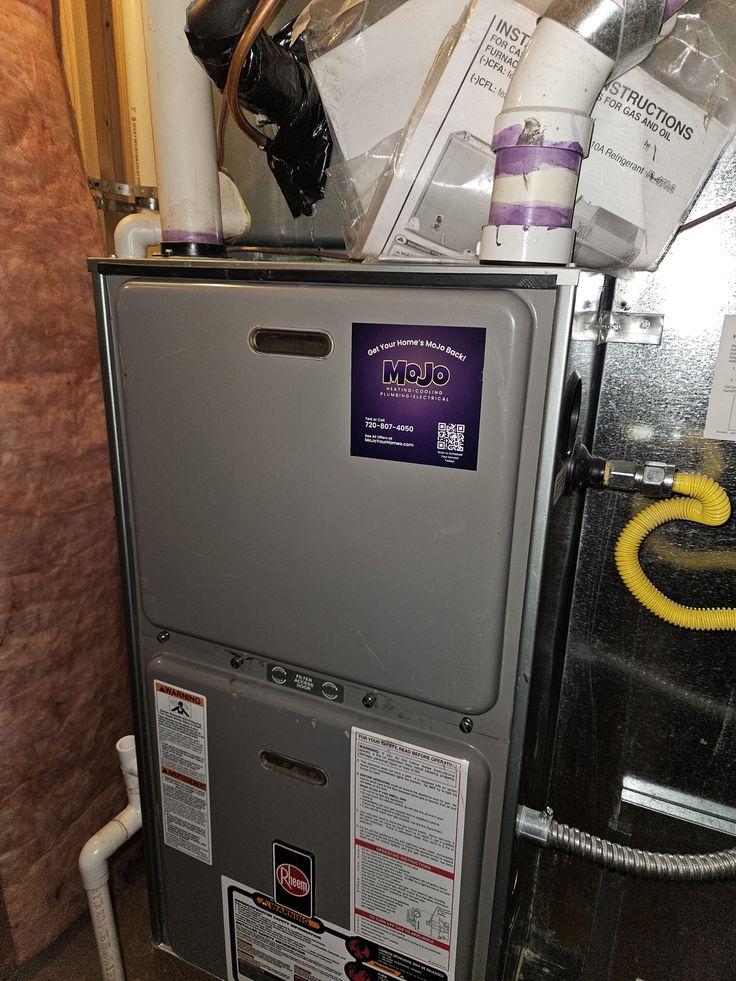
A modern gas furnace runs through the same sequence every time it starts. The thermostat calls for heat, the inducer fan clears the flue, a pressure switch confirms the draft, the igniter glows, the gas valve opens and a flame sensor proves the burners lit. A failure at any step halts the sequence, and the control board stores a blink code that tells us where to look. The parts we replace most often are:
Flame sensors coated with residue, which let the burners light and then shut them down seconds later.
Hot surface igniters that crack with age and leave the furnace clicking with no flame.
Pressure switches and inducer motors, including switches tripped by a blocked vent pipe or a frozen condensate line on high-efficiency models.
Limit switches that trip because a clogged filter or closed registers let the heat exchanger run too hot.
Blower motors and capacitors, behind weak airflow, a humming cabinet or burners that fire with no air moving.
Control boards and thermostats, especially after a power surge or a wiring change.
How We Diagnose a Furnace
The technician reads the stored fault history first, then tests instead of swapping parts on a hunch. That means measuring gas pressure at the valve, checking the temperature rise across the heat exchanger and confirming the flue drafts the way it should. We inspect the heat exchanger for cracks and rust, look at the filter and the return air, and check the condensate trap and drain on any 90 percent efficiency furnace, since a frozen or clogged trap is a common winter shutdown in Colorado. Intermittent faults get extra time, since some only show up after the furnace has run several full cycles and warmed up. You get a clear explanation of the fault and the fix before anything is replaced.
At Denver's altitude, gas furnaces are derated, and a unit set up with the wrong orifices or gas pressure burns poorly, sooting the burners and shortening the life of the heat exchanger. A furnace that has never been adjusted for altitude is one of the first things we look for.
Getting the Heat Back On
A furnace that quits during a cold snap is urgent, and we treat it that way. Call Monday through Saturday, 8am to 8pm; we are closed Sundays. Appointments the same day or the next are often open. If there is a gas odor near the furnace, do not try to relight it; get outside and call the gas utility first.
What Furnace Repair Costs
Furnace service and repair with MoJo starts with a $39 diagnostic visit. The technician finds the cause, explains it, and gives you the repair price before any work begins. Visits after 6pm, on holidays or for emergencies start at $250. A few common repairs at our regular prices:
Hot surface igniter replacement: $525, or $420 when it's done during a routine clean and service.
Control board replacement: $785.
Blower motor and blower wheel cleaning: $385.
Flame sensors, pressure switches, inducer motors, blower motors and gas valves are priced after the diagnosis, because the part depends on your furnace's make and model. Our furnace repair cost guide covers more repairs and when replacing makes more sense. We take furnace service calls Monday to Saturday, 8am to 8pm.
Fix It or Retire It?
A single failed igniter or blower motor is almost always worth fixing. The math changes with age and with the kind of failure. We will point out when a furnace is pushing 20 years old, when parts for it are getting hard to find, when repair bills keep stacking up season after season, or when the heat exchanger is cracked, which makes the unit unsafe to run. In those cases we put the repair next to a replacement and let you decide. When replacement makes more sense, our furnace installation team takes over. If you want to weigh a heat pump or dual-fuel setup instead, see our heating system replacement options.
For typical repair prices, see our guide to furnace repair cost in Denver. If replacement is on the table, our 2026 furnace replacement cost guide lists new furnace prices by home size.
Preventing the Next Breakdown
Many of the failures above can be caught early. A yearly furnace service before the first freeze cleans the flame sensor, checks the igniter and blower, tests the safety switches and spots a heat exchanger that is starting to crack. Our annual heating tune-up covers that checklist, and changing a standard filter every one to three months does the rest. Tune-ups and repairs for homes around Aurora come out of our east-side office, while west metro homes near Wheat Ridge are handled by our west-side shop. Pick your city below for notes on the elevation and housing in your area.
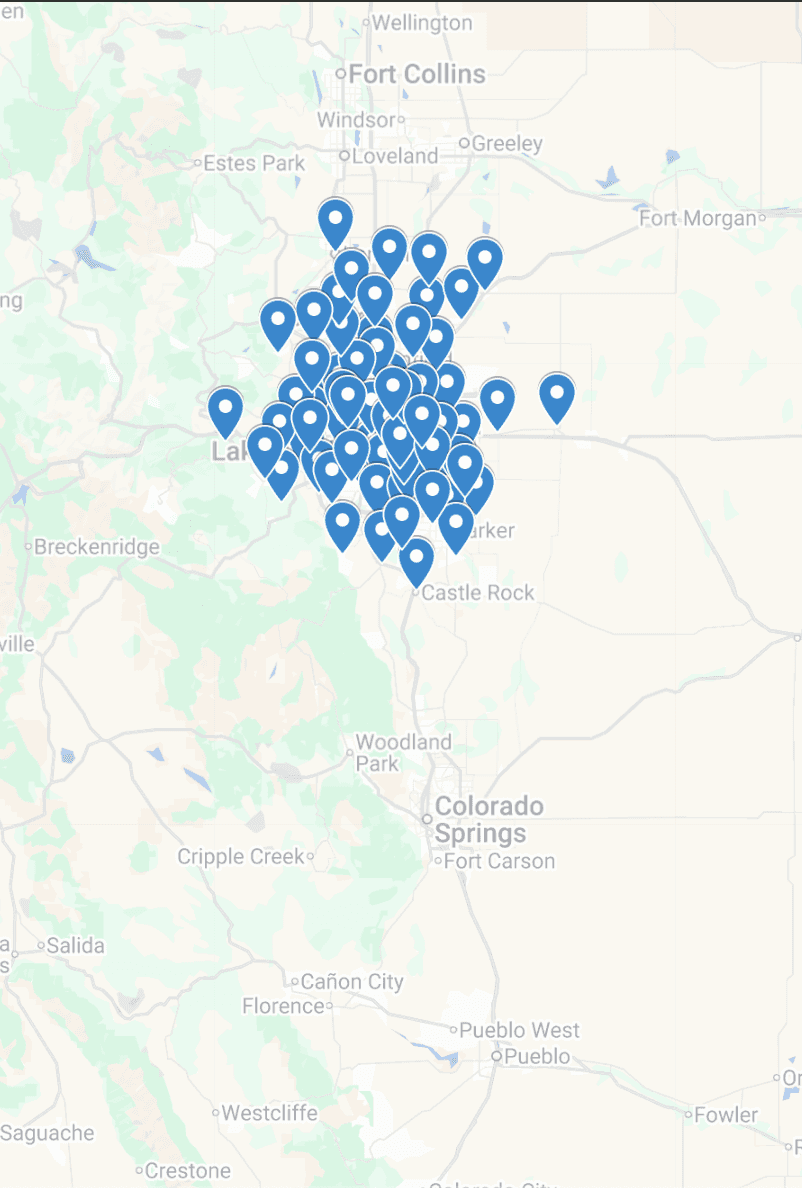
Furnace repair across the Denver metro
Elevation, permitting authority and housing stock all change from town to town, and so does the diagnosis. Each page below is written for that specific city — its own elevation, its own derate, its own county.
Jefferson County
Applewood, Arvada, Dakota Ridge, Edgewater, Evergreen, Genesee, Golden, Green Mountain, Ken Caryl, Lakewood, Morrison, Wheat Ridge
Arapahoe County
Aurora Highlands, Aurora Hills, Bow Mar, Centennial, Denver Tech Center, Englewood, Foxfield, Glendale, Greenwood Village, Littleton, Murphy Creek
Adams County
Aurora, Bennett, Brighton, Commerce City, Henderson, Larkridge, Northglenn, Northwood Acres
Denver County
Central Park, Denver, Green Valley Ranch, Hampden, Montbello, Park Hill
Boulder County
Boulder, Eldorado Springs, Erie, Lafayette, Longmont
Douglas County
Castle Pines, Castle Rock, Highlands Ranch, Lone Tree
Weld County
Fort Lupton, Frederick, Hudson, Lochbuie
City and County of Broomfield
Clear Creek County

Why Neighbors Trust Us
★★★★★ on Google & Nextdoor
5-star rated by Denver Metro homeowners
Fast response times
Same-day service on most calls
Licensed & insured
NATE & EPA certified technicians
Workmanship warranty
We stand behind every repair & install
Family & locally owned
Serving your neighborhood since 2009
Heating and Cooling Service
Plumber
Air conditioning service
Water heater service
Air quality tester
(720) 807-4050
Schedule Online 24/7
www.MoJoYourHomes.com
support@mojoyourhomes.com
FREE Heating Service Consultation
Schedule Your Service or Request a Free Quote Today

Why MoJo Home Services?
Denver’s trusted HVAC pros — delivering comfort, honesty, and reliable results for over 16 years.





Help Center
Frequently Asked Questions: Furnace Repair in Denver, CO
Why is my furnace blowing cold air?
Check the thermostat first: if the fan is set to ON instead of AUTO, the blower runs even when the burners are off. Otherwise the burners are not lighting or not staying lit, usually because of a worn igniter, a dirty flame sensor, a gas supply problem or a furnace that overheated and locked itself out. On high-efficiency furnaces a blocked condensate drain causes the same symptom.
What does a cracked heat exchanger mean?
The heat exchanger keeps combustion gases separate from the air you breathe. A crack can let those gases, including carbon monoxide, into the supply air, so a furnace with one should not be run. Your technician will show you what was found and explain the options, which usually means replacement. It is also a good reason to keep working CO alarms near bedrooms.
How often should a furnace be serviced?
Once a year, ideally in early fall before it runs every day. Most standard filters should be changed every one to three months during the heating season, more often with pets or ongoing construction dust.
Does altitude change how a furnace should be set up?
Yes. Thinner air at a mile high means less oxygen for combustion, so manufacturers call for a high-altitude derate, which can involve smaller burner orifices or lower gas pressure. A furnace that was never adjusted can over-fire, soot up and lock out. If you are not sure yours was converted for altitude when it went in, ask the technician to check the rating plate and burner setup at your next visit.
Can you work on any brand of furnace?
We service all makes and models, from older standard-efficiency units to modern variable-speed furnaces. Parts for some older or less common furnaces may need to be ordered, and we will tell you up front if that is the case. See the brands we service for the common ones.
How much does furnace repair cost in Denver?
At MoJo, every furnace repair starts with a $39 diagnostic visit, and you get the repair price before any work begins. At our regular prices, a hot surface igniter replacement is $525 and a control board is $785. Parts like flame sensors, pressure switches and blower motors are priced after diagnosis because they depend on the furnace model. If replacing is on the table, our HVAC price calculator shows what a new system would cost for your home.
We Service Your Location
Reliable HVAC Repair Service When You Need It Most
Experience the difference of working with a 5-star rated team that has served over 5,000 happy neighbors. Whether you need a seasonal HVAC tune-up or a high-efficiency system upgrade, we deliver honest assessments and guaranteed results backed by nearly two decades of industry expertise.
Plus surrounding areas within 50 miles of Denver, Colorado