TL;DR
Furnace Efficiency Standards
A new EPA efficiency standard takes effect in 2026, and it will change your furnace options, costs, and tax credit eligibility. This guide explains the 97% AFUE ENERGY STAR rule, what a high-efficiency condensing furnace installation involves, and how to claim available rebates and credits before the deadline arrives.
If you're thinking about replacing your furnace in Denver this year, there's an important deadline on the horizon that could affect your costs, your options, and your eligibility for federal tax credits. In January 2025, the U.S. Environmental Protection Agency finalized a major update to the ENERGY STAR furnace specifications — and for homeowners in northern states like Colorado, the new standard requires a minimum 97% AFUE (Annual Fuel Utilization Efficiency) rating to qualify for the ENERGY STAR label starting July 31, 2026.
This isn't a distant deadline. If you have an aging furnace — one that's 10, 15, or even 20 years old — now is a critical window to evaluate your options, take advantage of existing inventory, and maximize the federal tax credits tied to ENERGY STAR certification. Our team at MoJo Home Services has been tracking this change closely, and we want every Denver homeowner to understand what's coming before the summer manufacturing changeover hits.
What Is the New EPA ENERGY STAR Furnace Rule?
The ENERGY STAR program is a voluntary certification run by the EPA that identifies energy-efficient products. When you see the ENERGY STAR label on a furnace, it means that product meets the EPA's minimum efficiency threshold — and more importantly for homeowners, it means you likely qualify for federal tax credits and utility rebates tied to that certification.
Under the new ENERGY STAR Version 5.0 specification, the EPA has raised the bar significantly. For furnaces in northern U.S. states — which includes Colorado and most of the country where heating is a major energy cost — a furnace must achieve a minimum 97% AFUE rating to earn the ENERGY STAR label. Southern states have a slightly lower threshold of 95% AFUE. This is a substantial jump from the previous 90% AFUE standard that defined ENERGY STAR-certified furnaces for northern states.
The effective date is July 31, 2026. The EPA specifically chose this date to align with the end of the summer manufacturing ramp-up period, so the heating season beginning in fall 2026 fully reflects the new standard. After that date, a furnace running at 90%, 92%, or even 95% AFUE will no longer qualify for the ENERGY STAR label — or the tax credits and rebates that come with it.
Why This Matters for Denver Homeowners Right Now
At 5,280 feet above sea level, Denver's furnace needs are already unique. Our altitude affects combustion efficiency, and our temperature swings — from 65°F in October to a blizzard two days later — mean furnaces in the Denver Metro work harder and longer than their counterparts in warmer climates. Heating is not optional here, which is exactly why this deadline deserves your attention now, not next winter.
Here's why the July 31 deadline creates real urgency for homeowners considering a furnace replacement:
Federal tax credits are tied to ENERGY STAR certification. Under the Inflation Reduction Act (IRA), homeowners can claim a tax credit of up to $600 for installing a qualified ENERGY STAR furnace. After July 31, 2026, a furnace must hit 97% AFUE to earn the ENERGY STAR label in the North. If you want that credit on a replacement before or after the deadline, you need to understand which threshold applies to your timing.
Xcel Energy rebates follow ENERGY STAR. Xcel Energy Colorado ties many of its home efficiency rebates to ENERGY STAR certifications. As the certification standard rises, only the highest-efficiency units will qualify for these utility rebates going forward.
Inventory is shifting now. Manufacturers are already retooling product lines ahead of the July deadline. Availability of 90–95% AFUE models at today's pricing is a finite window. Once manufacturers phase these out of their lineups, the market will consolidate around 97%+ condensing units — which carry a higher price point.
97% AFUE means condensing-only installations. To reach 97% efficiency, a furnace must be a condensing unit — meaning it extracts heat from combustion gases that a standard furnace vents away. Condensing furnaces require PVC venting rather than a traditional metal flue. Homeowners with older B-vent systems may need installation modifications, so planning ahead lets you budget for that work.
What Is AFUE and Why Does 97% Matter?
AFUE stands for Annual Fuel Utilization Efficiency — it measures how efficiently a furnace converts fuel into usable heat over a full heating season. An 80% AFUE furnace converts 80 cents of every dollar spent on natural gas into heat; the other 20 cents escapes through the flue. A 97% AFUE furnace retains 97 cents of every dollar — a substantial difference over Denver's long, cold winters.
For context on where each tier stands:
80% AFUE: Standard efficiency — the baseline that dominated residential heating for decades. Inexpensive to purchase, but higher operating costs and no longer available in Colorado under the state's separate Ultra Low NOx law.
90–95% AFUE: Mid-to-high efficiency condensing units. These have been the sweet spot for many Denver homeowners — more efficient than 80%, accessible in price. Currently qualifies for ENERGY STAR in northern states, but that changes July 31, 2026.
97% AFUE: High-efficiency condensing units. The new ENERGY STAR threshold for northern states. Lower gas bills, higher upfront cost, but eligible for both federal tax credits and utility rebates.
Over a typical Denver winter, a homeowner running a 97% AFUE furnace versus a 90% AFUE unit can save $100–$250 annually in natural gas costs, depending on home size and usage patterns. Over a 15-year lifespan, that's $1,500–$3,750 in cumulative savings — often offsetting the higher upfront investment within 5–7 years, especially when combined with available tax credits.
Tax Credits and Rebates: What You Can Claim Before and After July 31
This is where timing matters most for your wallet. Under the Inflation Reduction Act, the federal government offers a 25C tax credit of up to $600 for installing a qualified ENERGY STAR furnace. Through July 31, 2026, qualified ENERGY STAR furnaces for northern states currently sit at 90%+ AFUE. After July 31, that threshold rises to 97% AFUE.
Additionally, Xcel Energy Colorado offers rebates for high-efficiency heating equipment. As ENERGY STAR standards rise, rebate programs typically align — meaning the floor for rebate eligibility rises with the certification standard. Homeowners who act and install a qualifying unit this year lock in today's qualification thresholds.
The practical math: a high-efficiency furnace replacement in Denver typically runs $4,000–$8,000 installed, depending on size, brand, and required venting modifications. A $600 federal tax credit plus an Xcel Energy rebate of $150–$300 meaningfully offsets that cost. Our team also recommends pairing a furnace upgrade with a smart thermostat upgrade, which qualifies for an additional $150 federal tax credit — both can be claimed in the same tax year.
What to Expect From a 97% AFUE Condensing Furnace Installation in Denver
If you're upgrading to a 97% AFUE condensing furnace, here's what the installation process typically involves for Denver-area homes:
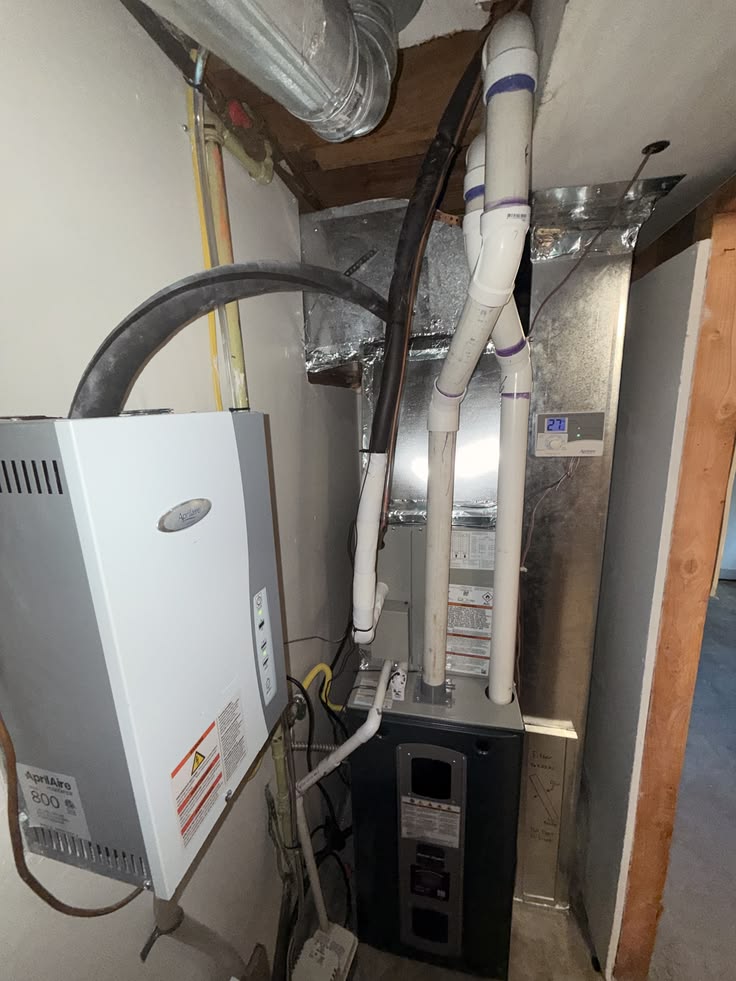
Venting upgrade: Condensing furnaces vent through PVC pipe rather than a metal flue or chimney. If your home currently uses a B-vent system, your installer will run new PVC exhaust and intake pipes through a rim joist or exterior wall. This is routine work our team performs throughout the Denver Metro.
Condensate drain line: High-efficiency condensing furnaces produce water as a combustion byproduct. A small drain line routes this to a floor drain or condensate pump — standard in most Denver mechanical rooms.
Altitude-adjusted sizing: At Denver's 5,280-foot elevation, furnaces need to be sized approximately 10–15% larger than sea-level equivalents to account for reduced combustion density in thinner air. Our technicians use Manual J load calculations on every installation to prevent both undersizing and oversizing.
Installation timeline: A standard furnace swap typically runs 4–6 hours. Installations requiring new venting or electrical work may take a full day.
For more on how Denver's altitude creates unique HVAC challenges, see our in-depth article on how Denver's elevation affects HVAC performance.
Your Denver Furnace Upgrade Partner — Act Before the Deadline
At MoJo Home Services, our NATE-certified technicians have been installing and servicing furnaces across the Denver Metro Area for over 16 years. We've guided hundreds of homeowners through furnace decisions — and right now, the window to act strategically is open. The July 31, 2026 ENERGY STAR deadline is real, inventory is shifting, and homeowners who plan ahead will have more choices, better pricing, and full access to tax credits and utility rebates.
Whether your furnace is on its last legs or you're simply being proactive, we can evaluate your current system, recommend the right high-efficiency replacement for your home's size and layout, and handle every aspect of the installation — from permits to final inspection. We serve homeowners throughout Denver, Wheat Ridge, Lakewood, Aurora, Arvada, Westminster, Centennial, and the surrounding communities.
Don't wait for a mid-winter breakdown to force the decision. Contact MoJo Home Services today to schedule a furnace assessment and find out how the new ENERGY STAR requirements apply to your specific system. You can also explore our heating installation services to learn more about what a modern, code-compliant installation looks like.

Sources & References
American Propane Gas Association (APGA) — EPA Finalizes New ENERGY STAR Furnace Specs, January 2025
U.S. Department of Energy — ENERGY STAR Proposes Updated Furnace Specification, 2024
U.S. Environmental Protection Agency — ENERGY STAR Version 5.0 Furnaces Draft 1 Specification, energystar.gov, 2024
Internal Revenue Service — Energy Efficient Home Improvement Credit (25C), irs.gov, 2025
Xcel Energy Colorado — High Efficiency Heating Rebates, xcelenergy.com, 2025–2026
Air Conditioning Contractors of America (ACCA) — Manual J Residential Load Calculation, 8th Edition
Need a furnace upgrade in Denver before the July 2026 deadline? MoJo Home Services provides professional furnace installation and replacement throughout the Denver Metro Area. Contact us at 4000 Newman St, Wheat Ridge, CO 80033 or call (720) 807-4050 for a free system assessment.
Frequently Asked Questions
What is the new EPA furnace rule and when does it take effect?
The EPA finalized updates to the ENERGY STAR furnace specification (Version 5.0) in January 2025. Starting July 31, 2026, gas furnaces must achieve a minimum 97% AFUE rating in northern states — including Colorado — to qualify for the ENERGY STAR label. In southern states, the threshold is 95% AFUE. This is a significant increase from the previous 90% AFUE standard. The ENERGY STAR label matters because it gates access to federal tax credits under the Inflation Reduction Act and utility rebates from providers like Xcel Energy Colorado.
Does this mean I have to replace my furnace before July 2026?
No — the new ENERGY STAR rule does not require you to replace a working furnace. You are not legally obligated to upgrade. However, if you're planning to replace your furnace in the next 1–3 years anyway, acting before or immediately after July 31, 2026 means you should ensure your new unit meets the updated 97% AFUE threshold to qualify for the $600 federal IRA tax credit in northern states. Planning ahead also gives you more equipment options and better pricing before manufacturers fully transition their product lines.
What is the difference between a 90% and 97% AFUE furnace?
AFUE (Annual Fuel Utilization Efficiency) measures how much of your gas bill becomes heat in your home. A 90% AFUE furnace converts 90 cents of every dollar into heat; a 97% AFUE unit retains 97 cents. For a Denver home heating through a long Colorado winter, that 7-point difference can save $100–$250 annually in gas costs. Over a 15-year furnace lifespan, those savings often outpace the higher upfront cost of the 97% unit — especially when combined with federal tax credits and Xcel Energy Colorado rebates.
Can I still get the federal tax credit for a new furnace after July 2026?
Yes, but only for furnaces that meet the new, higher ENERGY STAR standard. After July 31, 2026, a furnace must achieve 97% AFUE (in northern states like Colorado) to earn the ENERGY STAR label and qualify for the 25C tax credit under the Inflation Reduction Act — currently up to $600. Furnaces below that threshold installed after the deadline will not qualify. Understanding this timeline helps you make the right purchasing decision for your tax situation.
Does a 97% AFUE furnace require special installation in Denver?
Yes, in most cases. All 97% AFUE furnaces are condensing units, which vent through PVC pipe rather than a traditional metal flue or chimney. If your home currently uses a B-vent or natural draft venting system, your installer will need to run new PVC exhaust and intake pipes — typically through an exterior wall or rim joist. In Denver, our technicians also account for altitude during equipment sizing: at 5,280 feet, combustion dynamics differ from sea level, and proper Manual J load calculations are critical for efficient, reliable performance through Colorado winters.
How does this EPA rule interact with Colorado's Ultra Low NOx law?
These are two separate regulations that together are reshaping Colorado's heating market. The EPA ENERGY STAR rule (effective July 31, 2026) raises the efficiency certification threshold for tax credits and rebates — requiring 97% AFUE in northern states. Colorado's Ultra Low NOx law (HB23-1161, effective January 1, 2026) is a separate state mandate that bans standard 80% AFUE furnaces from being sold or installed in Colorado due to nitrogen oxide emission limits. The two rules compound: Colorado homeowners replacing furnaces now face both higher efficiency standards for tax incentives and stricter emissions requirements for what can legally be installed.
Related Resources