
TL;DR
HVAC System Performance
Thin high-altitude air changes how your heating and cooling equipment performs, which is why systems often run longer, cost more, and wear out faster at elevation. This guide explains the science behind the strain, the specific problems homeowners notice, and the fixes, from combustion analysis to proper altitude adjustment, that help your HVAC system thrive.
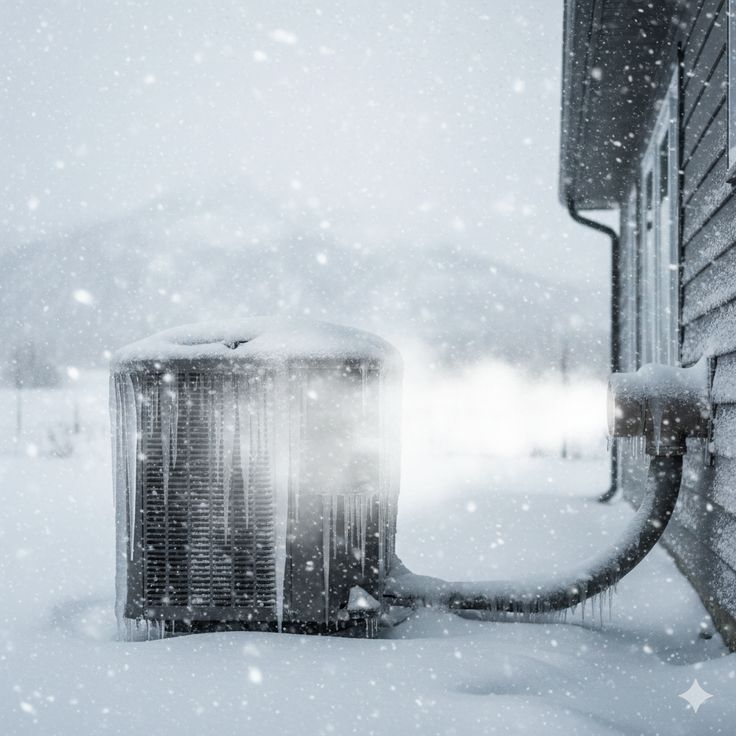
You've probably noticed it. Your Denver home takes longer to heat up in winter. Your AC runs constantly on hot summer days but rooms stay warm. Your energy bills creep higher despite no change in usage. Your furnace makes strange noises or shuts off unexpectedly.
Before you blame aging equipment or poor installation, consider this: You live exactly one mile above sea level.
Denver's famous 5,280-foot elevation isn't just a fun trivia fact or the reason you get winded climbing stairs. It fundamentally changes how your HVAC system works—or struggles to work. The thin air at altitude affects combustion, airflow, heat transfer, and overall system efficiency in ways most homeowners never realize.
At MoJo Home Services, we've served Denver Metro area homeowners for over 16 years. We've seen every altitude-related HVAC problem imaginable, from furnaces producing dangerous carbon monoxide due to improper combustion to AC units that can't keep up despite being brand new. Understanding these challenges is the first step to fixing them.
Let's dive into exactly why altitude makes your HVAC system work harder, what problems result, and most importantly, how to solve them.
The Science: How Thin Air Affects Your HVAC System
Air Density at 5,280 Feet
At sea level, air pressure is 14.7 pounds per square inch (PSI). In Denver, it's only about 12 PSI—roughly 82% of sea-level density. This means every cubic foot of air contains fewer oxygen molecules, less mass to transfer heat, and different properties than the "normal" air most HVAC systems are designed for.
Think of it this way: Your HVAC system is trying to do its job with 18% less air to work with. It's like asking someone to swim in a pool that's only 82% full—technically possible, but everything becomes harder.
The Critical Impacts
1. Combustion Efficiency Drops
Gas furnaces need a precise fuel-to-air ratio to burn efficiently and safely. At sea level, manufacturers calibrate furnaces for the oxygen content in normal-density air. At 5,280 feet, there's less oxygen in each cubic foot of air, which throws off this critical balance.
Without proper altitude adjustment, your furnace burns "rich" (too much fuel for available oxygen), resulting in:
Incomplete combustion and wasted fuel
Yellow or orange flames instead of clean blue flames
Soot buildup inside the heat exchanger
Dangerous carbon monoxide production
10-20% efficiency loss
2. Blower Motors Work Harder
Your HVAC blower fan moves air through ducts to heat or cool your home. But here's the problem: A fan moving air at sea level can push about 90,000 pounds per hour. That same fan at 6,000 feet only moves about 72,000 pounds per hour—a 20% reduction in performance.
The motor works harder to compensate, leading to:
Increased energy consumption
Accelerated motor wear
Premature bearing failure
Overheating and thermal shutdowns
3. Heat Transfer Becomes Less Efficient
Dense air excels at holding and transferring heat. Thin air? Not so much. At altitude, your HVAC system's heat exchangers—whether in your furnace, AC, or heat pump—can't transfer heat as effectively.
For example, cooling coils lose about 14% of their capacity above 5,500 feet. Your system must run longer to achieve the same heating or cooling effect, burning more energy for less comfort.
4. Refrigerant Pressures Change
Air conditioning and heat pump systems rely on refrigerant pressures that are calibrated for sea level. At altitude, the reduced atmospheric pressure affects how refrigerant behaves, potentially causing:
Incorrect superheat and subcooling readings
Difficulty maintaining proper refrigerant charge
Compressor stress from pressure imbalances
Reduced cooling capacity
The Problems Denver Homeowners Face
Problem #1: Your Furnace Underperforms
Symptoms you'll notice:
Home takes forever to reach set temperature
Furnace runs constantly but some rooms stay cold
Yellow or orange flames visible through inspection window
Sooty buildup around burners or inside unit
Higher than normal gas bills
Why it happens: Without altitude-specific adjustments, your furnace can't burn fuel efficiently at 5,280 feet. It wastes energy, produces less heat, and runs longer cycles trying to compensate.
The danger: Incomplete combustion produces carbon monoxide. If your furnace isn't properly adjusted for altitude, you're potentially exposing your family to this deadly, odorless gas.
Problem #2: Your AC Can't Keep Up
Symptoms you'll notice:
AC runs all day but house stays warm
Uneven cooling with hot spots
High electricity bills during summer
System freezes up frequently
Weak airflow from vents
Why it happens: Thin air reduces your AC's cooling capacity. The blower can't move as much air, heat exchangers work less efficiently, and the entire system strains to achieve what would be easy at sea level.
Problem #3: Equipment Wears Out Faster
Symptoms you'll notice:
Furnace or AC fails before expected 15-20 year lifespan
Frequent repairs needed
Blower motors burning out
Cracked heat exchangers (serious safety issue)
Compressor failures
Why it happens: When your HVAC system isn't properly configured for altitude, every component works harder than designed. Motors run hotter, combustion creates more soot and corrosion, and the constant strain accelerates wear on all parts.
Problem #4: Denver's Extreme Climate Makes It Worse
Denver doesn't just have altitude working against your HVAC—it also has:
Wild temperature swings: 40-50 degree changes in 24 hours force rapid system cycling
Dry climate: Humidity often drops to 10-20% in winter, making air feel colder
Seasonal extremes: Sub-zero winter nights and 95°F+ summer days
High UV exposure: 300+ days of sunshine degrade outdoor components faster
Cottonwood season: April-June brings seeds that clog outdoor units
Your HVAC system battles altitude AND climate simultaneously, creating a perfect storm of performance challenges.
The Fixes: How to Make Your HVAC System Thrive at Altitude
Fix #1: Proper Altitude Adjustment (Critical for Gas Equipment)
Every gas furnace, boiler, or water heater operating above 2,000 feet MUST be adjusted for altitude. This isn't optional—it's required by code for safety and efficiency.
What's involved:
Burner orifice replacement: Smaller orifices reduce gas flow to match available oxygen
Gas pressure adjustment: Recalibration ensures proper fuel delivery
Combustion analysis: Testing verifies clean, complete combustion
Carbon monoxide testing: Ensures safe operation with no CO production
The industry standard: Derate (reduce) furnace capacity by 4% for every 1,000 feet above sea level. At 5,280 feet, that's approximately 20% derating to match available oxygen.
DIY warning: Altitude adjustment requires specialized knowledge, tools, and EPA certification for gas work. Improper adjustment creates deadly carbon monoxide risk. Always hire licensed professionals.
If your furnace hasn't been serviced in years or you've never had altitude adjustment verified, schedule a professional diagnostic immediately. The safety of your family depends on it.
Fix #2: Install High-Altitude Rated Equipment
When replacing HVAC equipment, choose systems designed or certified for high-altitude operation.
What to look for:
Manufacturer certification for operation above 4,500 feet
Included high-altitude conversion kits
Variable-speed blowers that adapt to air density changes
Condensing furnaces that extract maximum heat from combustion gases
Brands that handle altitude well: Trane, Carrier, Lennox, and American Standard all offer models specifically designed for high-altitude performance. These systems come pre-adjusted or include factory kits for altitude conversion.
When you're ready for a new system, get a professional estimate from contractors experienced with Denver installations. We'll ensure proper equipment selection AND altitude-specific installation.
Fix #3: Upgrade Blower Motors and Fan Systems
Standard single-speed blowers struggle at altitude. Modern variable-speed motors adapt intelligently to thin air conditions.
Benefits of variable-speed systems:
Automatically adjust speed to maintain proper airflow
Run more efficiently by using only needed power
Provide better humidity control
Operate more quietly than single-speed motors
Last longer by reducing mechanical stress
If you have an older system with a standard blower, upgrading to a variable-speed ECM (electronically commutated motor) can improve performance by 20-30% at altitude.
Fix #4: Combat Denver's Dry Air
Denver's low humidity makes air feel colder in winter, forcing you to set thermostats higher and run your furnace more. The solution? Add moisture to your home's air.
Whole-home humidifier benefits:
Air feels warmer at lower temperatures (save 3-5°F on thermostat)
Reduce static electricity
Protect wood furniture and floors from cracking
Improve respiratory comfort
Reduce furnace runtime
A $400-800 investment in a whole-home humidifier can save $150-300 annually on heating costs while dramatically improving comfort.
Fix #5: Optimize Ductwork for Thin Air
Ducts sized for sea-level air density restrict airflow at altitude. Your system can't overcome physics, but proper duct design helps.
Duct optimization includes:
Sealing all leaks (20-30% of conditioned air escapes through duct leaks)
Proper sizing for altitude-adjusted airflow requirements
Balanced design minimizing resistance
Insulation in unconditioned spaces
Older Denver homes often have undersized or poorly designed ductwork that compounds altitude challenges. A professional airflow assessment identifies bottlenecks.
Fix #6: Implement Proactive Maintenance
At altitude, maintenance isn't optional—it's survival. Systems working harder accumulate problems faster.
Essential annual maintenance includes:
Filter changes every 1-3 months (Denver's dust demands frequent changes)
Combustion analysis on gas equipment
Carbon monoxide testing
Airflow measurement and adjustment
Refrigerant pressure verification
Electrical connection inspection
Blower motor and bearing service
Don't wait for problems. Schedule preventative maintenance twice yearly—once before winter heating season, once before summer cooling season. It's the cheapest insurance against altitude-related failures.
Fix #7: Consider Two-Stage or Modulating Equipment
Denver's wild temperature swings (70°F one day, 20°F the next) wreak havoc on single-stage systems that only run full-blast or off.
Why multi-stage systems excel at altitude:
Run on low capacity during mild conditions (less cycling, better efficiency)
Ramp to high capacity during extremes
Adapt to rapid temperature changes
Provide more consistent comfort
Handle altitude-reduced capacity better
Two-stage furnaces and AC units typically cost $800-1,500 more than single-stage, but payback comes through better altitude performance and 10-15% energy savings.
Fix #8: Add Zoning for Better Control
When your system struggles at altitude, zoning ensures you're not wasting energy trying to condition unused spaces.
Zoning systems allow:
Different temperatures in different areas
Reduced overall system load
Focused comfort where you need it
Significant energy savings
For multi-story Denver homes, zoning addresses the reality that heat rises and upper floors stay warmer—no need to overheat downstairs just to warm upstairs.

The Bottom Line: Don't Fight Altitude—Work With It
Living at 5,280 feet is part of what makes Denver special. But pretending altitude doesn't affect your HVAC system is expensive, uncomfortable, and potentially dangerous.
The good news? With proper altitude-specific installation, adjustment, and maintenance, your HVAC system can perform just as well (or better) than systems at sea level. You just need to work with contractors who understand the unique demands of Denver's elevation.
Red flags your system needs altitude attention:
Gas equipment never professionally adjusted for altitude
System installed by out-of-state contractors unfamiliar with Denver
Yellow or orange flames in gas furnace
Home uncomfortable despite new equipment
Higher than expected energy bills
Frequent repairs or premature equipment failures
Carbon monoxide detector ever alarming
Any of these warrant immediate professional evaluation.
Get Your Denver HVAC System Altitude-Ready
At MoJo Home Services, high-altitude HVAC isn't a specialty—it's our daily reality. We've served Denver Metro homeowners for over 16 years, and every single installation, repair, and maintenance call accounts for 5,280 feet of elevation.
We ensure every gas appliance is properly adjusted for altitude. We verify combustion quality and test for carbon monoxide. We select equipment that thrives in thin air. We design systems that handle Denver's temperature swings. And we educate homeowners about the unique challenges their HVAC systems face living one mile high.
Ready to stop fighting altitude and start working with it?
Schedule a diagnostic if your system isn't performing as expected
Book preventative maintenance to ensure altitude-specific adjustments are correct
Get an estimate for altitude-rated equipment replacement
Don't let Denver's altitude sabotage your comfort, safety, or energy bills. Call (720) 807-4050 or contact us online. We'll make sure your HVAC system performs the way it should—one mile above sea level.
Frequently Asked Questions
What does it mean that Denver air is only 82% as dense as sea-level air and why does that matter for heating and cooling?
Air density determines how much mass — and therefore how much thermal energy — a given volume of air can carry. At Denver's 12 PSI versus sea level's 14.7 PSI, each cubic foot of air contains roughly 18% fewer molecules. For your HVAC system, this affects three simultaneous processes: combustion in gas equipment receives less oxygen per cubic foot of air drawn in, the blower fan moves less air mass per rotation even at the same RPM, and heat exchangers transfer heat less efficiently because thinner air absorbs and releases thermal energy more slowly. All three deficits compound together — your furnace burns less cleanly, your blower delivers less air, and what air does move carries less heat. The result is a system that works noticeably harder for the same output compared to identical equipment at sea level.
What is combustion analysis and why is it specifically important for Denver gas appliances?
Combustion analysis is a diagnostic test performed by a technician using a specialized probe inserted into the flue gases exiting your furnace or boiler. The instrument measures the precise composition of exhaust gases — oxygen content, carbon monoxide levels, carbon dioxide percentage, and flue temperature — to determine whether combustion is complete and efficient. At sea level, a properly functioning furnace's exhaust tells a predictable story. In Denver, altitude-adjusted combustion produces a different signature, and combustion analysis is the only reliable way to verify the adjustment was done correctly. A furnace that looks normal from the outside, shows no visible yellow flame, and heats adequately can still be producing elevated carbon monoxide if the altitude adjustment is even slightly off. Annual combustion analysis is the safety check that catches this before it becomes a household health hazard.
How does reduced atmospheric pressure at altitude affect my AC refrigerant system specifically?
Refrigerant-based systems — both air conditioners and heat pumps — rely on precise pressure differentials between the high-pressure and low-pressure sides of the refrigerant circuit to drive the heat transfer cycle. The refrigerant's boiling and condensing points shift based on surrounding pressure, and at Denver's lower atmospheric pressure, the low-pressure side of the system operates at different absolute pressures than at sea level. This affects superheat and subcooling measurements — the readings technicians use to verify proper refrigerant charge. A technician using sea-level reference charts to charge your system in Denver will get an incorrect result, leaving the system either overcharged or undercharged. Both conditions stress the compressor, reduce efficiency, and in the overcharged case can cause the system to freeze. Refrigerant work in Denver requires technicians who understand altitude-corrected pressure tables.
What is a burner orifice and why does replacing it fix altitude combustion problems?
The burner orifice is a precisely sized small hole through which pressurized natural gas flows before mixing with air and igniting. The orifice size controls how much gas enters the combustion chamber per unit of time — it's essentially the metering point that determines the fuel side of the fuel-to-air ratio. At sea level, a given orifice size paired with incoming air at normal density produces a balanced combustion ratio. At Denver's altitude, the same orifice delivers the same volume of gas but pairs it with 18% less oxygen — creating a fuel-rich mixture that burns incompletely. Installing a smaller orifice reduces gas flow proportionally to match the available oxygen at 5,280 feet, restoring the correct ratio. This is why altitude adjustment isn't just a calibration tweak — it involves physically swapping a critical component, which is why it requires a licensed professional rather than a DIY fix.
Why does Denver's UV intensity accelerate wear on outdoor HVAC components and what can be done about it?
Denver receives over 300 days of annual sunshine and sits a mile closer to the sun than coastal cities — which sounds trivial but meaningfully increases UV radiation intensity reaching outdoor surfaces. UV exposure degrades the polymer and rubber components on outdoor condensers and heat pumps: refrigerant line insulation becomes brittle and cracks, plastic access panels fade and warp, rubber gaskets and vibration isolators deteriorate faster, and electrical wiring insulation can degrade over time. This accelerated UV degradation is one reason Denver HVAC technicians pay particular attention to line set insulation and outdoor unit condition during annual tune-ups. Replacing cracked line set insulation before it fails prevents refrigerant line sweating, condensation problems, and eventual refrigerant loss — all of which are preventable with visual inspection during routine maintenance.
If my furnace was properly altitude-adjusted when installed 10 years ago, does that adjustment need to be redone?
The altitude adjustment itself — the orifice size and gas pressure calibration — doesn't drift or change over time the way a tune-up might need to be repeated. However, there are two reasons to have combustion verified periodically even on a previously adjusted system. First, components age: burner assemblies accumulate soot and corrosion, heat exchangers develop micro-cracks, and small changes in the combustion chamber geometry can alter the effective fuel-to-air ratio even without anyone touching the adjustment. Second, if your furnace has been serviced by different technicians over the years, there's no guarantee the altitude adjustment has been consistently maintained or that a replacement component installed during a repair was altitude-adjusted before installation. Annual combustion analysis is the ongoing verification that the original adjustment is still holding — not a re-adjustment, but a confirmation that nothing has changed the combustion profile.
Why do Denver homes often have ductwork that's undersized for altitude conditions and how does that compound other problems?
Most residential ductwork is designed using standard engineering tables based on sea-level air density. At altitude, the same duct moving the same volume of air is actually moving 18% less air mass — and since heat transfer depends on air mass rather than air volume, the effective delivery is reduced. In a home where the ductwork was also sized too conservatively to begin with, or where decades of normal settling have created kinks, disconnections, or leaks, the altitude deficit compounds an already restricted system. A blower working harder to push thinner air through undersized or leaky ducts is the worst-case scenario for motor longevity — the motor draws higher current at elevated temperatures over longer run cycles, which is precisely the operating condition that accelerates bearing wear and winding failure. Duct sealing and airflow assessment often deliver surprisingly large improvements in Denver homes because they address a deficit that altitude makes more consequential than it would be at sea level.
How does Denver's dry winter air physically make a home feel colder than the thermostat reading suggests?
The mechanism is evaporative cooling on your skin. Human bodies continuously lose moisture through skin and respiration, and in very dry air — Denver's winter indoor humidity often drops to 15 to 25% without a humidifier — that evaporation happens rapidly. Evaporation is a cooling process, and the faster moisture leaves your skin, the colder you perceive your environment to be regardless of actual air temperature. This is the same principle that makes summer heat more tolerable in dry Denver than in humid Houston at the same temperature — but it works against you in winter. Research suggests that raising indoor humidity from 20% to 35% makes a 68°F room feel as warm as a 71°F room at low humidity, allowing homeowners to set the thermostat 3 to 5 degrees lower with identical perceived comfort. Over Denver's seven-month heating season, that thermostat reduction translates to meaningful gas bill savings from a whole-home humidifier investment.
Related Resources


