Welcome, Neighbors of
Genesee
Furnace Repair in Genesee, CO
Genesee sits high in the foothills where winter arrives weeks early and hangs on, and homes here ask far more of a heating system than a house down in the city ever will. Family owned, licensed and insured, keeping foothills homes warm since 2009.
5-star rated · Local & Family-owned since 2009
Licensed & Insured
Family Owned
NATE Certified
EPA Certified
BBB Accredited
Serving Denver Metro

See your neighbor deals
MoJo Home Services
Furnace Repair
Furnace Repair in Genesee, CO
Genesee sits at 7,648 feet, the highest ground in our service area, and gas furnaces here lose 22.6% of rated input to thin air. A 100,000 BTU/hr nameplate fires about 77,400 BTU/hr and delivers roughly 61,900 at 80% AFUE. That is the widest gap between label and reality anywhere we work, eleven full percentage points and 2,740 feet beyond Fort Lupton out on the plains.
How much furnace do you actually have at 7,648 feet?
Just over three-quarters of what the label claims. Across the common sizes: 60,000 becomes about 46,400, 80,000 about 61,900, 100,000 about 77,400 and 120,000 about 92,900 BTU/hr of input. Efficiency is applied after that reduction, never before it. Genesee's 3,609 residents live where design conditions are colder and the appliance is weaker at the same moment, so a furnace picked from metro habit rather than a load calculation falls short by a margin no repair can recover.
Why do high-altitude conversion kits matter more in Genesee than anywhere else?
Because the required correction is the largest. Most furnaces are certified as shipped only to about 4,500 feet, and Genesee stands 3,148 feet above that ceiling. Manufacturers publish orifice and manifold-pressure changes for precisely this situation, generally in bands reaching around 10,000 feet, and ignoring them at 22.6% is not a marginal oversight, it is operating an appliance outside its certified envelope. An unconverted furnace up here burns rich from day one: yellow flame, soot at the ports, high stack temperature, and carbon monoxide an analyser will find long before anyone in the house notices.
Why does a two-stage furnace in Genesee spend the winter in high fire?
Because low fire has already been cut twice. Low stage on many two-stage furnaces sits near 65% of high fire, so a nameplate 100,000 appliance calls it 65,000, and Genesee's 22.6% brings that to roughly 50,300 BTU/hr of genuine input. On a cold night that will not hold the house, so the control steps up and stays there, and the comfort advantage the homeowner paid for quietly disappears. That is a sizing outcome rather than a defect, and it is worth understanding before anyone assumes the staging has failed.
What does a 22.6% reduction do to ignition and the heat exchanger?
It compresses the margin on both. Lighting off is less reliable when every cubic foot of air brings nearly a quarter less oxygen, so weak igniters, fouled ports and marginal gas pressure appear as delayed ignition far sooner here than on the valley floor. Each late light is a small pressure event inside the exchanger. A rich fire simultaneously raises flue temperature, and sustained overheating is what moves a heat exchanger from cracked-eventually to cracked-now. Furnaces at this elevation want an annual combustion test, not just a filter.
Does a Genesee furnace need more combustion air than the same unit downtown?
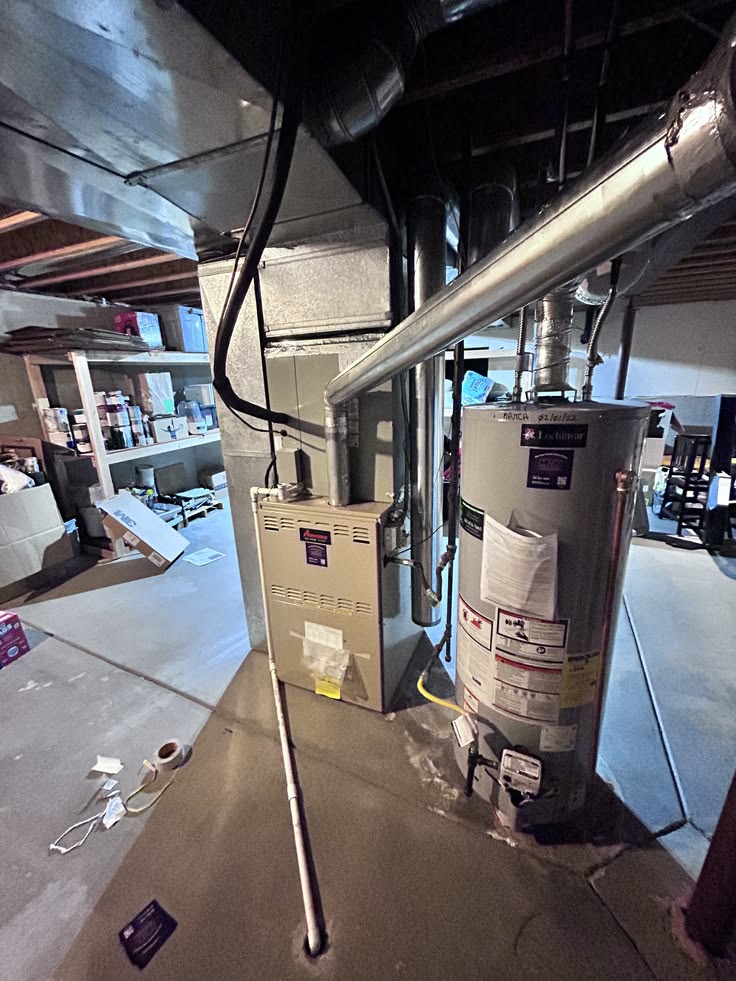
It needs more volume to find the same oxygen, which is the practical meaning of a 22.6% reduction. An atmospheric furnace closed into a small mechanical room, or sharing that room with a gas water heater, has to draw makeup air from somewhere at 7,648 feet, and if the room cannot supply it the appliance backdrafts or burns rich. Sealed-combustion equipment sidesteps the room entirely by drawing intake air through a dedicated pipe, provided the termination stays clear of snow. Combustion air is a calculation, not a hopeful assumption.
How do you tell a repairable Genesee furnace from a finished one?
Three checks decide it. Is the primary heat exchanger intact on inspection. Was the appliance ever converted for 7,648 feet, which burner deposits and stack readings reveal regardless of what the paperwork says. And are the specific parts still obtainable for that model. Access and parts logistics are genuine factors in how long a repair takes up here, and both belong in the conversation before a component is committed to. A sound, correctly converted furnace is worth fixing at any elevation.
Who permits furnace work in Genesee, and what else is nearby?
Genesee is unincorporated, so gas appliance permitting runs through the Jefferson County authority having jurisdiction. Component repairs generally sit outside permitting; a changeout or heat exchanger replacement does not. Nearby we work Evergreen at 7,054 feet and 20.2%, Golden 1,972 feet below at 14.7%, and Morrison at 5,764 feet. Call 720-807-4050.
Nearby towns we cover
We work furnace repair in Golden, furnace repair in Evergreen, furnace repair in Morrison out of the same dispatch.
The opposite season has its own failure list: AC repair in Genesee.
Background on the service is at furnace repair; the full local list is at everything in Genesee.

Genesee
Home Of The $39 Diagnosis
Book your diagnostic today!
The $39 diagnostic service is a professional troubleshooting visit performed by a certified MoJo technician to identify the root cause of an HVAC issue.
Frequently Asked Questions
What is the real output of a 100,000 BTU furnace in Genesee?
About 77,400 BTU/hr of input, because 7,648 feet costs 22.6% of the rating. An 80% AFUE model delivers roughly 61,900 BTU/hr into the ducts and a 95% condensing unit about 73,500. Genesee is the highest community we serve, so this is the largest correction we apply anywhere, and it has to be in the load calculation before equipment is chosen.
Does a Genesee furnace need a high-altitude kit?
Without question. Furnaces are typically certified as shipped to about 4,500 feet, and Genesee is 3,148 feet above that, further outside the standard envelope than any other address we cover. Manufacturer kits specify orifice sizes and manifold pressure for elevation bands up to roughly 10,000 feet. Running a Genesee furnace on factory settings means a permanently rich fire and rising carbon monoxide.
Why can my Genesee furnace not keep up on the coldest nights?
Because it is producing 22.6% less than its label suggests while the mountain heat load is at its peak. If the burner runs continuously and the house still drifts down, the appliance has run out of capacity, and no replacement part changes that. The answer is a heat loss calculation done at 7,648 feet, checked against the derated input rather than the nameplate.
How is Genesee different from Evergreen for furnace repair?
Genesee is 594 feet higher, 7,648 against 7,054 feet, which is 22.6% derate against 20.2%. On a 100,000 BTU/hr nameplate that is about 2,400 BTU/hr of additional loss. Both fall under Jefferson County for permitting, but a furnace sized correctly for an Evergreen home is not automatically sized correctly for a comparable house in Genesee.
How often should a furnace at 7,648 feet be serviced?
Once a year at minimum, before heating season, and the visit should include a combustion analysis rather than a filter change and a visual look. At Genesee's 22.6% derate the readings that matter are air-free carbon monoxide, stack temperature, manifold pressure and flame signal, since those show a furnace drifting rich while it is still an adjustment instead of a replacement.
MoJo Home Services
A note for our neighbors
Almost everyone we meet in Genesee found us through somebody else who lives up here, usually a neighbor we saw on a cold morning who remembered afterward. Getting passed from one house to the next is the only way a small family heating repair outfit lasts as long as we have.

Furnace Repair
In
Genesee
Share Your Experience
Thank you for supporting our local family business. If we did right by you, we'd love to hear about it on any site you use.
- Write a Google reviewQuick & easy
- Find us on YelpRead what neighbors said
- Review us on FacebookShare with friends
- Recommend us on NextdoorTell your neighbors


Your referrals and reviews not only mean so much to us, they also help the community know who to trust to Get their Home's MoJo Back!
Honest feedback is what we're after, good or bad. If something fell short, call us at the office first and we'll make it right.