Welcome, Neighbors of
Aurora Hills
AC Repair in Aurora Hills, CO
Ice on the indoor coil is a regular summer call in Aurora Hills, where the homes are older and the ductwork was laid out long before anyone thought about cooling. Too little air across the coil is nearly always the cause. Family run since 2009, licensed and insured.
5-star rated · Local & Family-owned since 2009
Licensed & Insured
Family Owned
NATE Certified
EPA Certified
BBB Accredited
Serving Denver Metro

See your neighbor deals
MoJo Home Services
Out in your neighborhood · Denver Metro
Air Conditioning Repair in Aurora Hills
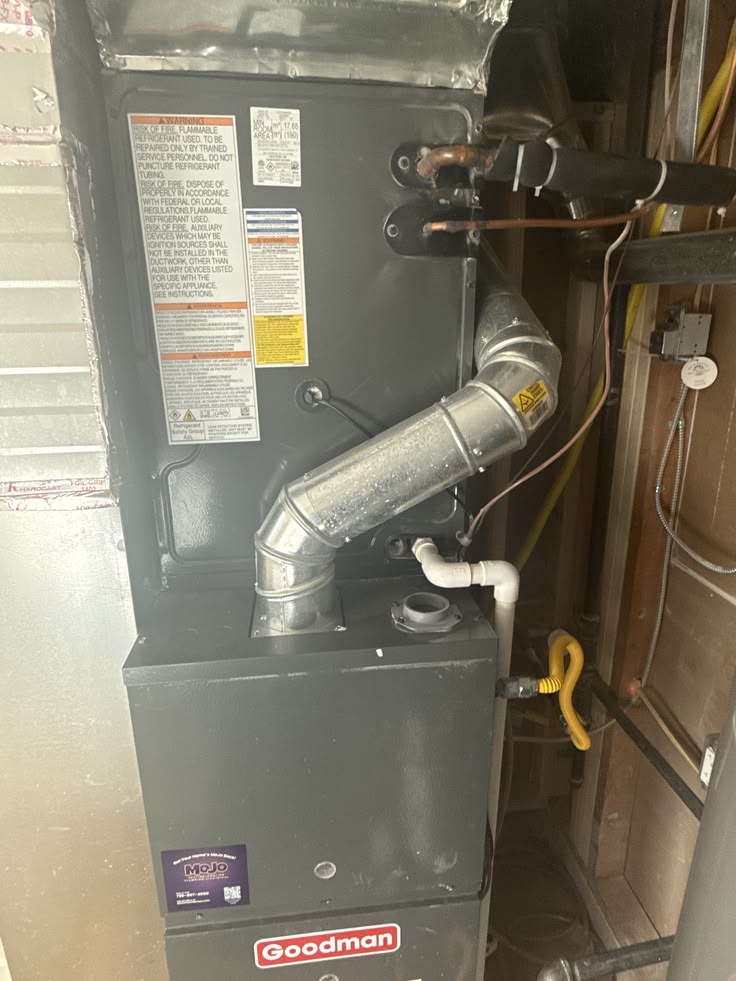
Ice on the refrigerant line and water where water should not be are the two calls that define cooling season in Aurora Hills. Both start at the evaporator coil inside the furnace cabinet, and both come down to the same short list: not enough air moving across that coil, or not enough refrigerant inside it. Aurora Hills sits in Arapahoe County at 5,515 feet, 108 feet above central Aurora. MoJo Home Services answers at 720-807-4050.
Why is my Aurora Hills air conditioner covered in ice?
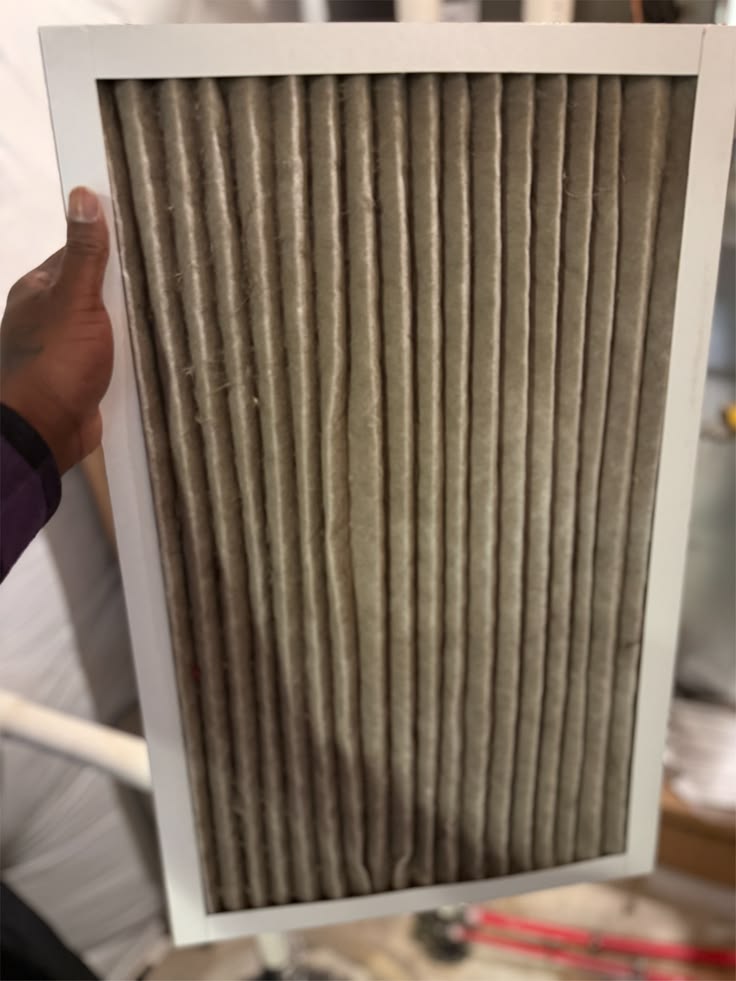
Ice means the coil surface dropped below freezing, which happens when the refrigerant inside runs colder than the air passing over it can offset. Two roads lead there. Restricted airflow — a loaded filter, a blocked or undersized return, a dirty evaporator, a blower on too low a speed tap. Or a charge low enough that the remaining refrigerant boils at a lower pressure and a lower temperature. Switch cooling off, leave the fan running to thaw the coil, and do not restart until someone has measured. Running an iced system sends liquid refrigerant back to a compressor built to pump vapor.
Why is water dripping out of the furnace cabinet?
The evaporator makes condensate even in dry Colorado air, and it has to leave through a trapped drain. Three things stop it. A clogged primary line. A trap that has dried out and lost its seal, so the blower pushes air through the opening water needs. Or a secondary pan that filled quietly because its float switch was never wired. When a coil ices and then thaws, the water arriving at once overwhelms a partly blocked line, which is why the ice call and the water call in Aurora Hills are so often the same call on the same day, reported by the homeowner in whichever order the symptoms appeared.
How does Aurora Hills' dry air change what normal looks like?
Almost all the work here is sensible cooling rather than dehumidification, so the drop across the coil reads higher than humid-climate references say it should — roughly 20 to 25°F instead of 16 to 20°F. A technician who sees 22°F at an Aurora Hills register and calls it overcooling is reading a chart written for a different climate. It also means an iced coil here is essentially never a humidity story. It is airflow or charge, and at 5,515 feet, where air runs about 15.2% thinner than at sea level, the airflow side has less room to spare than the tables allow.
What gets measured on an Aurora Hills coil call?
Static pressure ahead of and behind the coil. Filter differential, measured rather than assumed. Blower tap and delivered airflow against a target near 472 actual CFM per ton. Evaporator entering and leaving air temperatures. Superheat and subcooling. Drain line flow, trap condition, and float switch operation. And the coil face itself: a coil that has iced repeatedly carries bent fins and packed debris that no charge adjustment can undo. If any of that turns into equipment replacement rather than repair, it becomes permitted work, and Aurora Hills falls under Arapahoe County for that paperwork.
Does a frozen coil ruin the compressor?
It can, and the damage accumulates rather than arriving all at once. Liquid refrigerant returning down the suction line washes oil off the compressor bearings and, because liquid does not compress, hammers the valves. One thaw-and-restart cycle rarely kills a compressor. A summer of them in an Aurora Hills home tends to show up later as a compressor that will not start against pressure, or one drawing locked-rotor current on every call. That is why we ask homeowners to leave the system off rather than keep cycling it while waiting on a visit.
The rest of the Aurora corridor
Same trucks, same routes. Aurora sits 108 feet below Aurora Hills at 5,407 feet, Aurora Highlands sits 66 feet above it at 5,581 feet, and Murphy Creek lies east on the same corridor. The elevation spread across those four is modest; the equipment ages are not, and that is what actually changes the diagnosis.
Where else we work
Nearby and on the same schedule: AC repair in Aurora, AC repair in Aurora Highlands, AC repair in Murphy Creek.
For the other half of the system, furnace repair in Aurora Hills.
Wider view: AC repair, or everything in Aurora Hills.

Aurora Hills
Home Of The $39 Diagnosis
Book your diagnostic today!
The $39 diagnostic service is a professional troubleshooting visit performed by a certified MoJo technician to identify the root cause of an HVAC issue.
Frequently Asked Questions
What should I do when my Aurora Hills AC freezes up?
Turn cooling off at the thermostat, switch the fan to ON, and let the coil thaw completely before anything restarts. Then replace the filter and open every supply register. If it ices again, the cause is restricted airflow or a low charge, and at 5,515 feet the airflow side needs roughly 472 actual CFM per ton to stay clear of freezing.
Why is water leaking from my air conditioner in Aurora Hills?
Condensate is not draining. The usual culprits are a clogged primary drain line, a dried-out trap that lets blower air push back through it, or a secondary pan filling because its float switch was never connected. A recently frozen coil makes it worse, since a thaw dumps more water at once than a partly blocked Aurora Hills drain line can carry.
What temperature split should an Aurora Hills system deliver?
Roughly 20 to 25°F between return and supply air. Aurora Hills' dry summer air means the system spends almost nothing on removing humidity, so the drop runs higher than the 16 to 20°F printed in humid-climate references. A split much above that range usually signals restricted airflow rather than exceptional performance, and it is often the reading right before a coil ices.
Can a frozen coil damage the compressor?
Yes, over time. Liquid refrigerant returning down the suction line strips oil from the bearings and hammers the valves, since liquid will not compress. One episode rarely ends a compressor, but a season of freeze-and-restart cycles in an Aurora Hills home commonly shows up as a compressor that cannot start against pressure. Leave the system off until it is measured.
How high is Aurora Hills and does it change the diagnosis?
Aurora Hills sits at 5,515 feet in Arapahoe County, 108 feet above central Aurora, with a 14.1% gas derate and air about 15.2% thinner than sea level. The practical effect on a cooling call is the airflow target of about 472 actual CFM per ton, which is the number an iced coil is usually failing to meet.
MoJo Home Services
A note for our neighbors
Quite often the call from Aurora Hills is not from the homeowner at all, but from a son or daughter arranging AC repair for parents who have been in that house for decades. Being the company a family trusts with their folks is about as much responsibility as we could ask for.

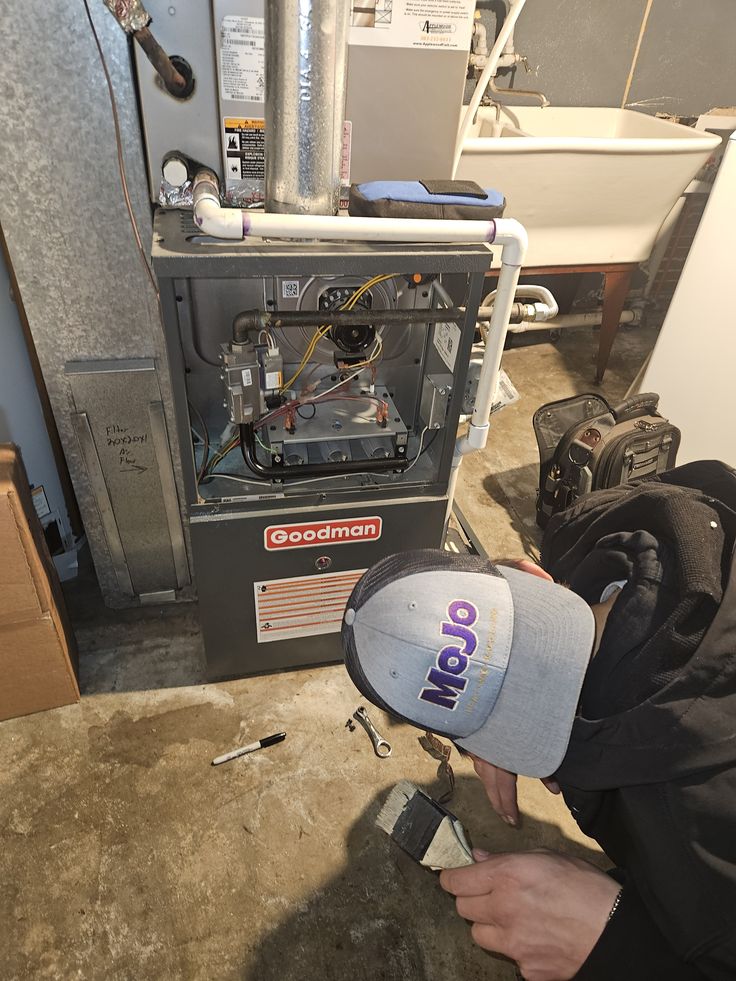
On the job
In
Aurora Hills
Share Your Experience
Thank you for supporting our local family business. If we did right by you, we'd love to hear about it on any site you use.
- Write a Google reviewQuick & easy
- Find us on YelpRead what neighbors said
- Review us on FacebookShare with friends
- Recommend us on NextdoorTell your neighbors


Your referrals and reviews not only mean so much to us, they also help the community know who to trust to Get their Home's MoJo Back!
Honest feedback is what we're after, good or bad. If something fell short, call us at the office first and we'll make it right.