Welcome, Neighbors of
Aurora Hills
Furnace Repair in Aurora Hills, CO
Aurora Hills is one of the older established corners of Aurora, full of solid mid century homes that have been warmed by more than one furnace over the years. When something goes wrong in a house like that, its history matters. Family owned and licensed since 2009.
5-star rated · Local & Family-owned since 2009
Licensed & Insured
Family Owned
NATE Certified
EPA Certified
BBB Accredited
Serving Denver Metro

See your neighbor deals
MoJo Home Services
Furnace Repair
Furnace Repair in Aurora Hills, CO
Aurora Hills sits at 5,515 feet, 108 feet above the City of Aurora, which puts the gas derate at 14.1% instead of 13.6%. A 100,000 BTU/hr furnace fires about 85,900 BTU/hr here, and at 80% AFUE roughly 68,700 BTU/hr reaches the rooms. The most frequent no-heat call in this pocket of Arapahoe County is a furnace that lights, runs a few seconds and shuts itself down: a flame proving failure.
How does a furnace prove flame, and why does altitude matter?
By flame rectification. The control board puts AC voltage on a sensor rod sitting in the flame, ionized combustion gas conducts in one direction only, and the board reads the resulting DC current in microamps. A clean rod in a healthy flame typically reads 3 to 6 microamps, and most boards drop out below about 1. At 5,515 feet the flame is less dense and carries fewer ions to start with, so the signal begins lower than it would at sea level. Add a rich mixture from an appliance never corrected for Aurora Hills' 14.1% derate, and oxide film builds on the rod faster. The film insulates, microamps fall, and the furnace starts dropping out on mild days first.
What does the repair actually involve?
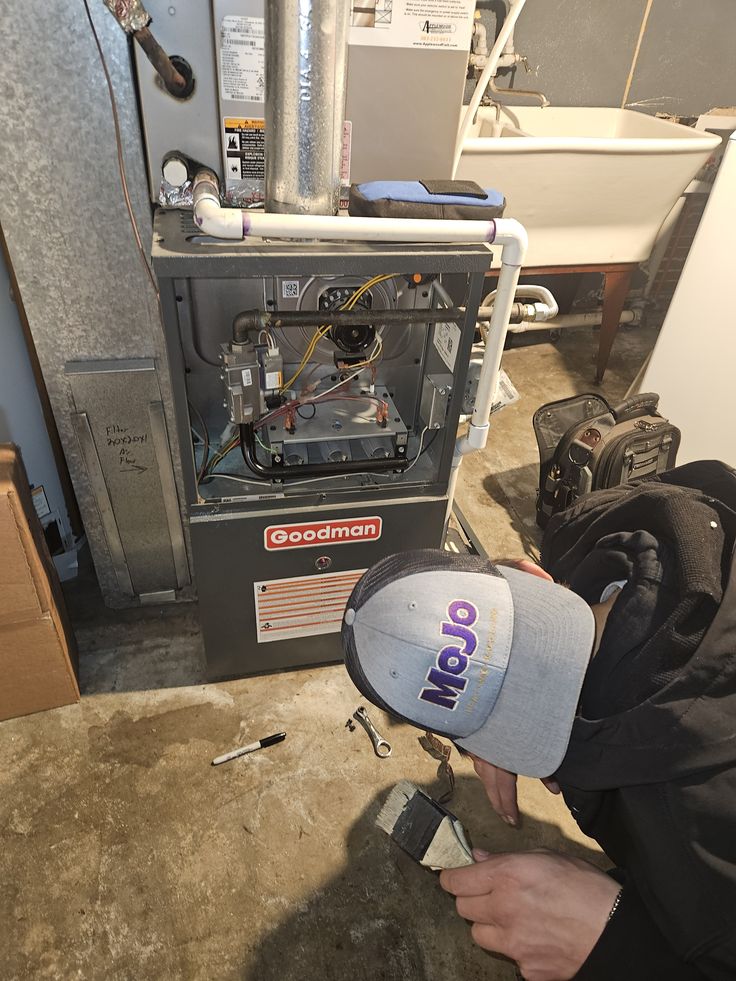
More than sanding the sensor. Abrasive paper leaves a rough surface that fouls again sooner, so a fine pad or scouring cloth is the correct tool. Then the parts that get skipped: the sensor's ground path back to the burner assembly, because rectification needs a grounded flame area several times the rod area to function, and corroded burner-to-cabinet grounding produces an identical symptom. Then line polarity at the furnace, since reversed hot and neutral kills the flame signal outright. Then rod position inside the flame envelope, because a rod sitting too high is reading the least ionized part of the flame. We record the microamp value before and after so there is a number to compare against next season.
When is the flame sensor not the problem?
When the rod is clean and the reading is still low, which points upstream at combustion itself. This is where the 14.1% derate returns: a burner overfiring for 5,515 feet makes a lazy, yellow-tipped flame that rectifies poorly no matter how clean the sensor is. The correction is orifice sizing and manifold pressure, not another sensor. Other look-alikes are a partially blocked flue starving the flame of secondary air, a cracked heat exchanger distorting the flame once the blower starts, and a board with a failing rectification circuit, which is the last thing to suspect and the first thing that gets sold.
What numbers should you ask to see?
Four, at minimum. Flame signal in microamps against the manufacturer's stated minimum. Inlet gas pressure, generally near 7 inches of water column on natural gas. Manifold pressure against the data plate, commonly 3.5 inches on a single-stage appliance, adjusted for altitude. And air-free CO from a combustion analyzer, compared with the 400 ppm ANSI limit and expected to be far beneath it. If a technician leaves an Aurora Hills house unable to tell you what the flame signal read, the diagnosis was a guess with an invoice attached.
How is Aurora Hills different from the Aurora addresses beside it?
By 108 feet of elevation and by county line. Aurora Hills is in Arapahoe County; the Aurora addresses in our facts sit under Adams. The half-point derate difference is roughly 500 BTU/hr on a 100,000 BTU/hr input, which is small on its own and becomes significant once it stacks with an oversized furnace and undersized returns, the usual pairing behind short cycling around here.
What can you check before calling?
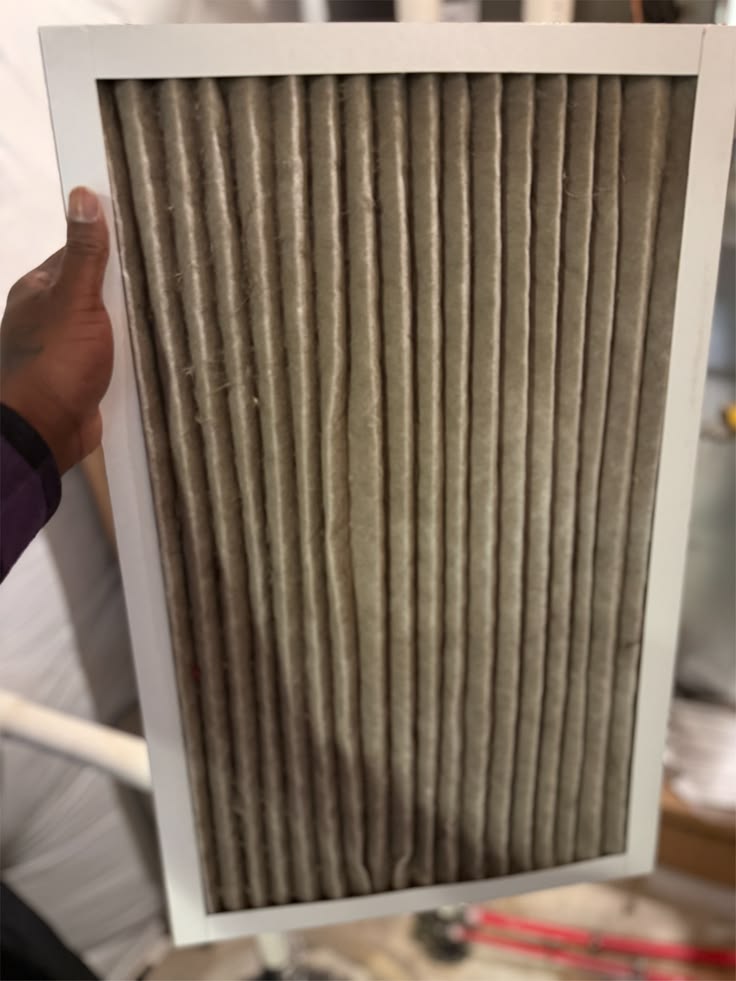
Time the cycle. Burners that light and go out within about ten seconds, repeatedly, is flame proving, and that is a service call rather than a thermostat setting. If the furnace tries three times and locks out with a flashing code, write the code down before cutting power, because resetting the board erases what the furnace was telling you. Change a loaded filter, confirm the furnace switch and the manual gas valve are on, and leave the burner compartment closed.
Where else do you work near Aurora Hills?
Aurora at 5,407 feet, Aurora Highlands at 5,581, and Murphy Creek, which shares Aurora's elevation. MoJo Home Services has run gas heat diagnostics across the east metro since 2009, licensed and insured. Call 720-807-4050.
Same crews, neighbouring towns
The same trucks run furnace repair in Aurora, furnace repair in Aurora Highlands, furnace repair in Murphy Creek on the same rotation.
Heating and cooling fail for different reasons in the same house — see AC repair in Aurora Hills.
More: furnace repair · everything in Aurora Hills.

Aurora Hills
Home Of The $39 Diagnosis
Book your diagnostic today!
The $39 diagnostic service is a professional troubleshooting visit performed by a certified MoJo technician to identify the root cause of an HVAC issue.
Frequently Asked Questions
Why does my Aurora Hills furnace light and then shut down seconds later?
The board is not seeing enough flame signal. At Aurora Hills' 5,515 feet the flame carries fewer ions than it would at sea level, so a rod with oxide film, a poor ground path or reversed line polarity drops the microamp reading under the board's minimum and the gas valve closes. The correct diagnosis reads flame current in microamps before any part is replaced.
What is the furnace derate at Aurora Hills' elevation?
14.1%. At 5,515 feet, using 4% per 1,000 feet above 2,000 feet, a 100,000 BTU/hr furnace fires about 85,900 BTU/hr and delivers roughly 68,700 BTU/hr at 80% AFUE. That is 0.5 points more than the City of Aurora at 5,407 feet, and it belongs in any heat loss calculation done for a house in Aurora Hills.
Can I clean the flame sensor myself?
You can, with a fine scouring pad rather than sandpaper, but it treats a symptom. If an Aurora Hills furnace fouls its sensor every few weeks, the flame itself is wrong, usually because the appliance was never corrected for the 14.1% derate and is running rich. Cleaning that rod on a schedule is not maintenance, it is a warning that combustion needs to be measured.
Does a low flame signal always mean the sensor is bad?
No. A clean rod with a low reading points upstream: an overfired burner making a lazy flame at 5,515 feet, a restricted flue starving secondary air, a cracked heat exchanger disturbing the flame when the blower starts, or a failing board. Sensors are cheap and get swapped first, which is why the same Aurora Hills furnace often fails again a few weeks later.
Should I keep resetting a furnace that locks out?
Note the fault code first, then stop. Each reset erases the diagnostic information the furnace stored and buys one more cycle of whatever caused the lockout. In an Aurora Hills house running a 14.1% derate there is little spare heating capacity to begin with, so an intermittent flame proving fault in November reliably becomes a dead furnace in January.
MoJo Home Services
A note for our neighbors
Some of the households we visit in Aurora Hills have owned the same home for decades, and they had a heating repair company long before they ever had us. Being asked to take that place, and then being asked back the following winter, is about the best thing that can happen to us.

Furnace Repair
In
Aurora Hills
Share Your Experience
Thank you for supporting our local family business. If we did right by you, we'd love to hear about it on any site you use.
- Write a Google reviewQuick & easy
- Find us on YelpRead what neighbors said
- Review us on FacebookShare with friends
- Recommend us on NextdoorTell your neighbors


Your referrals and reviews not only mean so much to us, they also help the community know who to trust to Get their Home's MoJo Back!
Honest feedback is what we're after, good or bad. If something fell short, call us at the office first and we'll make it right.