TL;DR
AC stopped working
An air conditioner that suddenly stops on the hottest day of the year does not always need an emergency call. This troubleshooting guide starts with a five minute reset sequence, explains the common causes of AC failure, and helps you recognize when a problem is truly urgent, along with tips for staying comfortable until service arrives.
Start Here: The Five-Minute Reset Sequence
Most AC failures follow one of a small number of common causes, and several of them resolve with a systematic reset. Work through this sequence before assuming major failure.
Check the thermostat first. Confirm it is set to "cool" mode, not "fan only" or "off." Verify the set temperature is at least 3 to 5 degrees below the current room temperature — if the room is already at or below the set point, the system is working correctly and simply doesn't need to run. Replace thermostat batteries if the display looks dim or unresponsive.
Check the circuit breaker. Your AC system typically has two breakers — one for the indoor unit (furnace or air handler) and one for the outdoor condenser. Both should be fully in the "on" position. A tripped breaker sits slightly off-center rather than fully off. Flip it completely off first, then back on. If it trips again immediately, stop — that indicates an electrical problem requiring a professional.
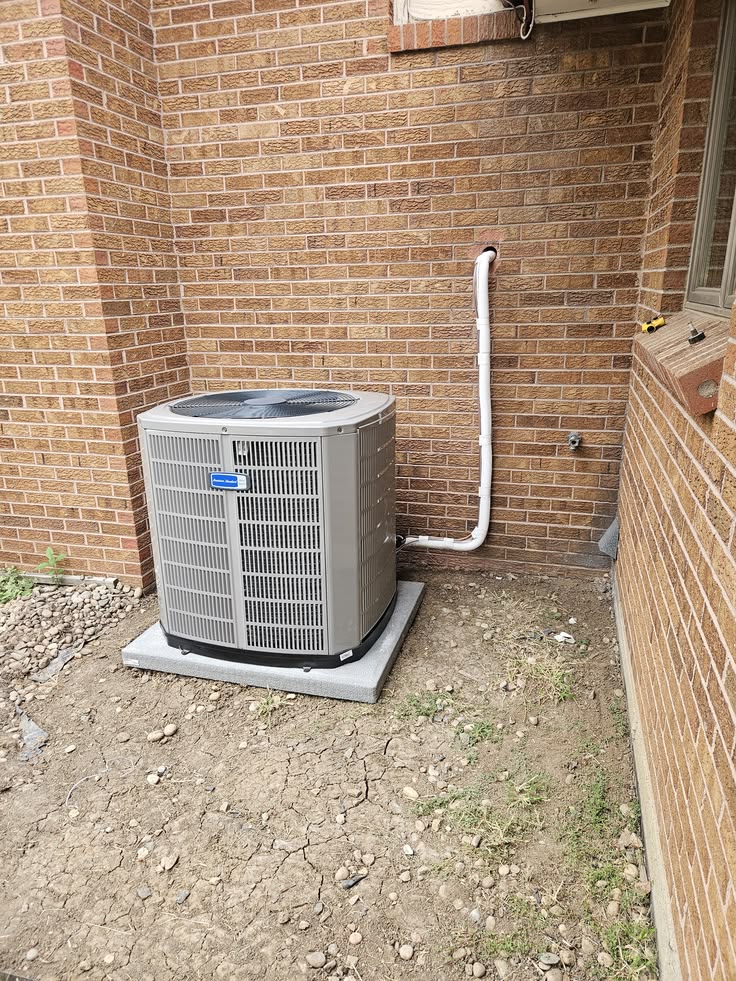
Check the outdoor disconnect. A metal box mounted near the outdoor condenser contains a pull-out disconnect block or switch. Verify it is fully seated and in the "on" position. This is occasionally knocked loose during yard work or maintenance.
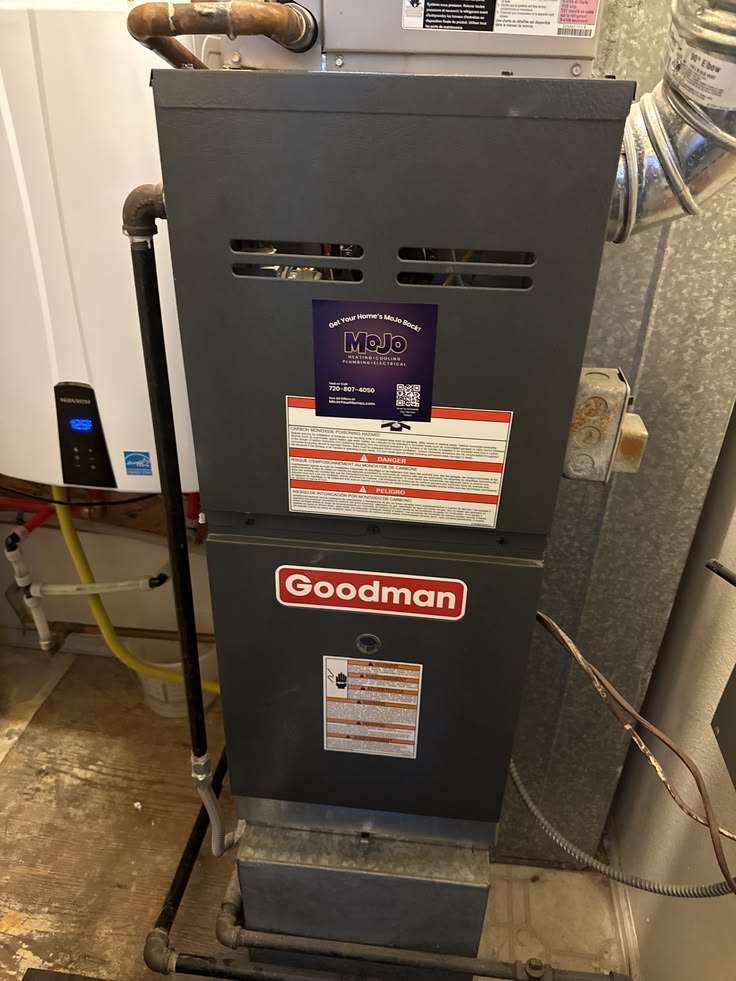
Locate the indoor unit switch (furnace or air handler). The indoor unit has a dedicated power switch that resembles a standard light switch, often mounted on or near the unit. Make sure it hasn't been accidentally switched off.
Give the system 30 minutes after resetting. Modern AC systems have built-in time-delay protections that prevent the compressor from restarting immediately after a shutdown. This protects the compressor from damaging pressure equalization. If the system went off on its own, wait 30 minutes before expecting it to restart after a reset.
Common Causes of AC Failure in Denver Homes
Tripped High-Pressure or Low-Pressure Safety Switch
Your AC system includes refrigerant pressure switches that shut the system down when pressures exceed safe operating ranges. High outdoor temperatures — Denver regularly sees days above 95°F — can cause head pressure to spike. A dirty condenser coil packed with cottonwood seeds or debris prevents heat from escaping, driving pressures higher. The system shuts itself off rather than damage the compressor.
If your outdoor unit is visibly coated in cottonwood seeds or dirt, turn off the system, cut power at the disconnect, and gently rinse the coil with a garden hose from top to bottom at a downward angle. Allow it to dry, restore power, and wait 30 minutes before attempting to restart. Do not use a pressure washer — the high pressure bends the coil’s delicate aluminum fins and restricts airflow, and in severe cases can damage the coil enough to cause a refrigerant leak.
Frozen Evaporator Coil
A frozen indoor coil is one of the most common Denver AC complaints in summer. Symptoms include weak airflow from vents, ice visible on refrigerant lines near the indoor unit, or water dripping near the indoor unit as ice melts. Causes include a severely restricted air filter, blocked return vents, or low refrigerant from a slow leak.
If you suspect a frozen coil, turn the system to "fan only" mode and allow it to thaw completely, which can take several hours, before restarting. Replace the air filter immediately and verify all return vents are unobstructed. If the coil freezes again after thawing, the cause is likely low refrigerant — a professional repair.
Failed Capacitor
The capacitor is the most commonly failed single AC component. It provides the electrical surge that starts the compressor and fan motors. A failed capacitor may cause the outdoor unit to hum but not start, the fan to spin slowly or not at all, or the system to shut down shortly after starting. You cannot test or replace a capacitor safely without the proper tools and knowledge — capacitors store lethal voltage even after power is cut. This is a professional repair, but it is also one of the fastest and least expensive fixes an HVAC technician performs.
Clogged Condensate Drain Line
Your AC removes humidity from indoor air as it cools, and that moisture drains through a condensate line. When that line clogs with algae or debris, many systems trigger a float switch that shuts cooling off entirely to prevent water damage. Check for standing water in the drain pan beneath the indoor unit. If present, the drain line is clogged. Some homeowners can clear a shallow clog by pouring a diluted bleach solution or compressed air into the access port on the drain line — but if water is already overflowing the pan, call a professional before the situation damages ceilings or floors below.
Low or Lost Refrigerant
Refrigerant doesn't get "used up" — if levels are low, there is a leak somewhere in the system. A system with insufficient refrigerant will blow air from vents that is cool but not cold, and may ice over the evaporator coil. This requires a licensed technician with EPA Section 608 certification to locate the leak, repair it, and recharge the system. It is not a DIY repair, and adding refrigerant without fixing the leak is only a temporary solution.
When to Call for Emergency Service Immediately
Call a professional right away — without attempting further troubleshooting — if you notice any of the following:
Grinding, clanking, or loud banging from the outdoor unit, which indicates a mechanical failure inside the compressor or fan assembly.
The breaker trips again immediately after you reset it, indicating an electrical fault.
A burning or electrical odor coming from any part of the system.
Iced-over refrigerant lines on the outdoor unit while the system runs continuously.
The system runs more than two hours without reducing the indoor temperature at all on a day below 100°F.
Managing Heat While You Wait for Service
If professional service will take hours or days, Denver homeowners can manage indoor heat with a practical strategy. Close all blinds and window coverings on south and west-facing windows by 10 a.m. to block the strongest solar heat gain. Use ceiling fans set to counterclockwise rotation in summer to create a wind chill effect — fans cool people, not rooms, so turn them off when no one is in the space. If you have a basement, it naturally stays 10 to 15 degrees cooler than upper floors and can serve as a cooling refuge during peak afternoon heat. Limit use of the oven, dishwasher, and clothes dryer during the hottest part of the day, as these appliances add significant heat to the indoor environment.
Preventing This Situation Next Year
The most reliable way to avoid a summer emergency is a spring AC tune-up, before Denver’s appointment calendars fill up. During that visit, a technician will test the capacitor — the most common failure point — clean the condenser coils, verify refrigerant pressure, clear the condensate drain, and confirm the system is ready for its first hot day of the year. Our AC clean and service is $199, or you can have your full system serviced at the same time — including your furnace — for $299. By comparison, an emergency service call in July, with premium weekend or after-hours rates, typically runs $500 to $1,200 for repairs that a spring tune-up would have caught months earlier.

Sources and Technical References
U.S. Centers for Disease Control and Prevention: Extreme Heat Prevention and Safety Guide
U.S. Environmental Protection Agency (EPA): Section 608 Refrigerant Management Program Requirements
U.S. Department of Energy: Common Air Conditioning Maintenance and Troubleshooting
Air Conditioning Contractors of America (ACCA): National Standards for HVAC Quality Installation and Service
Xcel Energy Colorado: Denver AC Rebates and Energy Efficiency Programs
ENERGY STAR: Annual HVAC Maintenance Checklist
Colorado Department of Public Health & Environment: Tips for Preventing Heat-Related Illness in Colorado
National Renewable Energy Laboratory (NREL): Residential Cooling Research and Efficiency Standards
Frequently Asked Questions
Why does my AC turn on but blow warm air?
Warm air from a running AC system points to a few specific causes. Low refrigerant — from a slow leak — is the most common, as an undercharged system runs continuously but can't achieve the pressure differential needed to transfer heat effectively. A dirty condenser coil that can't release heat outdoors produces the same symptom. A failed compressor, which is the most serious and expensive cause, also results in the system running without cooling. Start by checking that the outdoor unit is actually running — if only the indoor fan is operating and the outdoor unit is silent, you have a compressor or capacitor problem. If both are running, the likely cause is low refrigerant or a dirty coil.
How long can I wait before an AC failure becomes a health emergency in Denver?
Denver's combination of high altitude and low humidity means heat stress can develop faster than in humid cities, even at equivalent temperatures. The U.S. Centers for Disease Control and Prevention identifies indoor temperatures above 90°F as genuinely dangerous for vulnerable individuals — the elderly, young children, and anyone with cardiovascular or respiratory conditions. Denver's afternoon temperatures regularly exceed 95°F in summer, and an unshaded home without AC can reach indoor temperatures of 100°F or higher within hours on those days. If your home reaches 85°F indoors and you cannot reduce it through fans and shading, relocating to an air-conditioned space — a library, community center, or friend's home — is the appropriate response rather than waiting it out.
Is it safe to run my AC if ice is forming on the refrigerant lines?
No. Running an AC system with a frozen evaporator coil or iced refrigerant lines can damage the compressor, which is the most expensive component in the system. When the coil is frozen, refrigerant returning to the compressor is not adequately warmed by the heat exchange process — it arrives as liquid rather than gas. Compressors are designed to compress gas, not liquid, and running liquid refrigerant through a compressor causes immediate mechanical damage called liquid slugging. Switch the system to fan-only mode to thaw the coil, identify and fix the cause of the freeze (usually a dirty filter or low refrigerant), and allow a full thaw before restarting in cooling mode.
Why does my AC fail on the hottest days specifically?
This pattern is not coincidence — it's physics. Your AC system is sized to handle a specific maximum heat load, and on the hottest days, that load is at or near the system's design limit. Components that are marginally functioning — a weakening capacitor, a partially clogged condenser coil, a refrigerant charge that's slightly low — may work adequately on a 90°F day but tip into failure on a 100°F day when the system is running at maximum demand. Additionally, the electrical grid draws heavily on hot days, which can cause voltage fluctuations that stress motors and controls. Extreme heat also accelerates the existing degradation in components that are already near failure. A system in good condition handles these days without issue; a system with deferred maintenance is most vulnerable exactly when you need it most.
Can I pour water on my outdoor AC unit to help it cool down?
Rinsing the condenser coil with a gentle garden hose spray is actually a legitimate and recommended maintenance step — but the technique matters. A gentle, downward spray from a garden hose nozzle removes dust, cottonwood seeds, and surface debris that restrict airflow through the fins. This is safe and helpful. What you should never use is a pressure washer, which operates at pressures that easily crush the delicate aluminum fins and can drive debris deeper into the coil rather than removing it. During extreme heat events, some manufacturers and technicians actually recommend a light misting of the outdoor unit to help condenser efficiency on peak days — but this only helps if the coil is already clean. A dirty coil that's wet is no better than a dirty coil that's dry.
What does an emergency AC repair typically cost in Denver and how can I avoid it?
Emergency AC repair in Denver during summer peak season typically adds $150 to $250 in emergency service fees on top of standard repair costs, plus weekend and after-hours premiums of 25 to 50% on labor rates. A capacitor that costs $150 to $300 as a standard repair becomes $400 to $500 as an emergency call on a Saturday afternoon. Compressor repairs that might cost $1,500 during a planned service visit can reach $2,500 or more in emergency scenarios where the compressor has already been damaged by running in a compromised state. The preventive alternative — a spring tune-up costing $120 to $180 — catches the failing capacitor, low refrigerant, and dirty coils that cause the majority of emergency calls before they become crises.
How do I know if my AC needs refrigerant or just a cleaning?
These two problems produce similar symptoms but have a reliable distinguishing sign. A system that needs refrigerant will typically produce air from the supply vents that feels cool but not cold — you'll notice temperatures of 60 to 65°F from the vents rather than the 50 to 58°F a properly charged system delivers. The system may also run continuously without reaching your set temperature, and in severe cases the evaporator coil will ice over. A system that simply needs cleaning will often run in shorter cycles with adequate cooling when temperatures are moderate, but struggle or run continuously on the hottest days as the dirty coil's reduced efficiency becomes the limiting factor. A technician can distinguish the two definitively with manifold pressure gauges and a temperature split measurement in a single service visit.
Should I turn my AC completely off or leave it at a higher temperature while waiting for repair?
If your system is running but not cooling effectively, turning it off and leaving it off is generally better than running it continuously in a compromised state. A system with a frozen coil, low refrigerant, or a failing compressor can cause additional damage to more expensive components if operated continuously. If your system is simply undersized for the current heat load and operating normally — just struggling to keep up — leaving it running at a higher set temperature (78 to 80°F) is reasonable. The judgment call is whether the system is running normally under heavy load versus running abnormally. Unusual sounds, ice formation, water from the air handler, or a burning smell all indicate abnormal operation — turn it off. A system that is simply running all day without unusual symptoms is operating normally under peak demand.
Related Resources