TL;DR
Seasonal Tips
When your air conditioner quits on a hot afternoon, a few quick checks can save you an expensive service call. This guide walks through a five minute reset sequence, the most common causes of AC failure, the moment you should stop troubleshooting and call a professional, and how to keep cool while you wait for help.
It's 91°F outside, it's July in Denver, and your air conditioner just stopped working. Before you spend 45 minutes on hold with an HVAC company—or pay an emergency after-hours service fee—there are five quick checks every homeowner should run first.
Most AC failures follow one of a small number of common causes, and several of them resolve with a systematic reset that takes under five minutes. At MoJo Home Services, this is the exact sequence our technicians walk through when they arrive at a home—and we'd rather you know it too, because catching a tripped breaker or a thermostat set to "fan only" before you call us saves everyone time.
This guide covers the full reset sequence, the six most common causes of AC failure in Denver homes, the warning signs that mean you should stop troubleshooting and call immediately, and how to keep your home livable while you wait for service.
The 5-Minute Reset Sequence Rule: Before assuming major failure, work through a systematic 5-step reset. Thermostat → Circuit breaker → Outdoor disconnect → Indoor air handler switch → 30-minute wait. If the system still won't run after this sequence, the cause requires professional diagnosis.
The 5-Minute Reset Sequence: Start Here
Work through these five steps in order. Each one takes less than a minute, and any one of them can be the entire reason your system stopped.
Check the thermostat. Confirm it is set to "cool" mode—not "fan only" or "off." Verify the set temperature is at least 3–5°F below the current room temperature. If the room is already at or below the set point, the system is working correctly and simply doesn't need to run. Replace thermostat batteries if the display looks dim or unresponsive.
Check both circuit breakers. Your AC system has two breakers—one for the indoor air handler and one for the outdoor condenser. Both should be fully in the "on" position. A tripped breaker sits slightly off-center rather than fully off. Flip it completely off first, then back on. If it trips again immediately—stop. Do not reset it a second time. That indicates an electrical problem requiring a professional.
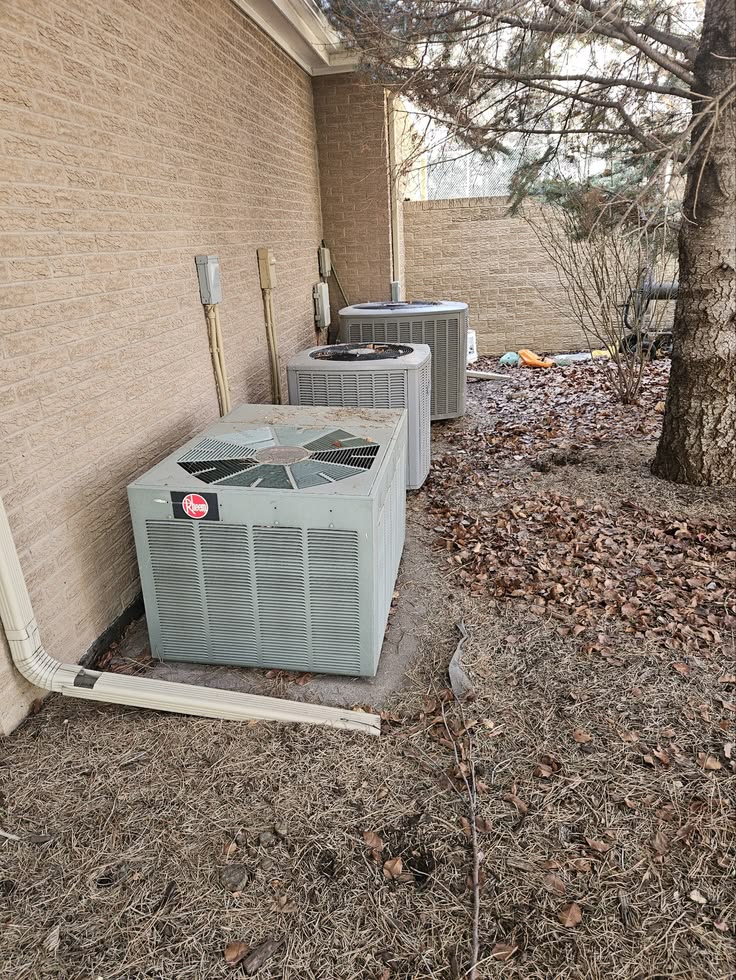
Check the outdoor disconnect. A metal box mounted near your outdoor condenser contains a pull-out disconnect block or switch. Verify it is fully seated and in the "on" position. This is occasionally knocked loose during yard work or landscaping.
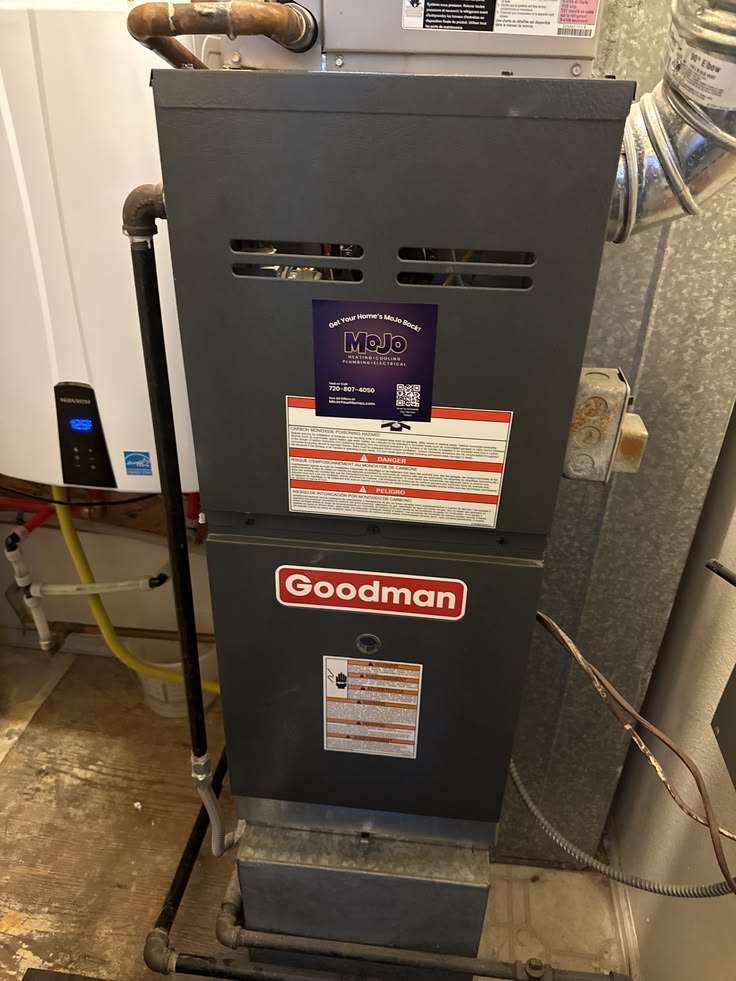
Find the indoor air handler power switch. Like a furnace, the indoor air handler has a dedicated power switch that resembles a standard light switch, usually mounted on or near the unit itself. Make sure it hasn't been accidentally switched off—this happens more often than you'd think during storage cleanouts or basement projects.
Wait 30 full minutes before expecting a restart. Modern AC systems have built-in time-delay protections that prevent the compressor from restarting immediately after a shutdown. This protects the compressor from damaging pressure equalization. If your system shut off on its own, the 30-minute wait is not optional.
Quick self-check: After completing all five steps and waiting 30 minutes, does the system start and run but still not cool adequately? That points to one of the six causes below.
Common Causes of AC Failure in Denver Homes
If the reset sequence didn't resolve the problem, the cause is almost certainly one of the following.
[Image of central air conditioning system components diagram]
Cause | Common Symptoms | Fix Type |
|---|---|---|
Tripped pressure switch | System shuts off in peak heat; outdoor unit coated in debris | DIY Possible |
Frozen evaporator coil | Ice on refrigerant lines; weak airflow; water dripping | DIY First Step |
Failed capacitor | Outdoor unit hums but doesn't start; fan sluggish | Professional Only |
Clogged condensate drain | System shuts off; standing water in drain pan | DIY Possible |
Low or lost refrigerant | Cool but not cold air; coil icing over; hissing | Professional Only |
Dirty condenser coil | System shuts off during peak heat; reduced efficiency | DIY Possible |
1. Tripped High-Pressure or Low-Pressure Safety Switch
Denver regularly sees days above 95°F, and high outdoor temperatures cause head pressure to spike—especially when the condenser coil is packed with cottonwood seeds. If your outdoor unit is visibly coated in debris, turn off the system, cut power at the outdoor disconnect, and gently rinse the coil with a garden hose from top to bottom at a downward angle.
Pro Tip: Rinse only—never use a pressure washer on condenser fins. High-pressure water bends the aluminum fins and permanently reduces airflow efficiency.
2. Frozen Evaporator Coil
A frozen indoor coil is one of the most common Denver AC complaints. If you suspect a frozen coil: switch the system to "fan only" mode and allow it to thaw for two to four hours. Replace the air filter immediately and verify all return vents are open. If the coil freezes again within a day, the underlying cause is likely low refrigerant.
3. Failed Capacitor
The capacitor provides the electrical surge that starts both the compressor and fan motors. Do not attempt to test or replace a capacitor yourself. Capacitors store lethal electrical charge even after the power is cut. This is a professional repair, but typically one of the quickest fixes we perform.
4. Clogged Condensate Drain Line
When the line clogs with algae or debris, many systems trigger a float switch that shuts cooling off entirely to prevent water damage. Check for standing water in the drain pan beneath the indoor unit. If water is present, the drain line is clogged.
5. Low or Lost Refrigerant
Refrigerant is not consumed during normal operation—if levels are low, there is a leak. Locating the leak, repairing it, and recharging the system requires a licensed technician with EPA Section 608 certification. Denver Note: R-410A is currently being phased out; ask your technician to evaluate if repair or replacement is more cost-effective for aging units.
6. Dirty Condenser Coils
The outdoor condenser coil releases heat from your home. Denver's consistent wind and dust mean condenser coils here foul faster than in lower-altitude cities. Beyond cottonwood season, keeping these clear is vital for efficiency.
When to Stop Troubleshooting and Call Immediately
If you observe any of the following, stop, shut the system off, and call a professional immediately:
The circuit breaker trips again immediately after a single reset.
Grinding, banging, clanking, or loud rattling from the outdoor unit.
A burning electrical smell from any part of the system.
Refrigerant lines are coated in ice while the system is running.
The system runs for more than two hours without reducing indoor temperature at all.
Visible water damage—ceiling staining or pooling water near the air handler.
Managing Heat While You Wait for Service
Block Solar Gain Early: Close blinds on south and west-facing windows by 10 a.m.
Use Ceiling Fans Correctly: Set fans to counterclockwise rotation to create a wind chill effect.
Use Your Basement: Denver basements stay 10–15°F cooler than upper floors.
Eliminate Indoor Heat: Avoid using the oven, dishwasher, and clothes dryer during peak heat.
Pro Tip: After sunset, open windows on opposite sides of the home to flush heat. Denver’s large overnight temperature drop makes nighttime ventilation unusually effective.
How to Prevent This Situation Next Summer
The single most reliable way to avoid a summer emergency is a February or early spring AC tune-up. Catching issues early prevents the "Emergency July Call" which can cost between $500–$1,200 compared to a $120–$180 preventive visit.
Beyond the annual tune-up, replace your air filter every 30–60 days and keep vegetation at least two feet away from your outdoor unit.
Run the Sequence First — Then Call If You Need To
At MoJo Home Services, we're straightforward about what homeowners can handle. If you've worked through the sequence and still have a problem, schedule a fast, honest AC diagnosis. Our team is ready to help Denver neighbors stay cool all summer long.

The Bottom Line: February is Your Window
You have about 4-6 weeks before the spring rush hits. During this window, you have:
Appointment availability (scheduling within days, not weeks)
Unhurried service (technicians have time for thorough work)
Standard pricing (no emergency premiums)
Time to plan repairs (not panicking during a heat wave)
Peace of mind (knowing you're ready for summer)
After mid-March, this window closes. Appointments get scarce. Technicians get rushed. You're gambling that your AC will make it through summer without the preventive care that prevents 85% of breakdowns.
At MoJo Your Homes, we've been serving Denver Metro homeowners for 16+ years. We've seen this pattern hundreds of times. The homeowners who schedule February maintenance sail through summer comfortably. The homeowners who skip it end up on our emergency call list in July.
Which group do you want to be in?
Ready to prepare your AC for Denver's 2026 summer?
Or call us at (720) 807-4050 to book your February pre-season service.
Serving Denver, Wheat Ridge, Aurora, Lakewood, Arvada, and all Denver Metro communities from our Wheat Ridge location at 4000 Newman Street.
Frequently Asked Questions
What is a capacitor and why does it fail more often than any other AC component?
The capacitor is a small cylindrical component that stores and releases electrical energy to start and run the compressor and fan motors. Starting a motor requires a powerful initial surge of electricity — far more than the motor needs once running — and the capacitor provides that burst on demand. Capacitors degrade gradually through thousands of start-stop cycles and exposure to heat, which is why they fail most often on the first hot day of summer when the system starts cycling hard after months of dormancy. The insidious part is that a failing capacitor doesn't announce itself — it simply weakens until one day the motor can't start. Testing capacitance during February maintenance takes two minutes with a multimeter and costs nothing. Replacing a weak capacitor costs $150 to $300. Discovering the failure mid-summer means an emergency call, a multi-day wait, and a bill of $400 or more for the same part.
What is a temperature split test and what does it reveal about my AC's performance?
A temperature split test measures the difference between the air temperature entering your return vents and the air temperature leaving your supply vents after passing over the evaporator coil. A properly functioning AC system should produce a split of 14 to 20 degrees Fahrenheit — meaning if 75°F air enters the return, 55 to 61°F air should exit the supply. A split below 14 degrees indicates reduced cooling capacity, which can point to low refrigerant charge, dirty evaporator coils, or inadequate airflow from a restricted filter or failing blower. A split above 20 degrees can indicate the system is starved for airflow, causing the coil to over-cool the limited air passing through it. This simple measurement catches multiple potential problems simultaneously and provides a clear efficiency baseline to compare against in future maintenance visits.
What happens inside a condensate drain line that causes it to clog and what damage can result?
Your AC's evaporator coil removes humidity from indoor air as a byproduct of cooling — this moisture condenses on the cold coil and drips into a drain pan below, then flows out through the condensate drain line. The warm, dark, moist environment inside that drain line is ideal for algae, mold, and biological growth that gradually restricts and eventually blocks the line. When the drain line clogs completely, the drain pan overflows. Depending on where your indoor unit is located, this can mean water damage to ceilings, walls, flooring, or finished basement spaces — or it can trigger a float switch that shuts the entire system down to prevent further damage. In Denver's dry climate, condensate lines are sometimes neglected because homeowners assume dryness prevents this problem. It doesn't — the moisture comes from the cooling process itself, not outdoor humidity. Annual flushing with algaecide during February maintenance prevents a problem that causes genuine property damage when ignored.
Why do rubber seals and O-rings in AC systems deteriorate faster in Denver than in humid climates?
Rubber and elastomer compounds require trace amounts of ambient moisture to maintain their flexibility and sealing integrity over time. In humid climates, this moisture is always present. In Denver, where winter indoor humidity frequently drops to 10 to 15%, rubber components in dormant HVAC equipment are essentially curing in an extremely dry environment for five or more months each year. The result is seals that become brittle, lose elasticity, and develop micro-cracks that may not be visible to the naked eye but can leak refrigerant under the pressure of normal operation. This is why Denver AC systems can develop refrigerant leaks at connection points and service valves that would hold indefinitely in a more humid climate. February inspection catches deteriorating seals while they can be replaced inexpensively — a $15 O-ring replaced proactively versus a refrigerant leak repair that can cost $600 or more once the seal fails under operating pressure.
What does "refrigerant level" actually mean and why can't I check it myself?
Refrigerant level in an AC system is verified through pressure measurements — not by looking at a gauge or sight glass the way you'd check engine oil. A technician connects calibrated manifold gauges to the high-pressure and low-pressure service ports of the refrigerant circuit and reads the pressures against manufacturer specifications, adjusted for outdoor temperature and altitude. Interpreting those readings correctly requires understanding the refrigerant type, the system's operating conditions, and Denver's altitude-specific pressure-temperature relationships. Beyond the technical complexity, refrigerant work is federally regulated — EPA Section 608 requires certification to handle refrigerants, and purchasing refrigerant without certification is illegal. DIY refrigerant checks with consumer gauge sets also risk introducing air or moisture into the refrigerant circuit, which can cause far more expensive damage than the problem you were trying to diagnose.
How does neglecting AC maintenance for multiple years specifically lead to compressor failure?
The compressor is the most expensive single component in your AC system — replacement typically costs $1,500 to $2,500 — and dirty condenser coils are its most common killer. The condenser coil's job is to release the heat extracted from your home into the outdoor air. When those coils are clogged with cottonwood seeds, dirt, and debris, the heat can't escape efficiently, causing refrigerant to return to the compressor hotter than it should. Compressors are precision mechanical devices with very tight tolerances, and they're designed to compress refrigerant within a specific temperature range. Sustained operation with overheated refrigerant causes the compressor's internal lubricants to break down, its tolerances to exceed design limits, and its windings to experience thermal stress. This degradation is cumulative and irreversible — each cooling season on dirty coils chips away at compressor life until the component fails, usually on the hottest day of the year when it's working hardest.
What are bent condenser fins and why does straightening them during maintenance matter?
The condenser coil on your outdoor unit is covered with thousands of thin aluminum fins arranged in closely spaced rows. These fins dramatically increase the coil's surface area to maximize heat transfer between the refrigerant inside and the outdoor air passing through. When fins get bent — from hail, debris impact, careless handling, or pressure washing — the gaps between them close, restricting airflow through the coil. Even partially blocked fins can meaningfully reduce your system's cooling capacity and force the compressor to work harder. A fin comb is a simple tool with multiple comb-like attachments that technicians use to straighten bent fins back to their designed spacing. It's a minor task that takes minutes during a maintenance visit but restores airflow that restricted fins have been stealing from your system's efficiency — often without the homeowner ever knowing the capacity loss was occurring.
If Denver often reaches 60 to 70 degrees in February, is there any risk to briefly running my AC just to check if it works before scheduling maintenance?
There's one meaningful risk worth knowing: most manufacturers and HVAC professionals recommend against operating an AC system when outdoor temperatures are below 60°F, because low ambient temperatures affect refrigerant pressure in ways that can cause the evaporator coil to freeze and potentially damage the compressor. Denver's February weather is variable enough that a day that starts at 65°F can drop significantly by afternoon. Beyond the temperature concern, a brief test-run only tells you the system turns on — it doesn't tell you whether refrigerant is low, a capacitor is weakening, coils are dirty, or a drain line is partially clogged. All of those conditions can allow the system to start and run for a few minutes before the underlying problem manifests under sustained load during a July heat wave. Confirming the system starts is reassuring but not a substitute for the diagnostic measurements and component checks that a professional maintenance visit provides.
Related Resources