Welcome, Neighbors of
Boulder
Furnace Repair in Boulder, CO
Boulder sits right up against the Flatirons, and homes here range from drafty old bungalows near the hill to tightly sealed newer builds that heat in a completely different way. Both keep us busy once the canyon wind turns cold. Licensed, insured and family run since 2009.
5-star rated · Local & Family-owned since 2009
Licensed & Insured
Family Owned
NATE Certified
EPA Certified
BBB Accredited
Serving Denver Metro

See your neighbor deals
MoJo Home Services
Furnace Repair
Furnace Repair in Boulder, CO
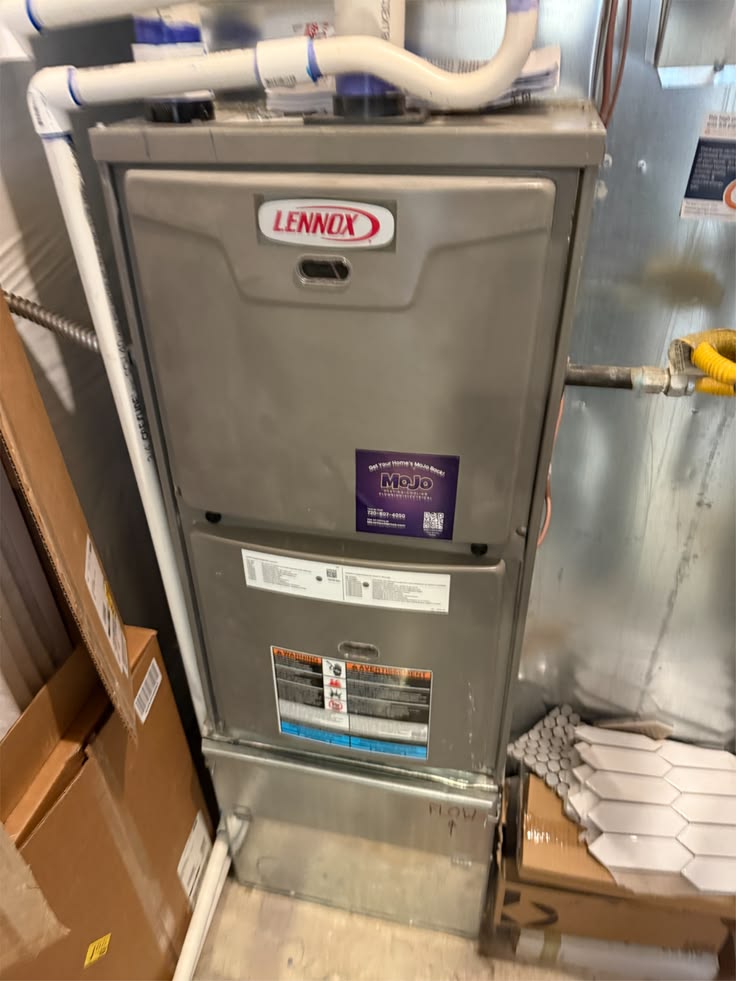
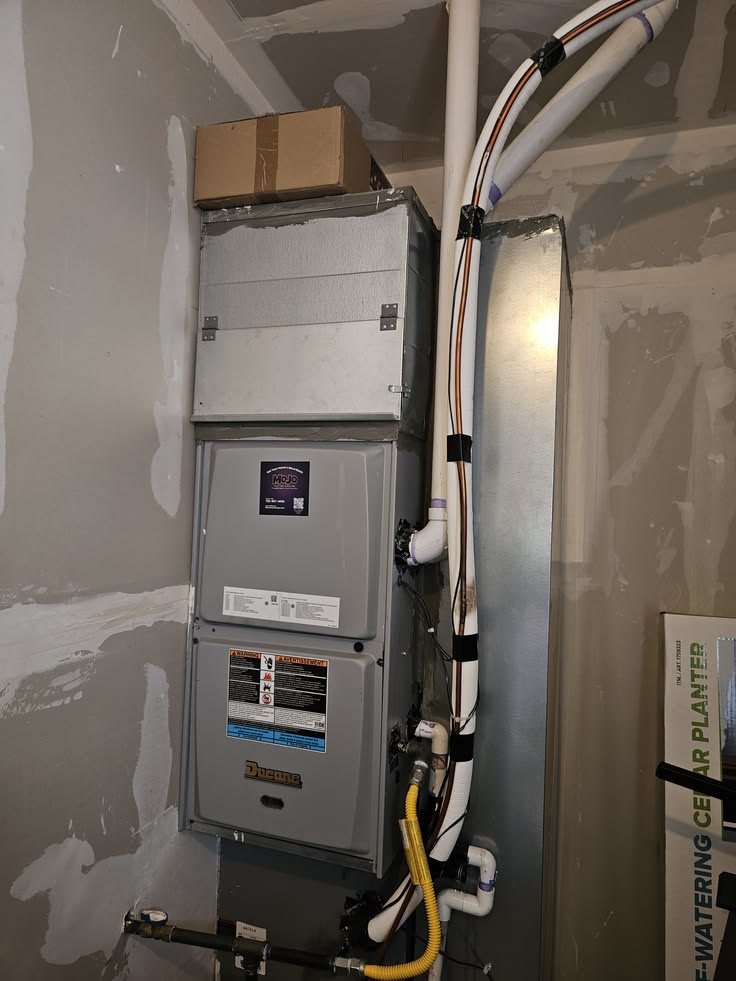
At 5,328 feet Boulder carries the smallest altitude derate of any city in this group: 13.3%, leaving a gas furnace 86.7% of its rated input. A 100,000 BTU/hr unit fires roughly 86,700 BTU/hr, and on a 95% AFUE condensing furnace about 82,400 BTU/hr of that reaches the house. Boulder runs a heavy share of high-efficiency equipment, and condensing furnaces fail in their own particular way: on the condensate side, not at the burner.
Why do condensing furnaces cause so much trouble in Boulder?
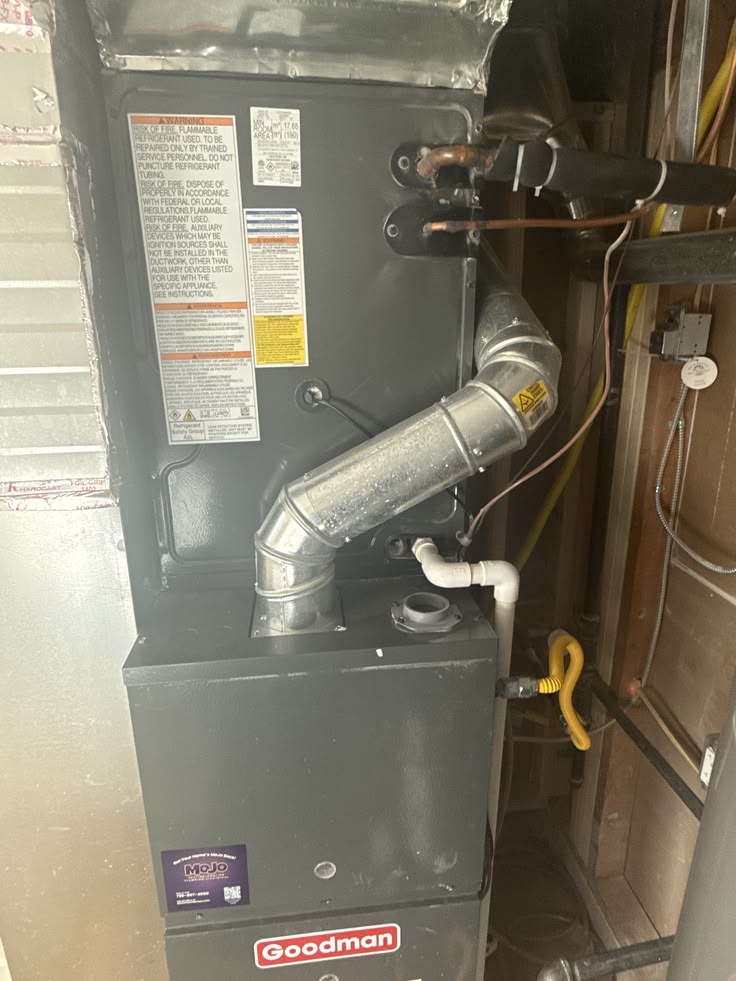
A 90%-plus furnace extracts so much heat from the flue gas that the water vapor in it condenses, producing a gallon or more per day of mildly acidic liquid that has to exit through a trap, a hose and a drain. Every one of those is a failure point. A plugged trap backs water into the secondary heat exchanger, the pressure switch senses the blocked passage, and the appliance locks out looking exactly like a draft fault. In Boulder County that lockout tends to arrive on the coldest morning of the year, because that is when the furnace has run long enough to make the most condensate and when a badly sloped termination is most likely already iced.
What freezes, and where?
Three places. The outdoor end of a sidewall vent, where escaping vapor builds a rime collar that narrows the pipe. A condensate line routed through an unconditioned crawl space or garage, where the trap contents freeze solid overnight. And the intake terminal, which ices from the exhaust beside it when the two are spaced wrongly. Boulder sits against the base of the foothills, so wind loading on the west face of a building is a genuine variable in where that vapor plume goes, which is why identical furnace models behave differently on two houses a block apart.
How much does 13.3% matter on a 95% furnace?
Exactly as much as it does on an 80% furnace, which surprises people. Efficiency and derate are separate quantities: AFUE describes what fraction of the fuel becomes useful heat, while the 13.3% derate describes how much fuel the burner can consume at 5,328 feet in the first place. High efficiency exempts nothing from altitude. Boulder is 3,328 feet above the 2,000-foot line where the NFPA 54 derate starts and 828 feet above the 4,500-foot line where most manufacturers require a documented conversion, the smallest such margin among the cities in this group but still on the wrong side of it.
What does a proper condensate diagnosis include?
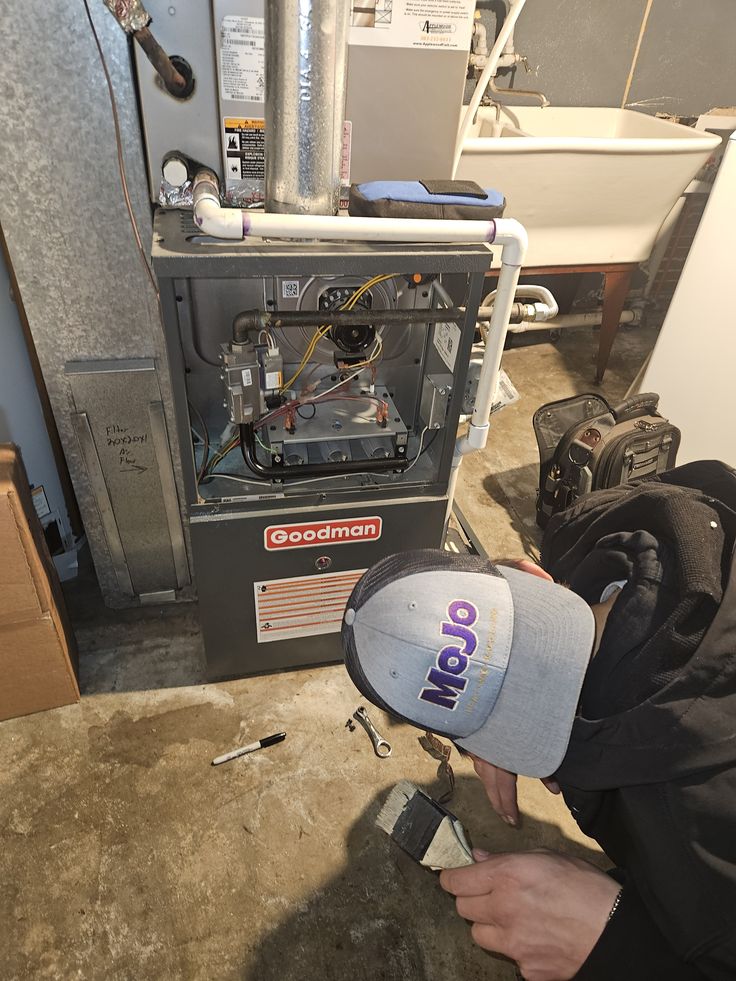
Pulling and inspecting the trap rather than blowing it out blind. Checking the drain line for slope, sags, and a correct air gap, and checking whether a condensate pump has been asked to lift further than its rating. Verifying the secondary heat exchanger is draining rather than holding water. Reading the pressure switch with a manometer against its stamped setpoint while the inducer runs, so you know whether the switch is faulty or simply reporting a blocked passage truthfully. Looking for white residue that says condensate has been leaking onto the cabinet floor, and confirming whether a neutralizer is fitted where the drain terminates.
Which failures are specific to Boulder's housing?
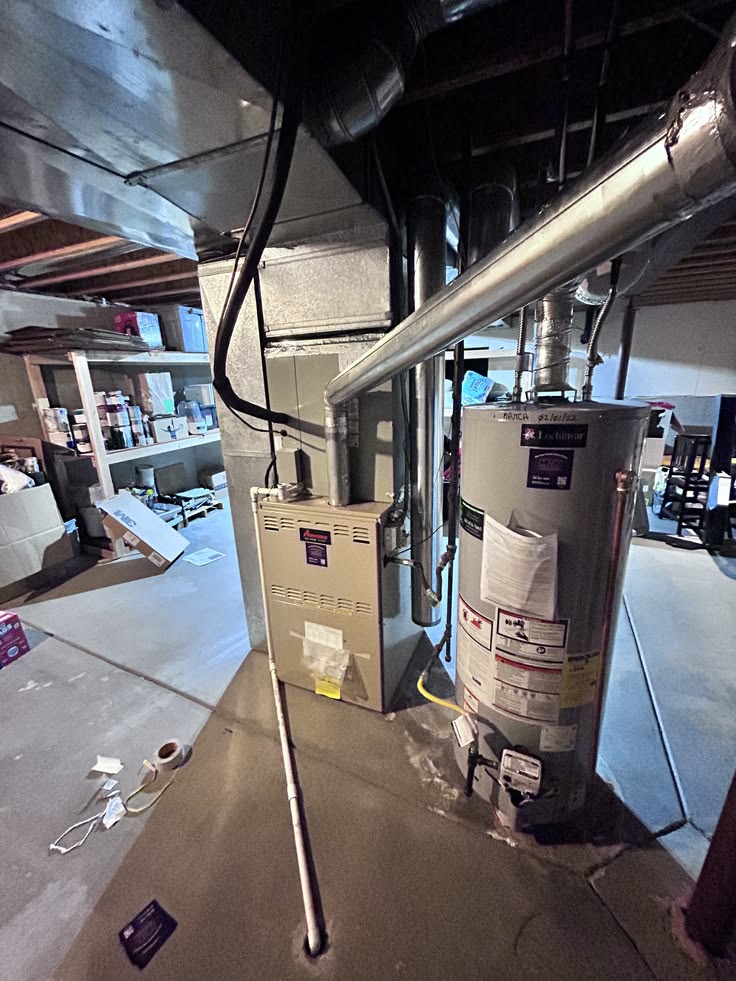
In a city of 106,803 with a wide range of building ages, the recurring pattern is high-efficiency equipment retrofitted into houses built for natural-draft appliances. The furnace is modern; the ductwork, the chase it vents through and the drain it uses are not. That produces long vent runs with marginal slope, condensate routed across a cold basement to a floor drain, and returns that were never enlarged for the airflow a condensing furnace expects. The equipment then gets blamed for the installation.
Repair or replace a Boulder condensing furnace?
Traps, hoses, pumps, pressure switches, igniters and inducers are all straightforward repairs, and a condensing furnace with sound primary and secondary exchangers is worth keeping. The real gate is the secondary exchanger: once it has corroded through, the appliance is finished, and any replacement should be specified against a heat loss calculation with the 13.3% derate applied to the input. What drives what that work costs is access to the equipment, whether the part is still supported by the manufacturer, and how much vent and drain has to be rebuilt for the repair to last.
Where else in and around Boulder County does MoJo work?
Lafayette at 5,210 feet and a 12.8% derate, Erie at 5,026 feet and 12.1%, and Broomfield at 5,394 feet. Boulder sits above Lafayette and Erie and below Broomfield, so equipment configured correctly for one of them is not automatically correct for the next. Licensed, insured, family-owned since 2009. Call 720-807-4050.
Where else we work
The same trucks run furnace repair in Lafayette, furnace repair in Broomfield, furnace repair in Erie on the same rotation.
For the other half of the system, AC repair in Boulder.
Wider view: furnace repair, or everything in Boulder.
Boulder
Home Of The $39 Diagnosis
Book your diagnostic today!
The $39 diagnostic service is a professional troubleshooting visit performed by a certified MoJo technician to identify the root cause of an HVAC issue.
Frequently Asked Questions
What is the gas furnace derate in Boulder, CO?
13.3%. Boulder's 5,328 feet is 3,328 feet above the line where the NFPA 54 convention applies 4% per 1,000 feet, so a furnace keeps 86.7% of its rated input. A 100,000 BTU/hr unit fires about 86,700 BTU/hr and a 95% AFUE condensing model delivers roughly 82,400 BTU/hr. It is the smallest derate we work with, and it still governs sizing.
Why does my high-efficiency Boulder furnace lock out on the coldest mornings?
Usually condensate, not draft. Long run times produce the most condensate exactly when a sidewall termination or a line crossing an unconditioned space is most likely frozen. Water then backs up into the collector box, the pressure switch reports a blocked passage, and the furnace locks out. The trap, the drain slope and the terminations get inspected before anyone orders a switch or an inducer.
Does a 95% AFUE furnace escape the altitude derate in Boulder?
No. AFUE measures how much of the burned fuel becomes usable heat; the 13.3% derate measures how much fuel the burner can consume at 5,328 feet. They are independent. Boulder sits 828 feet above the 4,500-foot line most manufacturers certify to, so a condensing furnace here still needs its altitude instructions applied and its manifold pressure verified.
How often should condensate parts be checked on a Boulder furnace?
Once before each heating season, at minimum. The trap, the hoses, the drain slope and any condensate pump are consumable items handling mildly acidic water, and in Boulder County they also face freezing risk wherever the line leaves conditioned space. A trap inspection takes minutes and prevents the lockout that otherwise arrives on the coldest morning of the winter.
When is a Boulder condensing furnace no longer worth repairing?
When the secondary heat exchanger has corroded through. Traps, pumps, pressure switches, igniters and inducers are all sensible repairs on an otherwise sound appliance. Once the secondary is gone the furnace is finished, and the replacement should be selected from a heat loss calculation with Boulder's 13.3% derate applied to the input rather than from the outgoing unit's nameplate.
MoJo Home Services
A note for our neighbors
A fair number of our Boulder customers moved here from somewhere else and had no idea who to call, so they asked a neighbor and ended up with us. That secondhand trust is the only reason a family owned crew gets to keep doing furnace repair year after year. Thank you for passing it on.

Furnace Repair
In
Boulder
Share Your Experience
Thank you for supporting our local family business. If we did right by you, we'd love to hear about it on any site you use.
- Write a Google reviewQuick & easy
- Find us on YelpRead what neighbors said
- Review us on FacebookShare with friends
- Recommend us on NextdoorTell your neighbors


Your referrals and reviews not only mean so much to us, they also help the community know who to trust to Get their Home's MoJo Back!
Honest feedback is what we're after, good or bad. If something fell short, call us at the office first and we'll make it right.