Welcome, Neighbors of
Lafayette
Furnace Repair in Lafayette, CO
Lafayette keeps its old coal town center with newer, tightly built neighborhoods spreading around it, and the modern high efficiency furnaces going into those homes fail in ways the old ones never did. We are comfortable with both. Family owned, licensed and insured since 2009.
5-star rated · Local & Family-owned since 2009
Licensed & Insured
Family Owned
NATE Certified
EPA Certified
BBB Accredited
Serving Denver Metro

See your neighbor deals
MoJo Home Services
Furnace Repair
Furnace Repair in Lafayette, CO
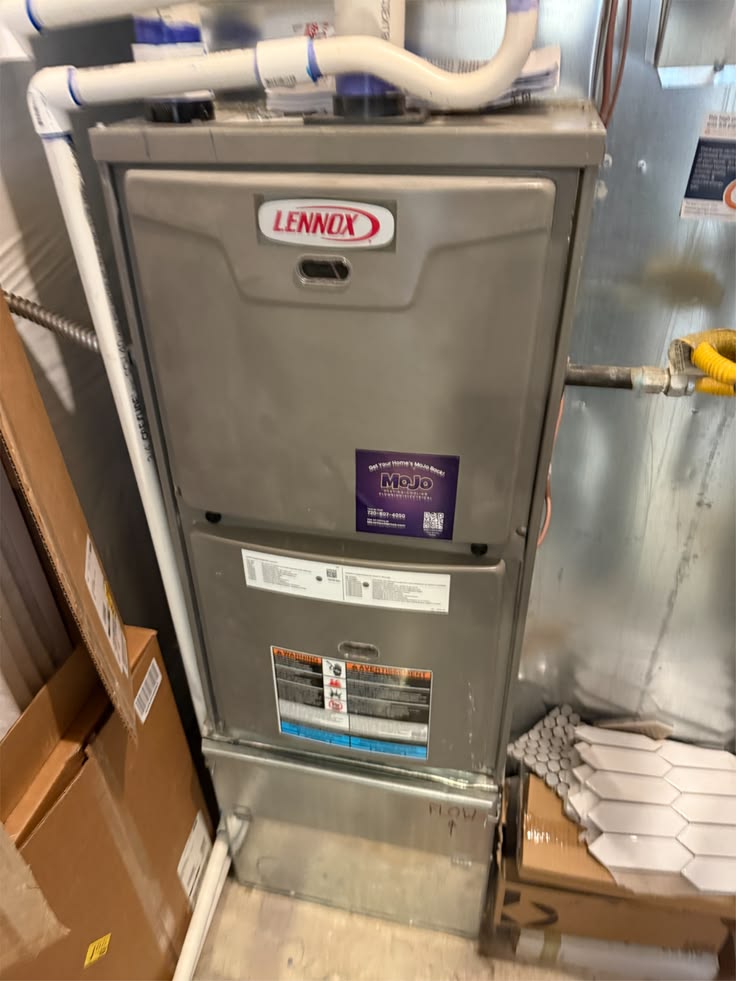
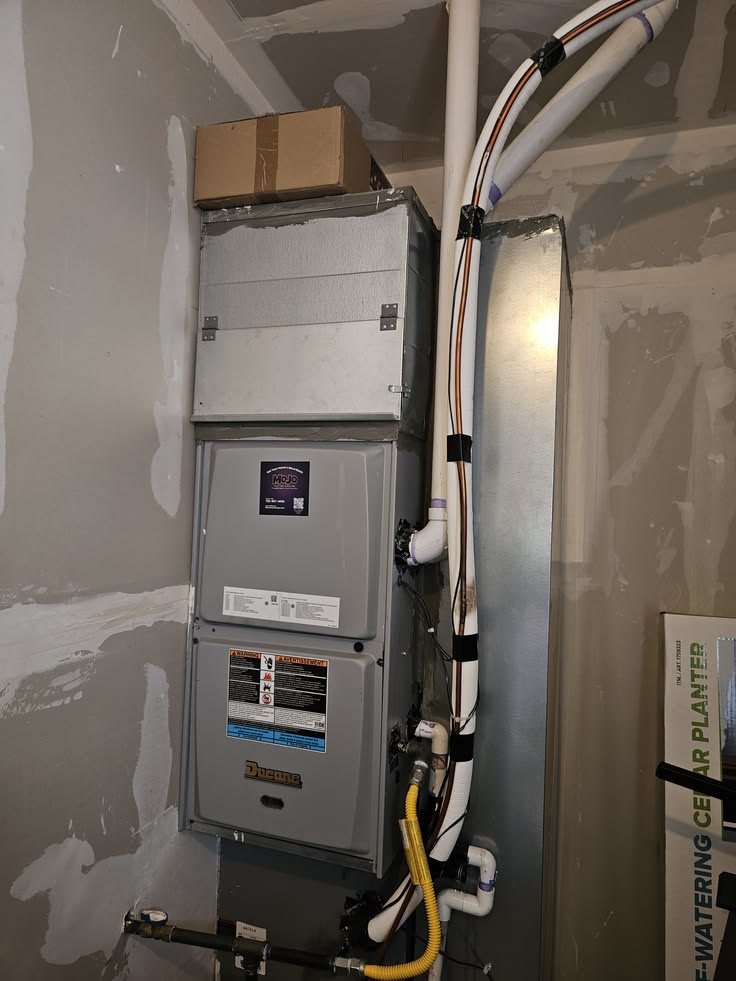
Lafayette's 5,210 feet puts a 12.8% derate on gas furnace input: 100,000 BTU/hr on the plate, 87,200 BTU/hr in reality. In this part of Boulder County a large share of the furnaces we open are 90%-plus condensing units, and that changes the repair list. Under a 12.8% derate a condensing furnace fails in ways an atmospheric 80% unit never does - around condensate handling, the secondary heat exchanger and the sealed combustion intake - and diagnosing it with 80% furnace habits wastes a visit.
What goes wrong with condensing furnaces at 5,210 feet?
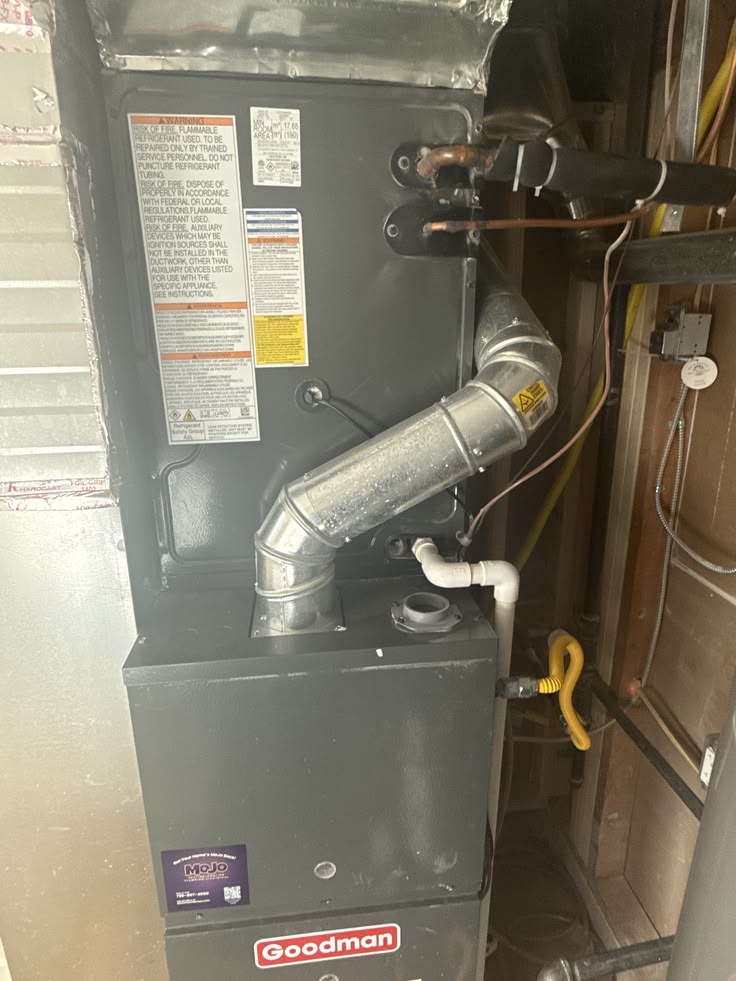
A 90% furnace deliberately cools flue gas below its dew point, so it produces acidic liquid condensate every cycle. When the trap fouls or the drain runs uphill, water backs into the collector box and the condensate-sensing pressure switch opens - the furnace locks out and the homeowner assumes the board failed. Second on the list is a PVC vent termination that ices at the elbow during a cold snap, blocking exhaust and stopping draft proof. Third is corrosion in the secondary heat exchanger, which is not a repair. All three present as "no heat," and each has a different fix.
How much usable heat does a 90% furnace produce in Lafayette?
Apply the 12.8% first, efficiency second. An 80,000 BTU/hr input condensing furnace has 69,760 BTU/hr of real input at 5,210 feet, which at 90% AFUE delivers about 62,800 BTU/hr into the ducts. A 100,000 BTU/hr version lands near 78,500 BTU/hr. High efficiency does not cancel the altitude penalty - the two stack, and a proposal quoting catalog output for a Lafayette home is overstating capacity by roughly an eighth.
Does sealed combustion solve the altitude problem?
No. A two-pipe sealed combustion furnace draws its own outdoor air, which stabilizes draft and keeps house air out of the burner box, but it does not add oxygen to that air. At 5,210 feet the intake pipe delivers exactly the same thin air, so the 12.8% derate and the orifice or manifold pressure conversion still apply as they would on an open-combustion unit. What sealed combustion does buy you in Lafayette is fewer draft complaints in tight construction and less dependence on mechanical room conditions.
Why does airflow deserve as much attention as the burner?
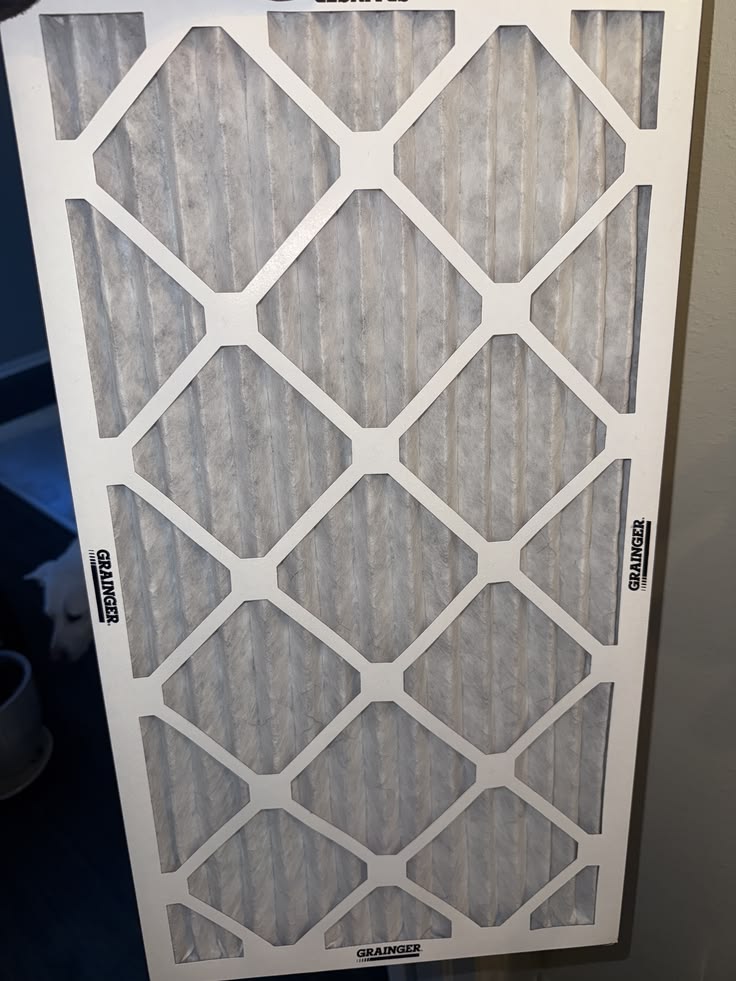
Because the derate and the airflow interact. The blower moves the same cubic feet per minute at 5,210 feet, but each cubic foot carries less mass, so it removes less heat per unit of volume and temperature rise trends toward the top of the nameplate range. Furnaces are typically rated at 0.5 inches w.c. of external static pressure, and real systems frequently measure well above that once filters, coils and undersized returns are counted. High static plus low air density is what produces limit trips on a furnace with nothing wrong on the gas side at all.
In what order should a Lafayette furnace be diagnosed?
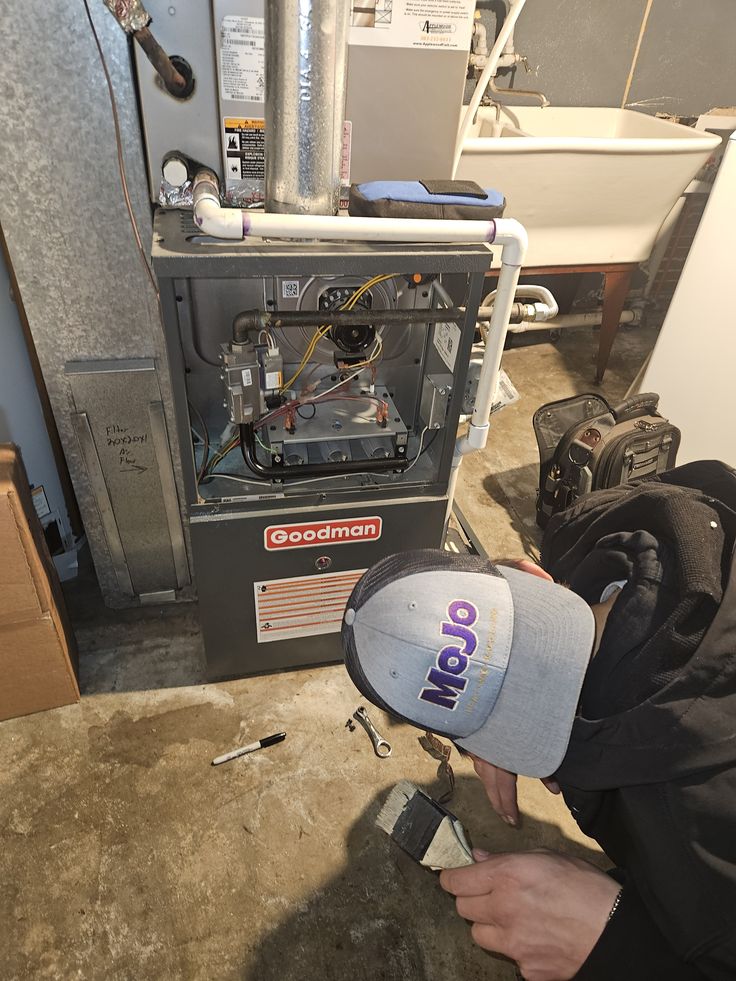
Watch the sequence of operation before touching a part: call for heat, inducer start, pressure switch proof, igniter warm-up, valve open, flame proof, blower on. Note where it stops. Then read flame signal in microamps, inlet and manifold gas pressure, condensate drain flow, temperature rise, and total external static. Finish with combustion analysis, comparing air-free CO to the 400 ppm ANSI limit and confirming the orifice setup is right for 5,210 feet. Most misdiagnoses come from replacing the component that reported the fault instead of the condition that caused it.
Which parts fail most often on Lafayette furnaces?
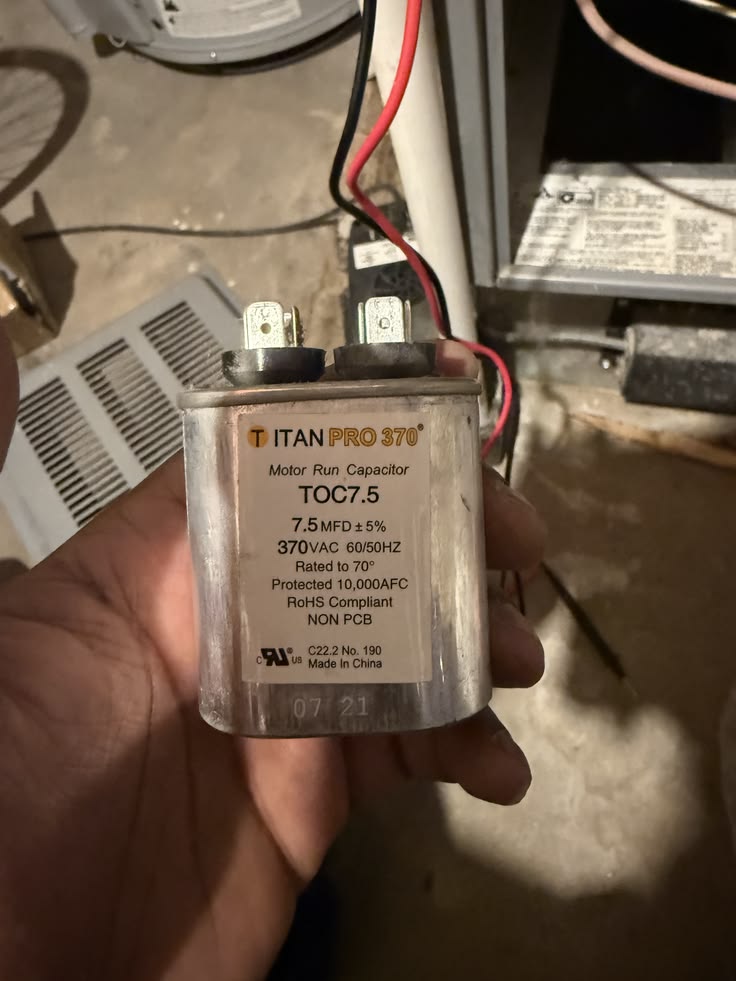
On condensing equipment the recurring list runs: condensate traps and drain lines, the pressure switches that respond to those blockages, hot surface igniters, flame sensors reading below the 2 to 6 microamp band a healthy rod produces, inducer motors and their gaskets, and control boards. On the older 80% units still in service around this 27,729-person city, add roll-out switches and heavy burner fouling. The finding that ends a furnace instead of repairing it is a compromised heat exchanger, primary or secondary. Because the 12.8% derate leaves a Lafayette furnace with less margin than its nameplate implies, we verify the altitude setup on every no-heat call even when the failed component is obvious.
How is furnace work permitted in Lafayette?
Gas appliance permitting here falls under the Boulder County jurisdiction. Replacing a furnace or a heat exchanger requires a permit; component repairs generally do not. On any Lafayette replacement we document the heat loss calculation alongside the 12.8%-derated input, so the sizing can be checked rather than taken on trust.
Which nearby communities do you cover?
The southeast corner of Boulder County and its edges. Erie sits 184 feet lower at 5,026 feet with a 12.1% derate, while Broomfield and Boulder shift the number again. Same brand of furnace, different correct setup. For heating diagnosis in Lafayette, call MoJo Home Services at 720-807-4050.
Where else we work
Nearby and on the same schedule: furnace repair in Erie, furnace repair in Broomfield, furnace repair in Boulder.
For the other half of the system, AC repair in Lafayette.
Wider view: furnace repair, or everything in Lafayette.

Lafayette
Home Of The $39 Diagnosis
Book your diagnostic today!
The $39 diagnostic service is a professional troubleshooting visit performed by a certified MoJo technician to identify the root cause of an HVAC issue.
Frequently Asked Questions
What is the gas furnace derate in Lafayette, CO?
12.8%. Lafayette sits at 5,210 feet, and gas appliance input falls 4% for each 1,000 feet above 2,000 feet. A furnace rated 100,000 BTU/hr therefore supplies 87,200 BTU/hr here, and an 80,000 BTU/hr unit supplies 69,760. That reduction has to be applied before efficiency, not after, when matching equipment to a Lafayette home's heat loss.
Why does my high-efficiency furnace lock out on cold mornings in Lafayette?
On 90%-plus furnaces the usual cause is condensate or vent blockage rather than the gas train. A fouled trap or improperly sloped drain backs water into the collector box and opens the pressure switch, and a PVC termination can ice at the elbow during a cold snap. Both stop draft proof before ignition, and both are far more common on condensing equipment than on older 80% units.
Does a 95% furnace still lose capacity to altitude in Lafayette?
Yes, and the losses compound. Lafayette's 12.8% derate applies to input, and efficiency is then applied to what remains. An 80,000 BTU/hr input furnace has 69,760 BTU/hr available at 5,210 feet, so even at 95% AFUE the usable output is about 66,300 BTU/hr, not 76,000. High efficiency reduces waste; it does not restore the oxygen missing from the combustion air.
Does sealed combustion remove the need for a high-altitude conversion?
No. A two-pipe furnace pulls combustion air from outdoors, which stabilizes draft, but that outdoor air at 5,210 feet is exactly as thin as the indoor air. The 12.8% derate and the orifice or manifold pressure conversion still apply. Sealed combustion mainly helps with tight construction and mechanical room air supply, not with the altitude penalty itself.
Do furnace repairs in Lafayette require a permit?
Component repairs such as an igniter, flame sensor, inducer or pressure switch generally do not. Furnace replacement and heat exchanger work do, permitted through the Boulder County jurisdiction. On replacements we document the heat loss calculation next to the 12.8%-derated input for the 5,210-foot elevation so the sizing is verifiable. Call 720-807-4050.
MoJo Home Services
A note for our neighbors
In Lafayette we often hear that our name came up in a community group before anyone ever rang us, which still surprises us. Thank you for going on a neighbor's say so, and for letting a licensed family team handle your furnace repair. Being recommended without ever asking is why we are still doing this.

Furnace Repair
In
Lafayette
Share Your Experience
Thank you for supporting our local family business. If we did right by you, we'd love to hear about it on any site you use.
- Write a Google reviewQuick & easy
- Find us on YelpRead what neighbors said
- Review us on FacebookShare with friends
- Recommend us on NextdoorTell your neighbors


Your referrals and reviews not only mean so much to us, they also help the community know who to trust to Get their Home's MoJo Back!
Honest feedback is what we're after, good or bad. If something fell short, call us at the office first and we'll make it right.