Welcome, Neighbors of
Lone Tree
AC Repair in Lone Tree, CO
Lone Tree sits high and open at the south end of the metro, where there is little shade and the sun stays on a house all afternoon. Systems here run long and hard on the worst days. Family owned since 2009, licensed and insured, and close by when yours quits.
5-star rated · Local & Family-owned since 2009
Licensed & Insured
Family Owned
NATE Certified
EPA Certified
BBB Accredited
Serving Denver Metro

See your neighbor deals
MoJo Home Services
Out in your neighborhood · Denver Metro
AC Repair in Lone Tree, Colorado
At 5,948 feet, Lone Tree is the highest-elevation city on our service map — 52 feet short of the 6,000-foot line and about 670 feet above Denver. Every altitude correction that applies anywhere in this metro applies here at its largest value: a 15.8% gas derate and air roughly 16% thinner than at sea level. MoJo Home Services, licensed, insured and EPA-certified since 2009. Call 720-807-4050.
What does 5,948 feet do to an air conditioner's real capacity?
An outdoor unit rejects heat by pushing air across the condenser coil, and that is a mass-flow problem before it is anything else. Each cubic foot of Lone Tree air carries about 16% less mass than sea-level air, so the same fan at the same RPM removes measurably less heat per minute. A nominal three-ton condenser does not deliver three tons at this elevation. On the indoor side the effect mirrors it: a blower rated 1,200 CFM moves just over 1,000 CFM worth of sea-level mass across the evaporator.
Why do high-pressure lockouts happen more often in Lone Tree?
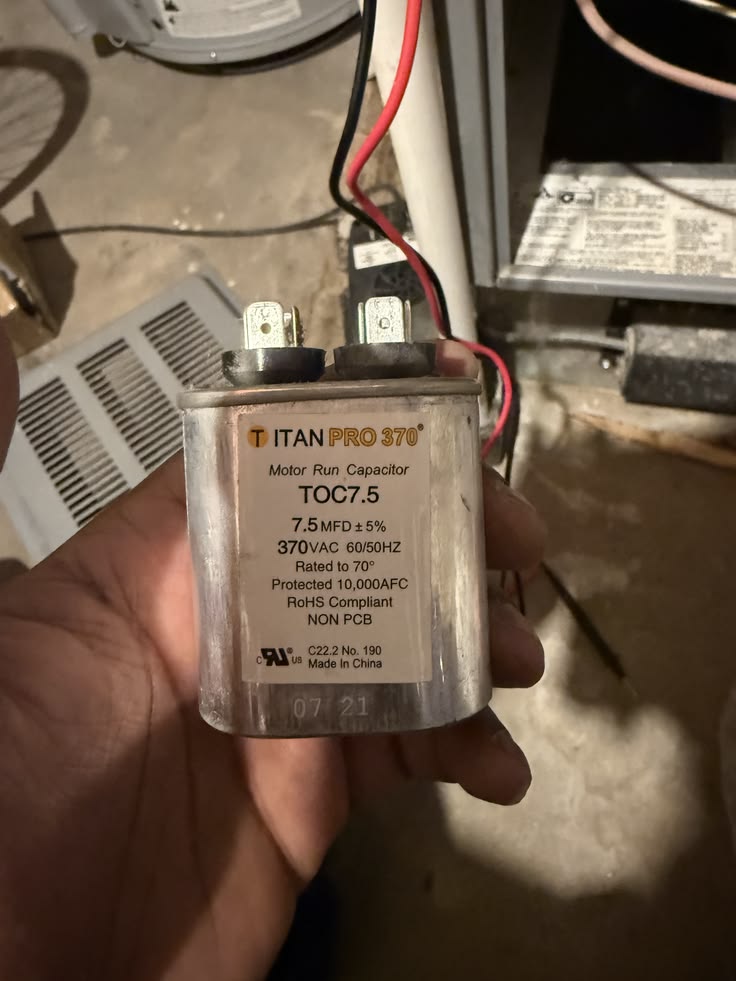
Because the system begins with less margin than it would anywhere lower. At 15.8% — the largest derate figure on this service map — and with the thinnest air of any city we cover, a Lone Tree condenser on a hot afternoon is already closer to its ceiling than identical equipment 500 feet down the hill. Add a coil coated with dust, a fan capacitor down 20% from its rating, or half a pound of overcharge, and head pressure crosses the cutout. Replacing the pressure switch fixes nothing. Finding what consumed the margin does.
How should refrigerant charge be set at Lone Tree's elevation?
Conservatively, and strictly by measurement. Overcharging is the failure mode to avoid here because it raises condensing pressure directly, and at 5,948 feet there is less headroom to absorb it than anywhere else we work. On a TXV system we charge to subcooling against the nameplate value; on a fixed-orifice system we work superheat, correcting the target for the low outdoor wet-bulb that Douglas County's dry air produces. Where the system has been opened, weighing the charge in after a full evacuation is the most defensible method available.
Does the 15.8% derate matter if the house only runs air conditioning?
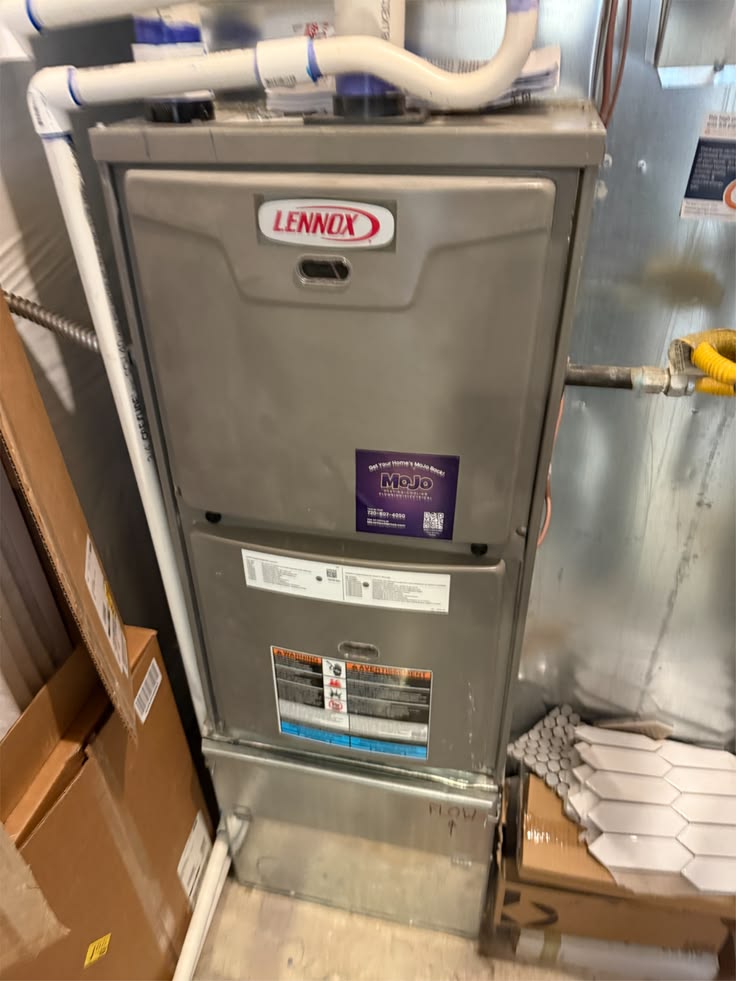
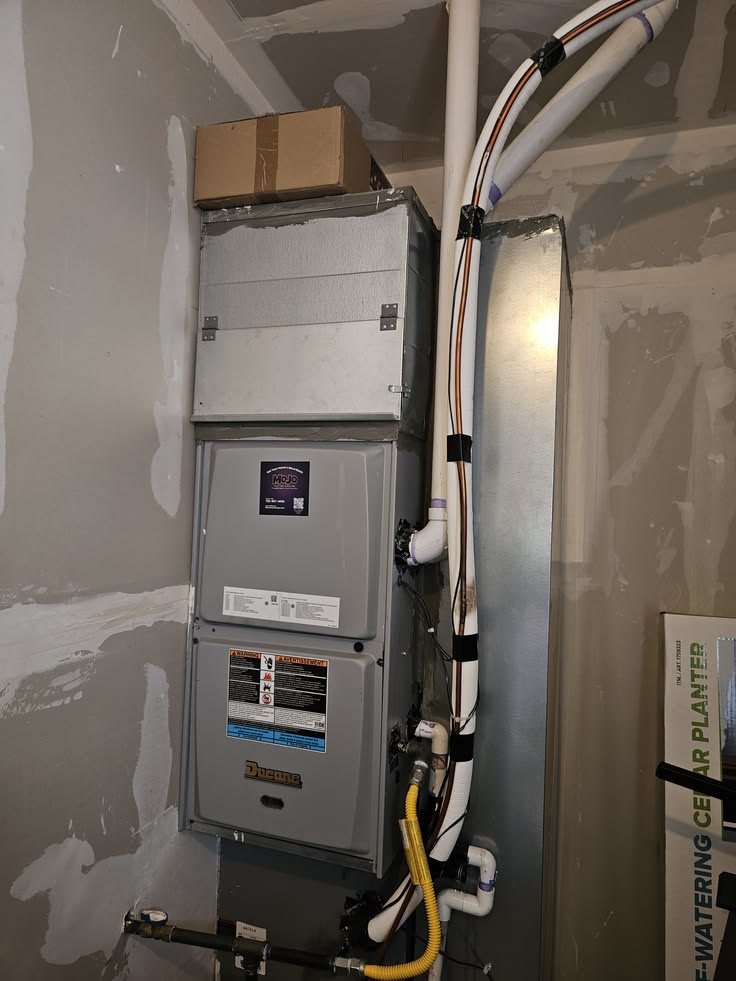
Indirectly, and it almost always does. In most Lone Tree homes the furnace is the air handler — its blower moves the cooling air too. A 100,000 BTU furnace delivers about 84,200 BTU/hr at this elevation, so heating equipment gets specified larger to cover that 15.8% loss, and the blower shipped inside the larger cabinet was selected for a heating airflow. When measured cooling airflow falls short of what the evaporator coil requires, that history is usually the reason, and the correction is blower speed, duct static pressure, or both.
What should be measured before anyone opens the sealed system?
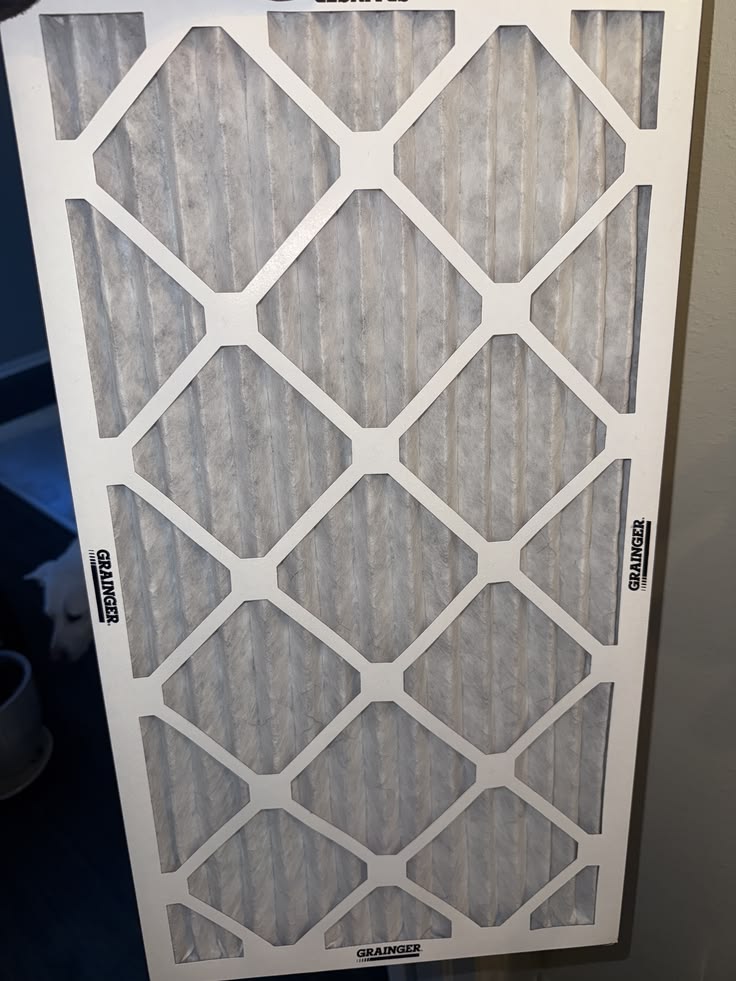
Line voltage at the disconnect under load, contactor condition, run capacitor microfarads against the printed rating, condenser fan and compressor amp draw against nameplate RLA, filter and coil condition, and total external static pressure across the air handler. Most no-cool calls in Lone Tree end inside that list. Putting gauges on first turns a straightforward electrical repair into a recovery, evacuation, and recharge — which at 5,948 feet also means re-establishing a charge that has very little tolerance for error.
What has to change in a cooling load calculation for Lone Tree?
The altitude corrections, applied at the top rather than bolted on afterward. A Manual J calculation run on default sea-level air overstates what the equipment will actually deliver at 5,948 feet, because both the sensible-heat constant and the condenser's heat rejection scale with density. The correction runs through the duct design too: airflow per ton has to rise from the sea-level 400 CFM figure toward roughly 480 to carry equivalent mass, which changes trunk sizing and return capacity. When a Lone Tree home has never cooled properly since installation, an uncorrected load calculation is the first thing worth checking, ahead of the equipment itself.
Who issues permits for AC work in Lone Tree?
Lone Tree sits in Douglas County, a different building authority from the Arapahoe and Jefferson County jurisdictions to the north and west. Repairs are not permitted work; a condenser or full-system replacement is, together with the disconnect and circuit that feed it, and we file it. Nearby cities we serve run lower — Highlands Ranch at 5,682 feet and 14.7%, a full 266 feet below Lone Tree, plus Denver Tech Center and Castle Pines. A load calculation carried over from any of them understates what Lone Tree asks of the equipment.
Same crews, neighbouring towns
Nearby and on the same schedule: AC repair in Highlands Ranch, AC repair in Denver Tech Center, AC repair in Castle Pines.
Heating and cooling fail for different reasons in the same house — see furnace repair in Lone Tree.
More: AC repair · everything in Lone Tree.

Lone Tree
Home Of The $39 Diagnosis
Book your diagnostic today!
The $39 diagnostic service is a professional troubleshooting visit performed by a certified MoJo technician to identify the root cause of an HVAC issue.
Frequently Asked Questions
Is Lone Tree the highest city MoJo Home Services covers?
Yes. At 5,948 feet Lone Tree is the highest-elevation city on our service map, sitting 52 feet under the 6,000-foot mark and roughly 670 feet above Denver at 5,279 feet. That makes it the place where every altitude correction we apply — the 15.8% gas derate, the roughly 16% air density deficit, and reduced condenser heat rejection — reaches its maximum value.
Why does my Lone Tree AC trip on high pressure during hot afternoons?
Because thin air at 5,948 feet gives the condenser less margin to begin with. Each cubic foot carries about 16% less mass to carry heat away, so a dirty coil, a weak fan capacitor, or a slight overcharge pushes head pressure into the cutout sooner than the same fault would lower down. The pressure switch is the symptom; the lost margin is the repair.
What is Lone Tree's altitude derate for gas equipment?
15.8%, calculated at 4% per 1,000 feet above 2,000 feet for Lone Tree's 5,948-foot elevation. A 100,000 BTU furnace delivers roughly 84,200 BTU/hr here. It matters on a cooling call because the larger furnace chosen to offset that loss also supplies the blower that moves air across the evaporator coil, which is a frequent source of low cooling airflow.
Does thin air at 5,948 feet mean I should buy a larger air conditioner?
Not usually. Lone Tree's dry air makes the cooling load nearly all sensible, so oversizing produces short cycles and uneven rooms rather than better comfort. The effective response to 16% lower density is raising airflow per ton and confirming the duct system can carry it, since an oversized condenser at this elevation also runs closer to its high-pressure limit.
Which county issues HVAC permits for Lone Tree?
Douglas County. Lone Tree's 13,175 residents fall under a different building authority than neighboring Arapahoe and Jefferson County communities, so the process differs from a job a few miles north. Repairs need no permit; replacing a condenser or a complete system does, including the electrical disconnect and circuit. MoJo Home Services files the paperwork as part of the installation.
MoJo Home Services
A note for our neighbors
A fair number of our Lone Tree customers came to us because a friend or a former neighbor sent them our way, sometimes years after we worked on that friend's house. An AC repair someone still remembers well enough to mention is the only advertising we have ever really trusted.

On the job
In
Lone Tree
Share Your Experience
Thank you for supporting our local family business. If we did right by you, we'd love to hear about it on any site you use.
- Write a Google reviewQuick & easy
- Find us on YelpRead what neighbors said
- Review us on FacebookShare with friends
- Recommend us on NextdoorTell your neighbors


Your referrals and reviews not only mean so much to us, they also help the community know who to trust to Get their Home's MoJo Back!
Honest feedback is what we're after, good or bad. If something fell short, call us at the office first and we'll make it right.