Welcome, Neighbors of
Castle Pines
AC Repair in Castle Pines, CO
Castle Pines sits high on the pine covered ridge at the south end of the metro, where the air is thinner and the afternoons stay bright and long. Equipment up here runs out of room before the same unit would in town. Family owned, licensed and insured, since 2009.
5-star rated · Local & Family-owned since 2009
Licensed & Insured
Family Owned
NATE Certified
EPA Certified
BBB Accredited
Serving Denver Metro

See your neighbor deals
MoJo Home Services
Out in your neighborhood · Denver Metro
AC Repair in Castle Pines, Colorado
Castle Pines sits at 6,558 feet, the highest elevation of any Douglas County community on our service map and 1,279 feet above the 5,279-foot Denver benchmark. The altitude corrections here are the largest we apply anywhere: an 18.2% gas derate and outdoor air roughly 18% less dense than at sea level. For a city of 3,614 people that is not trivia - it decides equipment selection. MoJo Home Services, family-owned since 2009, licensed, insured, EPA-certified. Call 720-807-4050.
How much cooling capacity does 6,558 feet actually remove?
Enough to change what gets installed. The sensible-heat equation a technician uses on site - 1.08 multiplied by airflow and temperature difference - carries a constant that scales directly with air density. At Castle Pines the working value is closer to 0.89. A duct system delivering 1,200 CFM here carries roughly 18% less heat away than the identical 1,200 CFM would at sea level. Label a condenser three tons and it still will not put 36,000 BTU of sensible cooling into a Castle Pines house, and no thermostat setting closes that gap.
Why does a Castle Pines condenser run out of margin first?
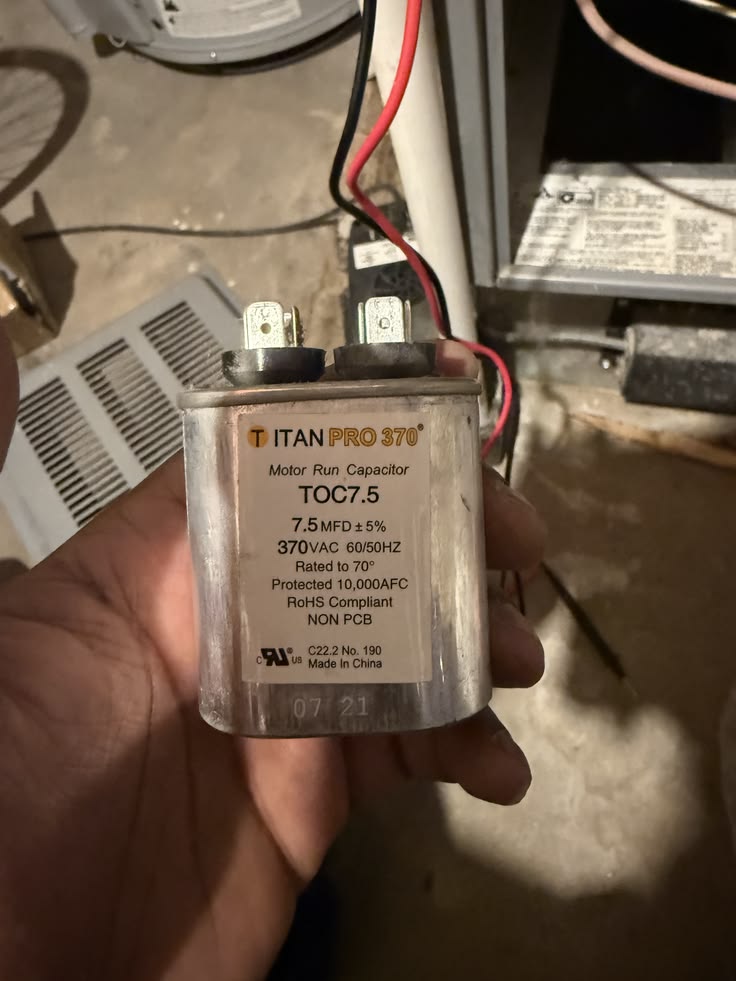
Because it starts with less. A condenser rejects heat into outdoor air, and at 6,558 feet there is about 18% less air mass per cubic foot to accept it. The system compensates by running a higher condensing temperature, which means higher head pressure at the same outdoor conditions than identical equipment lower down. That works until something narrows the gap. A coil packed with a season of debris, a run capacitor 15% under its printed rating, or an overcharge of a few ounces will trip a Castle Pines unit on high pressure during an afternoon that a unit 1,200 feet lower rides out untroubled. Swapping the pressure switch changes nothing. The repair is identifying whatever ate the margin.
What has to change in the duct system at this elevation?
Airflow. To move the same mass of air across an evaporator coil, cooling airflow has to climb past the 400 CFM per ton figure sea-level tables assume, out to roughly 487 CFM per ton at 6,558 feet - more than 20% additional volume through returns, trunks and filter racks that were frequently sized off a default table. The symptom is a system that keeps up in May and falls behind in July: a wide temperature split at the register, long run times, and a house that never quite catches up.
Should a Castle Pines system be oversized to cover the 18.2%?
No, and this is where the altitude argument gets misused. Douglas County air is dry, so almost the entire cooling load is sensible and there is little moisture for a longer cycle to remove. An oversized condenser satisfies the thermostat in short bursts, leaves upper rooms uneven, and at 6,558 feet spends more of its operating life near the high-pressure limit than a correctly sized unit would. The productive answers to thin air are higher airflow, an altitude-corrected load calculation, and staged or variable-capacity equipment that can run long at part load.
Why does a Castle Pines house cool downstairs but not upstairs?
Two things stack. Warm air rises through a multi-storey house on its own, so the upper floor gains heat the lower floor sheds, and the duct system has to overcome that with air distribution alone. Then the altitude compounds it: if the whole system is already short of the 487 CFM per ton that 6,558 feet requires, the branches that are longest and highest are the ones that fall short first. The fix is measurement rather than guesswork - static pressure, airflow at the upper registers, damper positions - because adding outdoor capacity to a distribution problem makes the short cycling worse and the upstairs no cooler.
What does the 18.2% derate have to do with a cooling call?
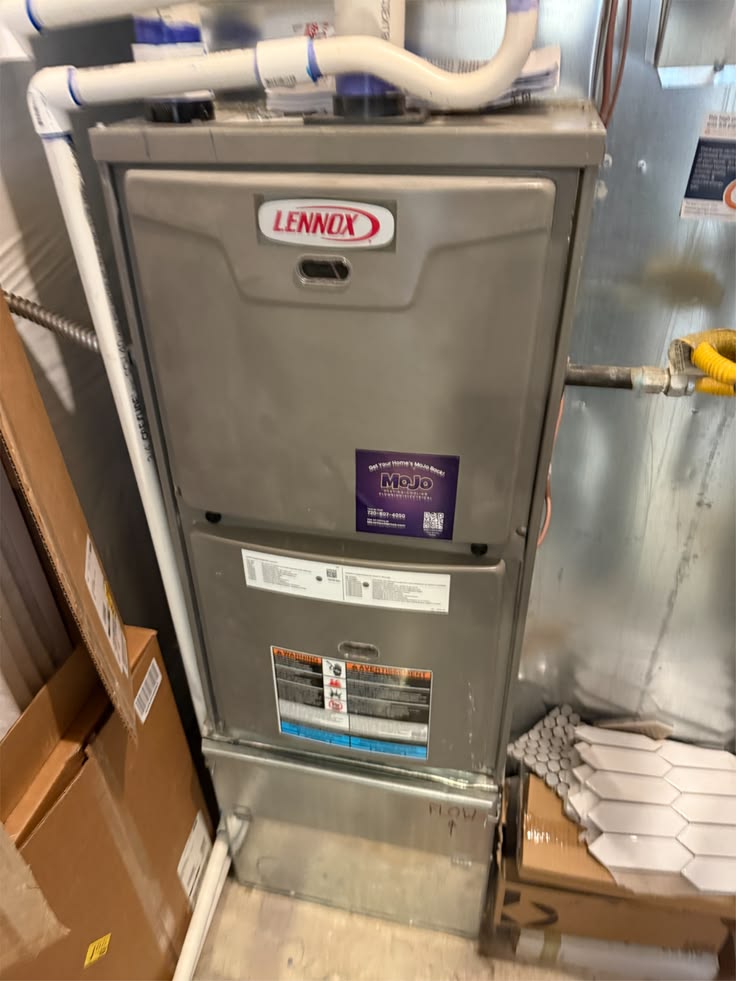
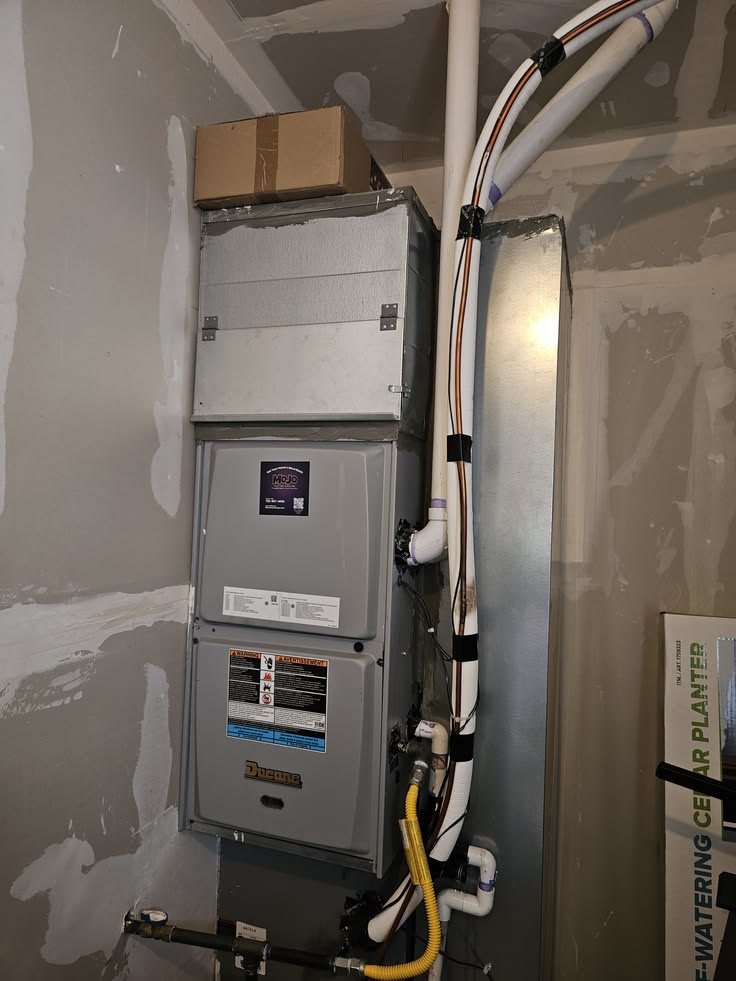
The blower that pushes cooling air through a Castle Pines house almost always lives inside the furnace cabinet, which is why a heating figure lands on a cooling page. Rated at 100,000 BTU, that furnace puts out roughly 81,800 BTU/hr here, so installers commonly step up a size to recover the 18.2%. The blower arriving inside the bigger cabinet was matched to a heating airflow. Cooling air that measures below what the evaporator needs usually traces back to that choice, and the levers left are wheel speed and duct restriction.
Which building authority covers Castle Pines, and what is nearby?
Douglas County, the same authority as Castle Rock at 6,224 feet and Lone Tree at 5,948. Highlands Ranch sits lower again at 5,682 feet and 14.7%. Repairs are not permitted work; swapping a condenser or the whole system is, together with its disconnect and circuit, and we file it. A load calculation carried up from any of those addresses understates Castle Pines - Highlands Ranch alone is 876 feet below it and three and a half derate points easier.
Nearby towns we cover
If you are comparing notes with someone a town over, we cover AC repair in Castle Rock, AC repair in Lone Tree, AC repair in Highlands Ranch too.
The opposite season has its own failure list: furnace repair in Castle Pines.
Background on the service is at AC repair; the full local list is at everything in Castle Pines.

Castle Pines
Home Of The $39 Diagnosis
Book your diagnostic today!
The $39 diagnostic service is a professional troubleshooting visit performed by a certified MoJo technician to identify the root cause of an HVAC issue.
Frequently Asked Questions
Why is Castle Pines harder on air conditioning than the rest of Douglas County?
Elevation. At 6,558 feet Castle Pines is the highest Douglas County community we cover - 334 feet above Castle Rock, 610 above Lone Tree, 876 above Highlands Ranch. That produces an 18.2% derate and air roughly 18% thinner than sea level, so the condenser has measurably less air mass to reject heat into and runs closer to its high-pressure ceiling on hot afternoons.
How much airflow does a Castle Pines air conditioner need per ton?
Around 487 CFM per ton, against the sea-level convention of 400. At 6,558 feet each cubic foot of air carries about 18% less mass, so more volume is needed to move the same mass across the evaporator coil. Ducts and returns sized from a default table will not pass it, which is why Castle Pines systems commonly cool acceptably in spring and fall behind in midsummer.
Does 18.2% mean I should buy a bigger air conditioner in Castle Pines?
Usually not. The air here is dry, so the cooling load is nearly all sensible and a larger unit short-cycles rather than dehumidifying. Oversized equipment at 6,558 feet also operates nearer its high-pressure limit, which shortens compressor life. Correcting airflow and running an altitude-adjusted load calculation does more for comfort in Castle Pines than adding tonnage does.
What output does a furnace actually deliver in Castle Pines?
About 81.8% of its label. Run the standard four-percent-per-thousand-feet rule from its 2,000-foot baseline out to 6,558 feet and the answer is 18.2%, so a 100,000 BTU furnace produces roughly 81,800 BTU/hr here. It reaches a cooling call through the blower: the upsized furnace bought to recover that loss is also the cabinet feeding the evaporator.
Does AC work in Castle Pines need a Douglas County permit?
Repairs do not. Swapping a condenser, or the whole system, does - the electrical disconnect and its circuit included - and Douglas County is the authority for Castle Pines just as it is for Castle Rock and Lone Tree. MoJo Home Services handles the filing. The sizing submitted with it should be calculated at 6,558 feet, not carried over from a lower address.
MoJo Home Services
A note for our neighbors
In Castle Pines our name tends to travel through the neighborhood board and the group emails, which means someone put their reputation next to ours in front of everybody. We are a family business, and an AC repair that arrives that way feels less like a job and more like a favor returned.

On the job
In
Castle Pines
Share Your Experience
Thank you for supporting our local family business. If we did right by you, we'd love to hear about it on any site you use.
- Write a Google reviewQuick & easy
- Find us on YelpRead what neighbors said
- Review us on FacebookShare with friends
- Recommend us on NextdoorTell your neighbors


Your referrals and reviews not only mean so much to us, they also help the community know who to trust to Get their Home's MoJo Back!
Honest feedback is what we're after, good or bad. If something fell short, call us at the office first and we'll make it right.