Welcome, Neighbors of
Park Hill
AC Repair in Park Hill, CO
Brick holds the afternoon heat in Park Hill, and the houses sit close enough together that the outdoor unit usually ends up squeezed into a narrow side yard with nowhere to breathe. Cooling fitted into a home like that struggles quietly for years. Family owned in Denver since 2009, licensed and insured.
5-star rated · Local & Family-owned since 2009
Licensed & Insured
Family Owned
NATE Certified
EPA Certified
BBB Accredited
Serving Denver Metro

See your neighbor deals
MoJo Home Services
Out in your neighborhood · Denver Metro
AC Repair in Park Hill, Denver
Park Hill sits at 5,335 feet northeast of City Park, and its air conditioning was almost all added to houses built without it. The pattern that follows is a slow refrigerant leak, usually at the indoor coil or the retrofit line set, and the repair that matters is finding it rather than refilling around it. MoJo Home Services has worked Denver's older neighborhoods since 2009, family-owned, licensed, insured, EPA-certified. Call 720-807-4050.
Why does a Park Hill air conditioner lose refrigerant every summer?
Because a sealed system does not consume refrigerant. If it is low, it leaked, and a system that needed topping up last June and needs it again this June has an active leak that grew over the winter. Retrofit installations give leaks more places to start than factory-built ones: field-brazed joints at the coil, flare connections, service valve cores and packing, and a line set threaded through an existing house with bends made on site. Adding refrigerant without finding the leak vents it to atmosphere over the following months, which is wasteful and, for a certified technician, the wrong way to work.
What is formicary corrosion and why does it hit retrofit coils?
It is pinhole corrosion that attacks copper tubing from the outside in, leaving microscopic tunnels that resemble ant galleries under magnification, hence the name. It is driven by organic acids in indoor air, from cleaning products, solvents, adhesives and building materials, and it produces leaks invisible to the eye and too small to hear. Older Park Hill homes with retrofit coils sitting in basement air get a full share of it. The practical signature is a coil that loses charge steadily with no oil stain, no hiss, and nothing obviously wrong, across multiple seasons rather than all at once.
How is a leak actually found rather than guessed at?
In order of certainty. An electronic leak detector sweeps joints and coil faces, fast but prone to false positives near a dirty coil. Ultrasonic detection catches larger leaks by sound. A pressurised nitrogen standing test isolates the system, brings it to pressure and watches for decay over hours, which proves whether a leak exists without proving where. Bubble solution confirms a specific joint. Fluorescent dye is the tool for leaks too slow to catch in one visit, requiring a return with a UV lamp. On a Park Hill coil suspected of formicary corrosion, dye and a standing pressure test together usually settle it, because the leak rate is too low for a detector sweep to pin down.
Why does a small charge loss cost more capacity at 5,335 feet?
Because the system has less margin to start with. Air at 5,335 feet is about 14.7% less dense than sea-level air, so the condenser rejects heat into thinner air and the evaporator has less mass crossing it per cubic foot. An undercharge lowers evaporator temperature and starves the coil further, and the two together push a Park Hill system toward freezing at a charge deficit that would only be an inefficiency near sea level. Once the coil ices, airflow drops to nothing, and liquid refrigerant can return to a compressor never designed to pump it.
What does a retrofit coil on an older furnace change?
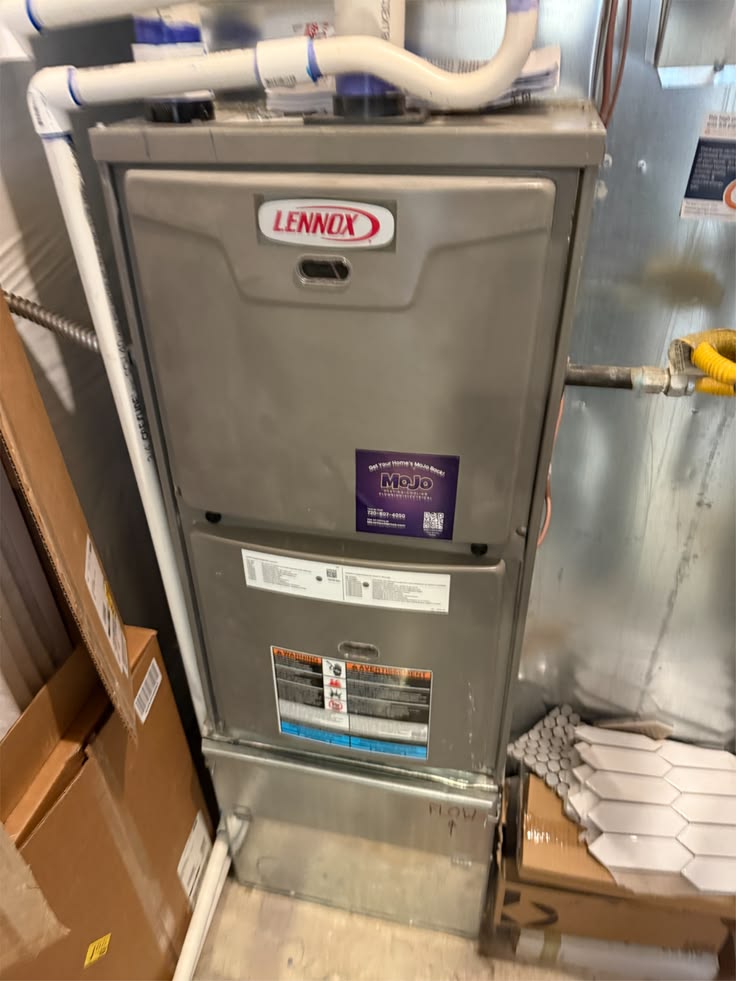
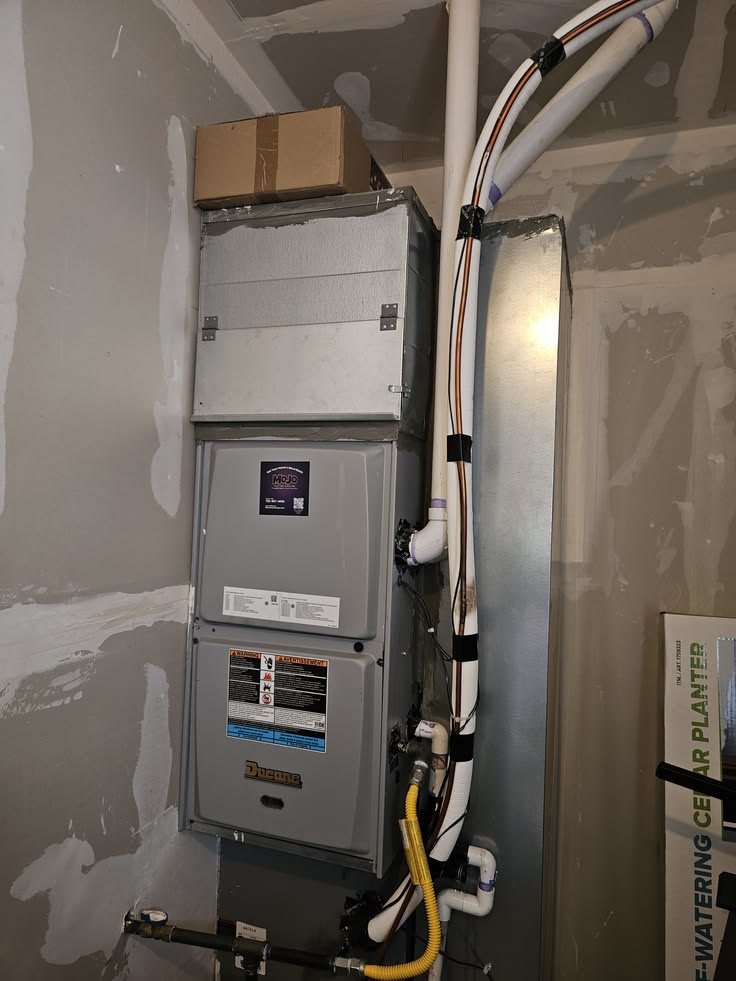
Several things worth checking together. The coil casing has to match the furnace cabinet width, and site-built plenum transitions are a common source of both air leakage and turbulence entering the coil. The condensate drain in a pre-war basement often runs a long way to reach a suitable termination, and a long shallow run blocks easily. The metering device belongs to the outdoor unit's rating, and if the halves were installed years apart it may not match. Park Hill's 13.3% gas derate, from the 4% per 1,000 feet above 2,000 feet convention, also means the furnace beneath that coil was sized for a heating load calculated on its own, long before anyone considered cooling airflow.
When does a leaking Park Hill coil justify replacement?
When the leak is in more than one location, when the coil is corroded rather than damaged at a single joint, when the system holds R-22 and any recharge depends on reclaimed supply, or when the coil turns out not to be rated with the outdoor unit anyway. A single accessible brazed joint on a matched R-410A system is a repair. A pinholed coil on an obsolete refrigerant buys one more season and no more. We work the same housing stock in Denver, Central Park and Montbello.
Nearby towns we cover
We work AC repair in Denver, AC repair in Central Park, AC repair in Montbello out of the same dispatch.
The opposite season has its own failure list: furnace repair in Park Hill.
Background on the service is at AC repair; the full local list is at everything in Park Hill.

Park Hill
Home Of The $39 Diagnosis
Book your diagnostic today!
The $39 diagnostic service is a professional troubleshooting visit performed by a certified MoJo technician to identify the root cause of an HVAC issue.
Frequently Asked Questions
Why does my Park Hill AC need refrigerant added every year?
Because it is leaking. Air conditioners do not consume refrigerant, so a system that needs a top-up each season has an active leak that is usually growing. In Park Hill's retrofit installations the likely locations are field-brazed joints at the indoor coil, service valve cores, and the line set run through an existing house. Finding it is the repair; refilling is not.
What causes pinhole leaks in an evaporator coil?
Formicary corrosion, driven by organic acids in indoor air from cleaning products, solvents and adhesives. It eats microscopic tunnels through copper tubing from the outside, producing leaks with no oil stain and no audible hiss. Older Park Hill homes with retrofit coils in basement air see it regularly, and the giveaway is steady charge loss across several seasons rather than a sudden failure.
How do you find a leak too slow to hear?
A nitrogen standing pressure test proves a leak exists by watching pressure decay over hours. Fluorescent dye with a UV lamp on a return visit finds leaks too slow for an electronic detector to pin down. Bubble solution confirms a specific joint. On a suspected corroded coil in Park Hill we generally combine the standing test with dye rather than relying on a detector sweep.
Why does low refrigerant freeze a coil at 5,335 feet?
An undercharge drops evaporator temperature below freezing, and at 5,335 feet, where air is about 14.7% thinner, there is less mass crossing the coil to hold it above that point. Ice then blocks airflow entirely and the situation compounds. If you see frost on the copper suction line, switch to fan-only at the thermostat and call before liquid refrigerant reaches the compressor.
Do I need a Denver permit to fix a leaking coil in Park Hill?
Repairs, including leak repair, recovery and recharge, are not permitted work. Park Hill is within the City and County of Denver, so a full system replacement or condenser change-out is permitted through Denver, along with the electrical disconnect and circuit sizing. If the leak decision is close, that step should be part of the comparison before you choose. Call 720-807-4050.
MoJo Home Services
A note for our neighbors
Park Hill takes its neighborhood seriously, and people there are careful about who they recommend because everybody will hear whether it went well. We would rather be judged that way than by an advertisement. Thank you for putting our name forward when a neighbor needed AC repair and asked around.

On the job
In
Park Hill
Share Your Experience
Thank you for supporting our local family business. If we did right by you, we'd love to hear about it on any site you use.
- Write a Google reviewQuick & easy
- Find us on YelpRead what neighbors said
- Review us on FacebookShare with friends
- Recommend us on NextdoorTell your neighbors


Your referrals and reviews not only mean so much to us, they also help the community know who to trust to Get their Home's MoJo Back!
Honest feedback is what we're after, good or bad. If something fell short, call us at the office first and we'll make it right.