Welcome, Neighbors of
Park Hill
Furnace Repair in Park Hill, CO
Park Hill is old Denver at its best, wide streets, tall trees and brick homes that have been standing a very long time. Furnaces here often sit in original basements that were never designed around modern equipment, and it shows at start up. Five star rated and family owned since 2009.
5-star rated · Local & Family-owned since 2009
Licensed & Insured
Family Owned
NATE Certified
EPA Certified
BBB Accredited
Serving Denver Metro

See your neighbor deals
MoJo Home Services
Furnace Repair
Furnace Repair in Park Hill, Denver
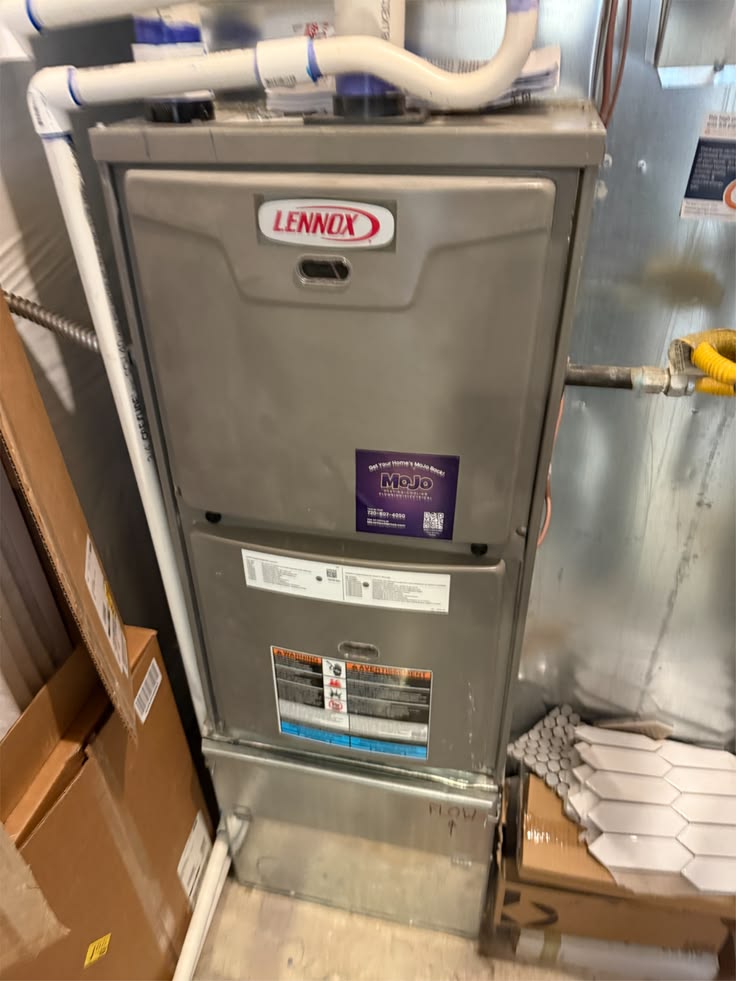
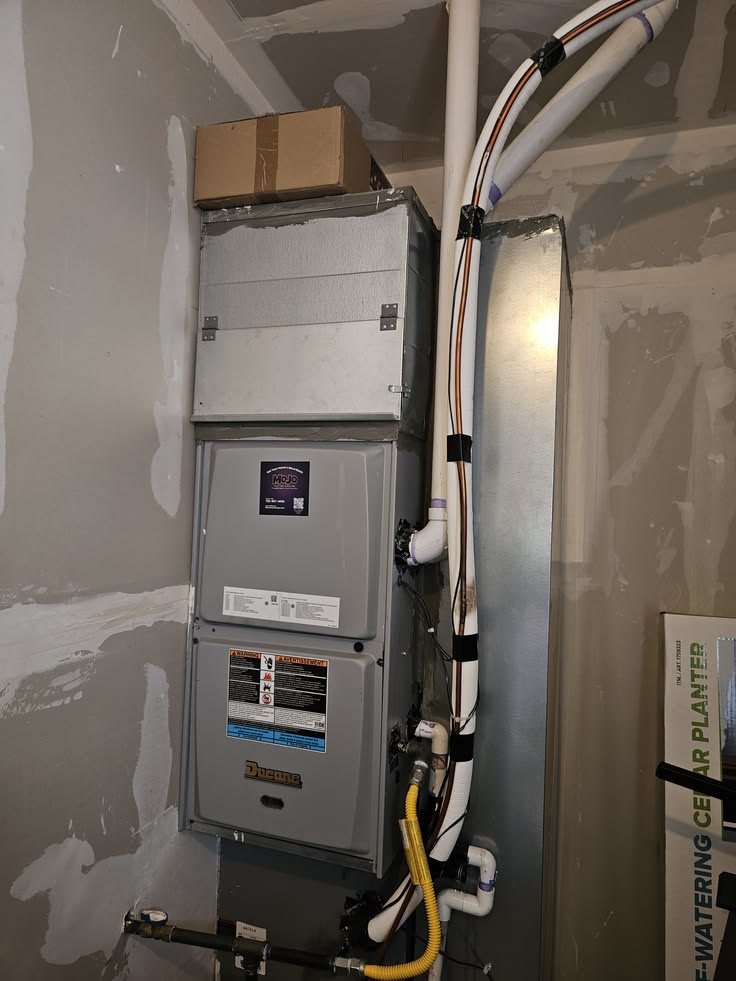
The bang some Park Hill furnaces make a second or two after the igniter glows is delayed ignition, and at 5,335 feet it turns up more often than it would at sea level. An atmospheric burner entrains its own combustion air on the momentum of gas leaving the orifice, and Park Hill air is about 14.7% lighter, so every breath the burner takes carries proportionally less oxygen. Put the 13.3% altitude derate on top and this neighbourhood northeast of City Park runs furnaces that fire lean on the nameplate, rich at the burner, and longer per cycle than the equipment was drawn for. MoJo Home Services - 720-807-4050, licensed and insured, in Denver since 2009.
Why does a Park Hill furnace bang when it lights?
Delayed ignition means gas entered the burner box and sat there a moment before a flame reached it; the noise is that pocket lighting all at once. Flame has to carry from the ignition point across every burner through crossover ports, and anything that slows the carry-over gives gas time to build. Rust flaking into the ports from an ageing heat exchanger, a burner knocked out of alignment during earlier service, a hot-surface igniter that reaches temperature slowly, manifold pressure set below the manufacturer's high-altitude figure, primary air starved by lint drawn into the burner compartment - all produce the same bang. Where a large share of the housing stock predates the equipment installed in it, as in Park Hill, the first two turn up most.
What does 5,335 feet change at the burner orifice?
The orifice meters gas by pressure and hole size and has no idea what elevation it is at. Primary air is the part that changes: it is dragged in by the gas jet from the space around the burner, and at Park Hill's density that entrained volume carries roughly 14.7% less oxygen by weight than the same volume at sea level. A burner set up on sea-level assumptions and never corrected therefore runs richer than intended. The visible symptom is flame shape - a correct natural gas flame is mostly blue with soft tips, while flames that are tall, lazy and yellow through the body are short of primary air and lay carbon down on the surfaces that most need to stay clean.
How much usable heat does a Park Hill furnace actually make?
Take 13.3% off the nameplate, which is what 4% per 1,000 feet above 2,000 comes to at 5,335 feet. A 120,000 BTU per hour input furnace fires near 104,000 in Park Hill, and at 80% efficiency that is roughly 83,200 BTU per hour into the ducts. Older homes here are frequently carrying furnaces sized with margin already, so the derate rarely leaves anyone cold. What it does is lengthen every burn, and more flame hours per winter is more hours at temperature on a heat exchanger that has already seen a few decades of them.
What does delayed ignition do to a heat exchanger over a winter?
Each delayed light is a small overpressure event inside the exchanger, and a furnace doing it on most starts does it a few thousand times a season, flexing the same steel at the same bends every time. Combine that with the extra flame hours the 13.3% derate buys and with carbon from a rich flame insulating the inner surface, and cracks appear at seams and tight radii years earlier than the same furnace would show them lower down. That is why the noise is not something to live with - it is the audible stage of a failure that ends in a heat exchanger inspection.
How is combustion verified on a Park Hill furnace?
With an analyser in the flue rather than by eye. Air-free carbon monoxide on a correctly set residential furnace should read in the low double digits and stay well under 100 parts per million; readings climbing toward the 400 ppm air-free figure appliance standards treat as a shutdown threshold say the burner is not getting the air it needs. Alongside that: temperature rise measured across the exchanger against the band printed on the nameplate, commonly 40 to 70 degrees on an 80% furnace, manifold pressure checked against the high-altitude specification, and flame carry-over watched from first burner to last.
Which building department covers a Park Hill address?
Park Hill is a Denver neighbourhood rather than a separate municipality, so furnace replacement is permitted and inspected through Denver's combined city and county building authority - a different route from an Adams or Jefferson County address. That, and the age of the housing, is the practical difference between a Park Hill job and an otherwise identical one a few miles out. Altitude is not, because the derate barely moves across this whole side of the city.
Northeast Denver at the same elevation
Park Hill's 5,335 feet is 46 above Central Park at 5,289 and 30 above Montbello at 5,305 - 13.3% against 13.2%, one tenth of a percent apart. Denver as a whole is quoted at 5,279 feet and 13.1%. Elevation is not what separates these jobs. Housing age, duct layout and whatever the last technician left behind are.
Other Park Hill-area pages
We work furnace repair in Denver, furnace repair in Central Park, furnace repair in Montbello out of the same dispatch.
If it is the other system acting up instead, start at AC repair in Park Hill.
See furnace repair for the service itself, or everything in Park Hill for everything we do there.

Park Hill
Home Of The $39 Diagnosis
Book your diagnostic today!
The $39 diagnostic service is a professional troubleshooting visit performed by a certified MoJo technician to identify the root cause of an HVAC issue.
Frequently Asked Questions
Why does my Park Hill furnace make a loud bang when it starts?
That is delayed ignition - gas collecting in the burner box before flame carries across it. At 5,335 feet the burner entrains air about 14.7% lighter than sea-level air, which makes slow carry-over more likely. The usual causes in Park Hill are rust flakes from an ageing heat exchanger blocking crossover ports, misaligned burners, a slow igniter, or manifold pressure set below the high-altitude figure.
How much heat does the 13.3% derate cost a Park Hill furnace?
At 5,335 feet a furnace loses 13.3% of rated input, so a 120,000 BTU per hour nameplate fires near 104,000 and an 80% efficiency unit delivers about 83,200 into the ductwork. Most Park Hill homes still heat fine, because the equipment was sized with margin. The real cost is flame hours - longer burns every winter and more time at temperature on the heat exchanger.
Is a yellow furnace flame normal in Park Hill?
Soft yellow tips on an otherwise blue flame are normal. A flame that is tall, lazy and yellow through the body is not - the burner is short of primary air, which at Park Hill's 5,335 feet already carries about 14.7% less oxygen per cubic foot than at sea level. That flame lays carbon inside the heat exchanger and pushes carbon monoxide up in the flue.
Does a Park Hill furnace need a combustion test or just a visual check?
A test. Air-free carbon monoxide should sit in the low double digits on a correctly set Park Hill furnace, and anything trending toward the 400 ppm air-free threshold in appliance standards means the burner is starved. Temperature rise gets checked against the nameplate band at the same visit, typically 40 to 70 degrees on an 80% furnace, along with manifold pressure at the altitude specification.
Does Park Hill's elevation make it different from Montbello or Central Park?
Barely. Park Hill sits at 5,335 feet, Montbello at 5,305 and Central Park at 5,289, so the derates run 13.3%, 13.2% and 13.2% - a tenth of a percent apart. What separates a Park Hill furnace call is housing age and what previous work left behind, not altitude. All three are permitted through Denver's combined city and county building authority.
MoJo Home Services
A note for our neighbors
Park Hill neighbors talk on their porches, and a great deal of our work here started exactly that way, with one household mentioning us to another. Being the name given for a furnace repair on a street where people have stayed a long time is a real honor. Thank you. 💜

Furnace Repair
In
Park Hill
Share Your Experience
Thank you for supporting our local family business. If we did right by you, we'd love to hear about it on any site you use.
- Write a Google reviewQuick & easy
- Find us on YelpRead what neighbors said
- Review us on FacebookShare with friends
- Recommend us on NextdoorTell your neighbors


Your referrals and reviews not only mean so much to us, they also help the community know who to trust to Get their Home's MoJo Back!
Honest feedback is what we're after, good or bad. If something fell short, call us at the office first and we'll make it right.