
TL;DR
Heating System
Furnaces and boilers both heat your home, but they do it in very different ways, with real trade offs in cost, comfort, and upkeep. This complete comparison covers installation and operating costs, the feel of radiant versus forced-air heat, lifespan, and maintenance, so you can decide which system truly fits your home.
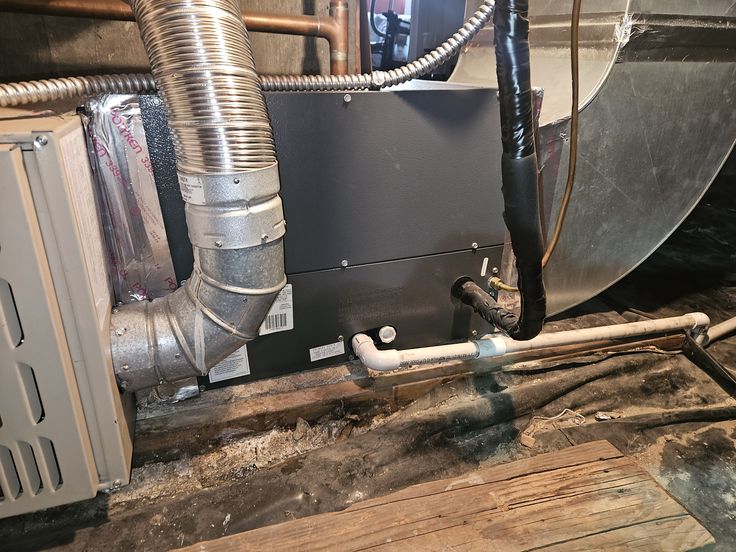
Furnace vs Boiler: Which Is Better for Your Home? The Complete Comparison Guide
Categories: Home Heating, HVAC Systems, Energy Efficiency
Choosing between a furnace and a boiler is one of the most important decisions you'll make about your home's heating system. While both keep your home warm during Denver's cold winters, they work in fundamentally different ways—and understanding these differences can save you thousands of dollars over the life of your system.
At MoJo Home Services, we help Denver homeowners navigate the complexities of home heating systems. Whether you're building a new home, replacing an aging system, or simply wondering which option is best, this comprehensive guide breaks down everything you need to know about furnaces versus boilers.
What's the Difference Between a Furnace and a Boiler?
The fundamental difference between these two heating systems lies in what they heat and how they distribute it throughout your home.
How Furnaces Work
A furnace heats air and distributes it throughout your home using a network of ducts and vents—this is called a forced-air heating system. Here's the process:
The furnace burns fuel (natural gas, propane, oil) or uses electricity to heat a heat exchanger
A blower fan pulls cool air from your home through return ducts
The air passes over the heated heat exchanger, warming it to the desired temperature
The heated air is pushed through supply ducts and released through vents in each room
Combustion gases are safely vented outside through a flue pipe
Furnaces are the most common heating system in American homes, especially in regions like Denver where natural gas is readily available and cost-effective.
How Boilers Work
A boiler heats water (or creates steam) and distributes it through a network of pipes to radiators or radiant heating systems. The process works like this:
The boiler burns fuel or uses electricity to heat water in a sealed tank
Hot water (or steam) circulates through pipes to radiators throughout your home
Heat radiates from the radiators (baseboard units, cast-iron radiators, or radiant floor systems)
The cooled water returns to the boiler to be reheated
The cycle continues to maintain your desired temperature
Boilers are more common in older homes, particularly in the Northeast, and in regions where radiant heat is preferred for consistent warmth.
Installation Costs: Furnace vs Boiler
One of the biggest factors homeowners consider is upfront cost. Generally, furnaces are significantly less expensive to install than boilers.
Furnace Installation Costs
Standard gas furnace: $3,500-$5,000 installed
High-efficiency furnace (95%+ AFUE): $5,000-$7,000 installed
Oil furnace: $4,000-$6,500 installed
Electric furnace: $2,500-$4,500 installed
Furnace installation typically takes 4-8 hours for a straightforward replacement. If your home lacks ductwork, you'll need to budget an additional $3,000-$10,000 for duct installation, which significantly increases the project cost and timeline.
Boiler Installation Costs
Standard gas boiler: $5,500-$8,000 installed
High-efficiency boiler (90%+ AFUE): $7,000-$12,000 installed
Oil boiler: $5,000-$9,000 installed
Electric boiler: $3,000-$7,000 installed
Boiler installation is more complex and time-consuming, often taking 2-4 days. The process involves connecting pipes, installing radiators, and sometimes removing walls or floors to accommodate the system. If you're converting from a furnace to a boiler, expect to pay $15,000-$25,000+ for the complete system with new piping and radiators.
The Verdict on Installation Costs
Winner: Furnace. Furnaces cost 30-50% less to install than boilers, making them the more budget-friendly option for most homeowners.
Operating Costs: Which Is Cheaper to Run?
While installation costs favor furnaces, operating costs tell a more nuanced story. The monthly cost to heat your home depends on fuel type, system efficiency, and local utility rates.
Energy Efficiency Ratings
Both systems use AFUE (Annual Fuel Utilization Efficiency) ratings to measure efficiency:
Standard furnaces: 80-85% AFUE
High-efficiency furnaces: 90-98% AFUE
Standard boilers: 80-85% AFUE
High-efficiency boilers: 87-95% AFUE
The Hidden Cost of Ductwork
Here's where boilers gain an advantage: furnaces lose 10-15% of heated air through duct leaks, even in well-maintained systems. Boilers deliver heat directly to radiators with minimal loss, making them more efficient in practice despite similar AFUE ratings.
Fuel Costs in Denver
For Denver homeowners, natural gas is typically the most economical fuel source. Average monthly heating costs during winter:
Gas furnace: $150-$250/month
Gas boiler: $125-$200/month
Oil furnace/boiler: $200-$350/month
Electric systems: $180-$300/month
The Verdict on Operating Costs
Winner: Boiler (slight edge). Boilers typically cost 10-20% less to operate monthly due to more efficient heat distribution and minimal duct losses.
Comfort and Indoor Air Quality
Beyond costs, comfort matters. The way your system distributes heat significantly affects how comfortable your home feels.
Furnace Comfort Factors
Pros:
Heats quickly: Furnaces bring your home to temperature fast, ideal for rapid morning warm-ups
Integrates with AC: The same ductwork handles both heating and cooling
Good airflow: Forced air systems circulate air, preventing stagnant pockets
Cons:
Uneven temperatures: Rooms farther from the furnace may feel cooler
Dry air: Forced air reduces humidity, especially problematic in Denver's already-dry climate
Noise: Blower fans and air rushing through ducts create noise
Allergen circulation: Dust, pollen, and pet dander circulate through ducts unless filtered well
Temperature fluctuations: Heat cycles on/off, creating temperature swings
Boiler Comfort Factors
Pros:
Even, consistent heat: Radiant heat distributes uniformly without hot/cold spots
Quiet operation: No blower fans means virtually silent heating
Better humidity: Doesn't dry out air like forced air systems
No allergen circulation: No ductwork means no dust distribution
Comfortable warmth: Radiant heat feels more natural and cozy
Cons:
Slow temperature changes: Takes longer to heat up or cool down
No air circulation: Air can feel stagnant without separate ventilation
No AC integration: Requires separate cooling system with its own installation
Radiators take space: Wall-mounted units or floor registers reduce furniture placement options
The Verdict on Comfort
Winner: Boiler. Most homeowners find radiant heat more comfortable, consistent, and pleasant than forced air, though furnaces win for rapid heating and AC integration.
Lifespan and Durability
The longevity of your heating system affects long-term value significantly.
Furnace Lifespan
Gas furnaces typically last 15-20 years with proper maintenance. High-efficiency models with more complex components may fall toward the lower end of this range. Oil furnaces last about 15-20 years, while electric furnaces can reach 20-30 years due to fewer moving parts.
Boiler Lifespan
Boilers are built for longevity, typically lasting 20-30 years. Cast-iron boilers frequently exceed 30 years, with some well-maintained units reaching 40-50 years. Boilers have fewer moving parts than furnaces, contributing to their extended lifespan.
The Verdict on Lifespan
Winner: Boiler. Boilers last 5-15 years longer than furnaces, offering better long-term value despite higher upfront costs.
Maintenance Requirements
Both systems require regular maintenance, but the frequency and complexity differ.
Furnace Maintenance
Furnaces need more frequent attention:
Filter changes: Every 1-3 months (monthly in dusty Denver conditions)
Annual professional tune-up: $100-$200
Blower cleaning: Annually
Ductwork inspection: Every 3-5 years
Common repairs: Blower motors, ignition systems, heat exchangers
Furnace repairs typically cost $150-$500, with major component replacements reaching $800-$1,500.
Boiler Maintenance
Boilers require less frequent but more specialized maintenance:
Annual professional inspection: $150-$300
Water level checks: Monthly (DIY)
Pressure monitoring: Monthly (DIY)
Bleeding radiators: Seasonally
Common repairs: Pumps, valves, pipes
Boiler repairs typically cost $200-$600, with major issues like pump replacement reaching $500-$1,200.
The Verdict on Maintenance
Winner: Boiler. Fewer moving parts and less frequent filter changes make boilers lower-maintenance, though professional servicing costs slightly more.
Denver Climate Considerations
Denver's unique climate affects which system performs better.
High Altitude Impact
At 5,280 feet, both systems must work harder than at sea level. Combustion equipment requires altitude-specific adjustments for optimal efficiency. This affects installation costs slightly but doesn't favor one system over the other.
Extreme Cold Performance
Both systems handle Denver's cold snaps well, but there are differences:
Furnaces: Won't freeze and can heat quickly after extreme cold
Boilers: Pipes can freeze in extreme cold if system fails or home loses power
Dry Climate Concerns
Denver's low humidity makes forced-air heating even more drying. Furnaces exacerbate this problem, while boilers don't affect humidity levels. Many furnace owners must add whole-home humidifiers ($400-$1,200) to combat excessive dryness.
The Verdict for Denver
Winner: Depends on your priorities. Furnaces are more common and practical for most Denver homes, but boilers combat the dry air issue naturally.
Can You Switch from One System to Another?
Yes, but it's expensive and complex. Switching heating systems requires entirely new infrastructure.
Switching from Furnace to Boiler
Requires:
New boiler unit: $5,500-$12,000
Piping throughout home: $8,000-$15,000
Radiators or radiant systems: $3,000-$10,000
Removal of old ductwork (optional): $1,000-$3,000
Total cost: $15,000-$35,000+
Switching from Boiler to Furnace
Requires:
New furnace unit: $3,500-$7,000
Complete ductwork installation: $5,000-$12,000
Removal of old boiler and pipes: $1,500-$3,000
Total cost: $10,000-$22,000+
The Bottom Line: Switching systems rarely makes financial sense unless you're doing a major renovation. It's almost always more cost-effective to replace your existing system with an upgraded version of the same type.
Which System Should You Choose?
The right choice depends on your specific situation, priorities, and home infrastructure.
Choose a Furnace If:
Your home already has ductwork in place
You want lower upfront installation costs
You need both heating and cooling (AC can use same ducts)
You want rapid heating when you get home
You're building a new home in Denver (most common choice)
You have budget constraints
You prefer faster temperature adjustments
Choose a Boiler If:
Your home already has a boiler system and radiators
You prioritize even, comfortable heat
You want the quietest possible operation
You have allergies or respiratory issues (no forced air circulation)
You're willing to pay more upfront for lower operating costs
Denver's dry air is a major concern for your family
You value long-term durability (20-30+ year lifespan)
Consider Your Home's Infrastructure
The single most important factor: what does your home already have? Homes with existing ductwork should stick with furnaces. Homes with existing boilers and radiators should upgrade to modern boilers. Converting between systems is expensive and rarely justified.
Frequently Asked Questions
Is a boiler more efficient than a furnace?
Boilers are generally 10-20% more efficient in practice because they deliver heat directly to radiators without duct losses. While both systems can achieve similar AFUE ratings (90-95%), furnaces lose 10-15% of heated air through duct leaks. This makes boilers more cost-effective to operate monthly, though they cost more to install initially.
How much does it cost to replace a furnace vs a boiler?
Replacing a furnace costs $3,500-$7,000 on average, while replacing a boiler costs $5,500-$12,000. Furnaces are significantly cheaper to install because they're simpler systems with less complex installation requirements. However, boilers last 5-15 years longer, which offsets some of the higher upfront cost over time.
Which lasts longer, a furnace or boiler?
Boilers last significantly longer than furnaces. A well-maintained boiler typically lasts 20-30 years, with many cast-iron models reaching 40+ years. Furnaces generally last 15-20 years. Boilers have fewer moving parts and less mechanical stress, contributing to their superior longevity and making them a better long-term investment despite higher initial costs.
Can I have both a furnace and a boiler?
Yes, some homes use hybrid systems, though this is uncommon. For example, a furnace might heat most of the home while a boiler provides radiant floor heating in bathrooms. However, maintaining two separate heating systems doubles maintenance costs and complexity. Most homeowners choose one primary system for the entire home.
Do furnaces or boilers add more value to a home?
Both systems add value, but furnaces are more desirable to most buyers because they're more common and familiar. However, homes with well-maintained boiler systems can attract buyers seeking quiet, efficient radiant heat. The key is having a modern, efficient system regardless of type. Outdated equipment of either type will detract from home value.
Which is better for Denver's climate?
Both systems work well in Denver's climate. Furnaces are more common because most Denver homes were built with ductwork, and they can't freeze during extreme cold like boiler pipes can. However, boilers combat Denver's dry air problem naturally by not circulating forced air. For existing homes, stick with whatever infrastructure you have. For new construction, furnaces are typically the practical choice.

Sources & References
Trane Residential - "Furnace vs. Boiler: What You Need to Know", February 2025
Carrier HVAC - "Boiler vs Furnace: What Is A Furnace vs Boiler Heating System", 2020
HVAC.com - "Boiler vs. Furnace: Which Is The Best Option?", December 2024
Lennox - "Furnace vs Boiler: Choosing the Right Heating System", April 2025
HOP Energy - "Boiler vs. Furnace: What Are the Differences?", November 2024
Making the Right Heating Choice for Your Home
Choosing between a furnace and a boiler isn't about finding a universal "better" option—it's about finding the right fit for your home, budget, and priorities. Furnaces offer affordability, quick heating, and AC integration. Boilers provide superior comfort, longevity, and quiet operation.
For most Denver homeowners, the decision comes down to existing infrastructure. If your home has ductwork, upgrading to a modern high-efficiency furnace makes the most sense. If you have radiators and love the comfort of radiant heat, invest in a new efficient boiler.
At MoJo Home Services, we help Denver homeowners make informed decisions about their heating systems. Our team can assess your current setup, explain your options, and provide honest recommendations tailored to your home and budget.
Ready to upgrade your heating system? Contact MoJo Home Services for a professional assessment and expert guidance on choosing the perfect heating solution for your Denver home.
Frequently Asked Questions
Why does a boiler's radiant heat feel warmer than forced-air heat at the same thermostat setting?
The difference comes down to how each system transfers heat to your body. Forced-air systems heat the air in a room, but moving air also accelerates heat loss from your skin through convection — which is why a breezy 68°F can feel colder than a still 68°F. Radiant heat from a boiler warms surfaces and objects in the room directly, including floors, walls, and furniture, which then radiate warmth back to you. This is why many homeowners find a boiler-heated room comfortable at 68°F while needing a furnace-heated room set to 70°F or higher to feel equally warm.
What does "bleeding a radiator" mean and why does it need to be done seasonally?
Bleeding a radiator means releasing trapped air that has accumulated inside it. Over time, small amounts of air work their way into a boiler's water circulation loop. When air gets trapped in a radiator, it creates a pocket that blocks hot water from filling that section of the unit — leaving part of the radiator cold while the rest heats normally. You'll often notice this as a radiator that is warm at the bottom but cool at the top. Bleeding the radiator by opening a small valve until water flows steadily releases the trapped air, restoring full heat output. It's a straightforward DIY task that should be done at the start of each heating season.
How does Denver's dry climate make the furnace versus boiler decision more significant than in other cities?
Denver already has some of the lowest indoor humidity levels of any major U.S. city, and forced-air heating makes this significantly worse. As a furnace heats air and circulates it, the warmer air holds relatively less moisture, further drying out your living environment. This can cause cracked skin, dry sinuses, wood furniture splitting, and static electricity throughout the winter. A boiler adds no heat through air movement, so it doesn't accelerate moisture loss. For Denver homeowners with allergy issues, respiratory sensitivities, or homes with hardwood floors and woodwork, this humidity difference alone can be a compelling reason to prefer a boiler system — or to budget for a whole-home humidifier if choosing a furnace.
What is the real risk of boiler pipes freezing during a Denver cold snap?
Boiler pipes can freeze if the system loses power or shuts down during extreme cold and the home's temperature drops far enough — a risk that furnaces don't share since they have no water distribution system. In practice, this risk is manageable with proper precautions: maintaining a minimum thermostat setting during cold stretches, having a backup heat source, and ensuring the system has low-temperature shutoff protections in place. For most Denver homeowners with functioning boiler systems, this is a theoretical concern rather than a common occurrence. It becomes a real risk only in power outages during extended deep freezes, which are rare but not impossible in Colorado.
Why does altitude specifically require adjustment for combustion heating equipment in Denver?
At 5,280 feet, the air is less dense than at sea level, meaning there is less oxygen available per cubic foot for the combustion process. A furnace or boiler calibrated for sea-level operation will run fuel-rich at Denver's altitude — burning more fuel than necessary relative to available oxygen, which reduces efficiency and can produce incomplete combustion. Professional installation in Denver requires altitude-specific adjustments to the gas pressure, burner orifice, and air-fuel mixture settings. Skipping this adjustment on a new installation means your system will never achieve its rated AFUE efficiency, and in some cases can create safety concerns related to incomplete combustion.
If boilers are more efficient and longer-lasting, why aren't they more common in new Denver construction?
The primary reason is ductwork. In new construction, builders install forced-air systems because the same ductwork handles both heating and cooling — a single infrastructure investment serves both systems. A boiler heats efficiently but cannot cool, meaning a home with a boiler still needs a separate duct system or ductless solution for air conditioning. In Denver's climate, where summer temperatures regularly hit the 90s, AC is not optional. The cost and complexity of maintaining two completely separate distribution systems — one for radiant heat and one for cooling — makes the boiler's efficiency and comfort advantages harder to justify financially for most new construction buyers.
Are there situations where switching from a furnace to a boiler actually makes financial sense?
Rarely, but they do exist. The most compelling case is a homeowner doing a complete gut renovation who values long-term operating costs, quiet operation, and the comfort of radiant heat enough to absorb the $15,000 to $35,000 conversion cost — particularly if the renovation already requires opening walls and floors where pipe installation becomes less disruptive. Homeowners with serious allergy or respiratory conditions who would benefit significantly from eliminating forced-air circulation represent another potential case. For everyone else, the math almost never works out — the operating cost savings from a boiler cannot recoup a $20,000+ conversion cost within a reasonable timeframe compared to simply installing a modern high-efficiency furnace.
How does a cast-iron boiler achieve a lifespan of 40 to 50 years when modern equipment rarely lasts that long?
Cast-iron boilers are remarkably durable because cast iron is highly resistant to the corrosion that eventually degrades steel and aluminum components. The closed-loop water system also helps — unlike a forced-air furnace that constantly processes air containing dust, humidity, and combustion byproducts, a boiler circulates the same treated water continuously with minimal exposure to fresh corrosive elements. Fewer moving parts mean fewer failure points, and individual sections of a sectional cast-iron boiler can often be replaced without replacing the entire unit. Many 1950s and 1960s cast-iron boilers are still operating in Denver homes today — a longevity record that no modern forced-air system can match.
Related Resources


