TL;DR
Repair vs Replace
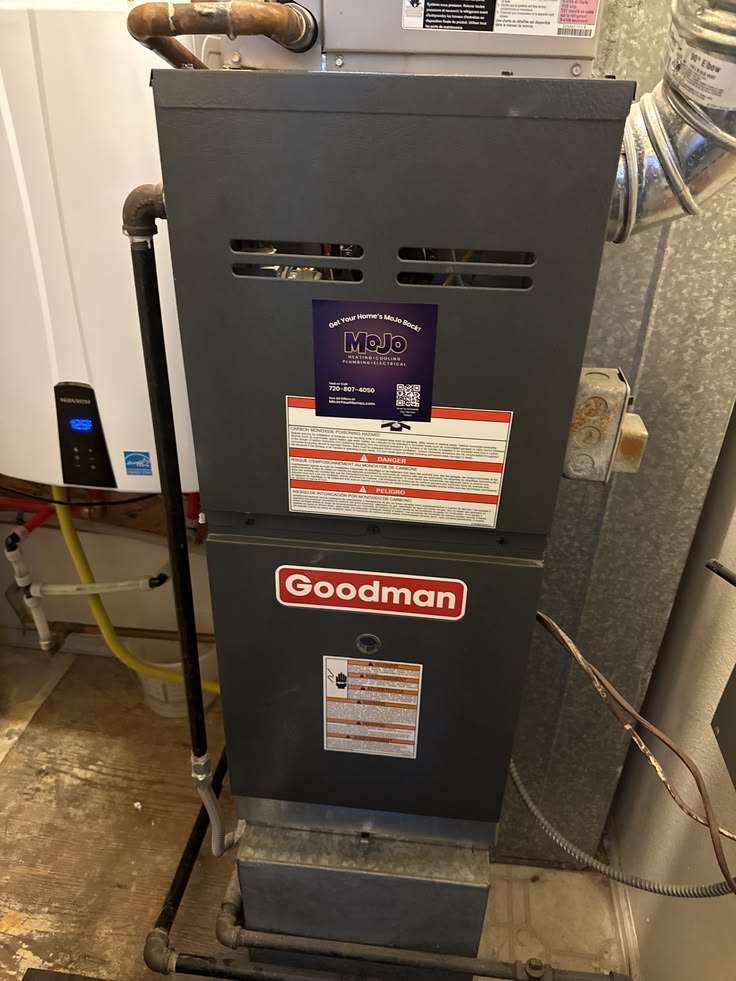
The 5,000 rule gives homeowners a quick way to decide whether a broken HVAC system is worth repairing or better replaced. This guide walks through how the calculation works, the common repairs that trigger it, when it makes sense to override the rule, and how replacement costs and long term efficiency should factor into your choice.
As a Denver homeowner, you've likely heard whispers about the "$5000 rule for HVAC" from neighbors or contractors, but what exactly does this guideline mean for your home at 5,280 feet? This financial decision-making tool has helped thousands of homeowners in Westminster, Arvada, and throughout the Denver Metro Area determine whether to repair their aging system or invest in a complete replacement. Understanding this rule could save you thousands of dollars and prevent you from making a costly mistake with your home's heating and cooling system.
The $5000 rule for HVAC is a simple formula that multiplies your system's age by the repair cost — if the result exceeds $5000, replacement typically makes more financial sense than repair. For Denver homeowners dealing with altitude-related HVAC stress and dramatic temperature swings, this rule takes on special significance as our unique climate conditions can accelerate system wear and affect the repair-versus-replace calculation.
At MoJo Home Services, our NATE-certified technicians have applied this rule to help hundreds of Denver families make informed decisions about their HVAC investments. After 16+ years serving the Mile High City, we've seen how Denver's semi-arid climate, altitude effects, and seasonal extremes impact the longevity and repair costs of heating and cooling systems.
Understanding the $5000 HVAC Replacement Rule
The $5000 rule for HVAC originated as a quick decision-making tool used by contractors and homeowners to evaluate whether repairing an aging system makes financial sense. The formula is straightforward: multiply your HVAC system's age (in years) by the cost of the proposed repair. If the result exceeds $5000, replacement is typically the wiser investment.
For example, if your 12-year-old furnace needs a $600 heat exchanger repair, the calculation would be 12 × $600 = $7,200. Since this exceeds $5000, the rule suggests replacement would provide better long-term value than repair.
However, this rule isn't absolute — it's a starting point for decision-making. Denver homeowners must consider additional factors unique to our market, including altitude effects on system performance, local utility rebates from Xcel Energy Colorado, and the impact of our extreme seasonal temperature variations on equipment lifespan.
Our experience serving neighborhoods from Highlands Ranch to Thornton has shown that systems in Denver often face unique stresses that can accelerate aging beyond what the standard rule accounts for. The reduced air density at our elevation affects combustion efficiency in gas furnaces and changes refrigerant behavior in air conditioning systems, potentially altering the repair-versus-replace equation.
How Denver's Climate Affects the $5000 Rule Calculation
Denver's unique environmental conditions significantly impact how we should apply the $5000 rule. Our semi-arid climate with over 300 days of sunshine creates exceptional temperature swings — a 70°F spring day followed by a snowstorm isn't unusual. This constant expansion and contraction of HVAC components accelerates wear on heat exchangers, compressors, and ductwork.
The Mile High altitude presents additional challenges that affect system longevity. Gas furnaces work harder at 5,280 feet due to reduced oxygen content, leading to less efficient combustion and increased stress on heat exchangers. Air conditioning systems must compensate for lower air density, which affects refrigerant pressure and cooling capacity.
Denver's monsoon season (July-August) brings sudden humidity spikes that stress cooling systems, while our exceptionally dry winters (humidity often drops to 10-20%) can cause ductwork to shift and develop leaks. These factors mean that a 10-year-old system in Denver might show wear patterns similar to a 12-15 year old system at sea level.
When applying the $5000 rule, Denver homeowners should consider adjusting the age multiplier upward by 10-20% to account for these altitude and climate stresses. This adjustment helps provide a more accurate assessment of whether repair or replacement makes financial sense in our unique environment.
Common HVAC Repairs That Trigger the $5000 Rule in Denver
Certain HVAC repairs commonly push Denver homeowners over the $5000 threshold, making replacement the more sensible choice. Understanding these high-cost repairs helps you recognize when it's time to start shopping for a new system rather than throwing good money after bad.
Heat exchanger replacement tops the list at $1,200-$2,500 for most Denver homes. In systems over 8-10 years old, this repair alone often triggers the $5000 rule. Heat exchangers fail more frequently in Denver due to altitude-related combustion stress and temperature cycling from our unpredictable weather patterns.
Compressor replacement in air conditioning systems ranges from $1,500-$3,000, plus refrigerant costs. For AC units over 6-8 years old, this major repair typically exceeds the $5000 threshold. Denver's intense summer UV exposure and temperature extremes accelerate compressor failure compared to more temperate climates.
Multiple smaller repairs can also accumulate quickly. When homeowners in Lakewood or Aurora face combinations like a failed blower motor ($800-$1,200), leaky ductwork repair ($500-$1,500), and control board replacement ($300-$800), the total often approaches or exceeds what the $5000 rule would recommend for replacement consideration.
Our repair or replace guide provides detailed information on how to evaluate these common repair scenarios specific to Denver's climate challenges.
When to Override the $5000 HVAC Rule
While the $5000 rule provides valuable guidance, certain circumstances warrant overriding its recommendation. Understanding these exceptions helps Denver homeowners make more nuanced decisions about their HVAC investments.
Recent major component replacements can justify repair over replacement even when the rule suggests otherwise. If you installed a new furnace heat exchanger or AC compressor within the past 3-4 years, repairing other components might extend your system's life cost-effectively, regardless of what the $5000 calculation indicates.
Exceptional system maintenance history can also override the rule. Systems that have received consistent professional maintenance from qualified technicians often perform reliably well beyond their expected lifespan. We've seen well-maintained systems in Cherry Creek and Park Hill operate effectively for 20+ years with strategic repairs.
Financial considerations might temporarily override the rule's guidance. If replacement isn't immediately feasible but a repair can safely extend your system's life 1-2 years, the temporary fix might be worthwhile while you plan and budget for eventual replacement.
However, safety issues always override financial calculations. Cracked heat exchangers, refrigerant leaks, or electrical hazards require immediate attention regardless of the $5000 rule's recommendation. Our heating repair services prioritize safety assessments before any cost-benefit analysis.
Denver HVAC Replacement Costs and Timeline Considerations
Understanding replacement costs helps Denver homeowners properly apply the $5000 rule and budget for HVAC investments. Complete system replacement costs vary significantly based on home size, system type, and efficiency levels, but here's what homeowners can typically expect in our market.
For a 2,000 square foot home in Denver, complete HVAC system replacement typically ranges from $8,000-$20,000, depending on equipment efficiency and complexity. High-efficiency systems with SEER2 ratings of 16+ and AFUE ratings of 95%+ command premium prices but offer substantial long-term energy savings, especially with Xcel Energy rebates.
Denver's altitude requires careful system sizing — most homes need furnaces sized 10-15% larger than sea-level equivalents to compensate for reduced air density. This sizing adjustment can add $500-$1,500 to replacement costs but ensures proper heating capacity during our coldest periods.
Timing considerations significantly impact replacement decisions. Spring and fall offer the best scheduling flexibility and potentially lower costs, while emergency winter replacements during cold snaps can cost 15-25% more due to urgent scheduling demands. Our seasonal preparation guide helps homeowners plan replacements proactively rather than reactively.
Xcel Energy Colorado rebates can reduce replacement costs by $300-$1,200 for qualifying high-efficiency equipment, effectively lowering the break-even point where replacement becomes more attractive than repair. These incentives should factor into any $5000 rule calculation for Denver homeowners.
Energy Efficiency and Long-Term Value Considerations
The $5000 rule focuses primarily on immediate repair costs versus replacement expenses, but Denver homeowners should also consider long-term energy savings when making HVAC decisions. Modern high-efficiency systems can dramatically reduce utility costs while improving comfort, factors that enhance the value proposition of replacement over repair.
Older systems (15+ years) typically operate at SEER 8-10 for air conditioning and AFUE 80-85% for furnaces. Upgrading to modern equipment with SEER2 16+ and AFUE 95%+ can reduce energy consumption by 20-40%, translating to $400-$800 annual savings for typical Denver homes.
Denver's extreme temperature variations make efficiency improvements particularly valuable. During summer heat waves when temperatures exceed 95°F, high-efficiency air conditioning systems maintain comfort while consuming significantly less electricity. Similarly, during winter cold snaps when temperatures drop below 10°F, high-efficiency furnaces provide consistent heating without the energy spikes common in older equipment.
Indoor air quality improvements also add value beyond simple energy savings. Modern systems often include enhanced filtration capabilities that help manage Denver's seasonal challenges — wildfire smoke during summer months, cottonwood allergens in May-June, and dust from our dry climate year-round. Our energy-efficient upgrade guide details how these improvements impact both comfort and operating costs.
When calculating long-term value, homeowners should consider that high-efficiency systems typically last longer than standard equipment, potentially extending the replacement cycle by 3-5 years and providing additional value beyond the initial $5000 rule calculation.
Your Local HVAC Partner in Denver
Understanding the $5000 rule for HVAC provides a valuable framework for making repair versus replacement decisions, but every Denver home presents unique circumstances that require professional evaluation. At MoJo Home Services, our NATE-certified, EPA-certified technicians bring 16+ years of Mile High experience to help you navigate these important decisions with confidence.
We understand how Denver's altitude, climate extremes, and seasonal variations affect HVAC system performance and longevity. Our team has helped thousands of homeowners throughout the Denver Metro Area apply the $5000 rule appropriately while considering local factors that standard calculators miss. Whether you're dealing with a major repair decision in your Wheat Ridge home or planning a proactive replacement in Centennial, we provide honest, expert guidance tailored to your specific situation.
Don't let a major HVAC decision catch you unprepared. Contact our experienced team for a comprehensive system evaluation that considers repair costs, replacement options, energy efficiency benefits, and available rebates. We'll help you apply the $5000 rule correctly while ensuring your decision supports your family's comfort and budget for years to come.

Sources & References
U.S. Department of Energy - Heating and Cooling Energy Efficiency Guidelines, 2024
ENERGY STAR - HVAC Equipment Efficiency Standards, 2024
Xcel Energy Colorado, Energy Efficiency Rebates and Incentives Program, Residential Services Division, 2024
North American Technician Excellence (NATE), HVAC Installation and Maintenance Standards, Certification Division, 2024
Air Conditioning Contractors of America (ACCA), Manual J Load Calculation Procedures, Technical Standards, 2023
Environmental Protection Agency - Indoor Air Quality and HVAC Systems, 2024
Need expert HVAC guidance in Denver? MoJo Home Services provides professional heating and cooling services throughout the Denver Metro Area. Contact us at 4000 Newman St, Wheat Ridge, CO 80033 or call (720) 807-4050 for same-day service.
Frequently Asked Questions
What is the 5000 dollar rule in HVAC?
The $5000 rule for HVAC is a decision-making formula that helps homeowners determine whether to repair or replace their heating and cooling system. You multiply your system's age in years by the repair cost — if the result exceeds $5000, replacement typically provides better long-term value. For example, if your 10-year-old furnace needs a $600 repair, the calculation is 10 × $600 = $6,000, suggesting replacement would be more cost-effective than repair.
Will HVAC prices go down in 2026?
HVAC prices are unlikely to decrease significantly in 2026 due to ongoing supply chain challenges, labor shortages, and increasing efficiency requirements. However, technological improvements and increased competition in high-efficiency equipment may stabilize some price segments. Denver homeowners should also consider that Xcel Energy rebates and federal tax credits can offset equipment costs by $500-$2,000, making current pricing more attractive than waiting for potential future decreases.
What is the most expensive part of an HVAC system?
The most expensive single component in an HVAC system is typically the heat exchanger in furnaces ($1,200-$2,500 replacement cost) or the compressor in air conditioning units ($1,500-$3,000 replacement cost). These components are considered the "heart" of their respective systems. When these major components fail, especially in systems over 8-10 years old, the repair cost often triggers the $5000 replacement rule for Denver homeowners.
How much does a new HVAC system cost for a 2000 sq ft home?
A complete HVAC system replacement for a 2,000 square foot home in Denver typically costs $8,000-$20,000, depending on efficiency levels and system complexity. Standard efficiency systems start around $8,000-$12,000, while high-efficiency systems with SEER2 16+ ratings and 95% AFUE furnaces range from $15,000-$20,000. Denver's altitude requires larger equipment sizing, which can add $500-$1,500 to costs, but Xcel Energy rebates can offset $300-$1,200 for qualifying high-efficiency equipment.
Does Denver's altitude affect the $5000 HVAC rule calculation?
Yes, Denver's 5,280-foot elevation significantly impacts how the $5000 rule should be applied. The reduced air density and oxygen content at altitude stress furnace heat exchangers and affect air conditioning refrigerant behavior, accelerating system aging. Denver homeowners should consider adjusting the age multiplier upward by 10-20% to account for altitude-related wear. Additionally, our extreme temperature swings and dry climate create additional stress that may make systems age faster than in more temperate climates.
When should I ignore the $5000 rule and repair my HVAC instead?
You should consider overriding the $5000 rule in several situations: if you recently replaced major components like the heat exchanger or compressor within the past 3-4 years, if your system has exceptional maintenance history, or if financial constraints require a temporary repair while you plan for replacement. However, safety issues like cracked heat exchangers or refrigerant leaks should always be addressed immediately, regardless of the rule's recommendation. Well-maintained systems can sometimes operate reliably 20+ years with strategic repairs.
Related Resources