TL;DR
Whole-House Humidifiers
If winter leaves your skin cracked, your nose bleeding, and every doorknob delivering a shock, painfully dry indoor air is the culprit. This guide explains why heating season air gets so dry, the signs your home needs more humidity, the three types of whole-house humidifiers, and how sizing, cost, and maintenance factor into the right choice.

If your skin cracks every winter, you get shocked by every doorknob, and you wake up with a bloody nose in January, your home isn't haunted — it's just dry. Painfully dry. Here in Denver, indoor humidity routinely plunges to 10–20% during heating season, far below the 30–50% range that's considered healthy and comfortable. That's drier than most deserts.
So here's the direct answer most Denver homeowners are looking for: yes, for the vast majority of homes along the Front Range, a whole-house humidifier is worth it. Our semi-arid climate, our 5,280-foot altitude, and our long furnace-running season combine to create some of the driest indoor air in the country. A whole-house humidifier, installed directly into your furnace, restores moisture to every room automatically — no refilling tabletop units, no guesswork.
But "usually yes" isn't "always," and not every humidifier is the right fit for every home. Below, we'll walk through exactly why Denver air gets so dry, the warning signs your home needs more humidity, the three main types of whole-house humidifiers, how they tie into your heating system, sizing, maintenance, and real cost ranges — so you can decide with confidence.
Why Denver Winter Air Gets Dangerously Dry
Denver's semi-arid, high-altitude climate is the root of the problem. Cold outdoor air holds very little moisture to begin with, and at 5,280 feet, the thinner atmosphere is even drier than it would be at sea level. When that already-dry winter air leaks into your home and your furnace heats it, the relative humidity collapses. Heating air without adding moisture is like wringing out a sponge — the warmth makes the dryness worse, not better.
The result is a months-long stretch, often from October through April, where indoor humidity sits well below healthy levels. Homeowners from Highlands Ranch to Arvada feel it the same way: the air literally pulls moisture out of your skin, your sinuses, your houseplants, and even your home's wood. As we covered in our guide to how Denver's altitude challenges your HVAC system, the Mile High City puts demands on home comfort equipment that lower-elevation cities never deal with — and dry winter air is one of the biggest.
The U.S. Environmental Protection Agency recommends keeping indoor relative humidity between 30% and 50% for health and comfort. In Denver, hitting even the bottom of that range in winter is nearly impossible without help. That's the gap a whole-house humidifier is built to close.
Signs Your Home Needs More Humidity
Dry indoor air doesn't just feel uncomfortable — it shows up in your body, your home, and even your energy bill. If you're noticing several of the following, your home is almost certainly below the healthy humidity range:
Cracked, itchy, flaky skin and chapped lips that won't improve no matter how much lotion you use.
Frequent bloody noses, sore throats, and worsened allergy or asthma symptoms — dry air irritates and dries out your nasal passages and airways.
Constant static electricity — shocks when you touch a doorknob, clingy laundry, and crackling hair are classic low-humidity signs.
Cracked or gapping hardwood floors, separating trim, and shrinking wood furniture or cabinetry — wood loses moisture and contracts in dry air, and the damage can be permanent.
Cracks in drywall, plaster, and musical instruments like pianos and guitars that fall out of tune quickly.
Feeling cold even when the thermostat reads a comfortable temperature — dry air feels cooler, so you crank the heat higher and your bills climb.
That last point is one homeowners often miss. Because properly humidified air feels warmer at the same temperature, many families find they can lower the thermostat a degree or two in winter and stay just as comfortable — which can ease heating costs. It pairs naturally with the other efficiency steps in our Denver HVAC seasonal prep guide.
The Three Types of Whole-House Humidifiers
Whole-house humidifiers install directly into your home's ductwork or furnace and humidify your entire home at once. There are three main types, and the right one depends on your home, your furnace, and your budget.
Bypass Humidifiers
The most common and most affordable option. A bypass humidifier uses a water panel (evaporator pad) and routes a portion of your furnace's warm air through it, picking up moisture before sending it back into the supply ducts. They have no fan of their own, relying on the furnace blower, which makes them simple and low-maintenance. The tradeoff is that they only add moisture while the furnace is actively heating — a minor limitation in Denver, where the furnace runs often all winter.
Fan-Powered Humidifiers
A fan-powered (power) humidifier works like a bypass unit but adds its own internal fan to push air across the water panel. This boosts output — often adding noticeably more moisture per day — and lets it run independently of the furnace blower in some setups. They cost a bit more than bypass models and use a small amount of electricity, but they're a strong middle-ground choice for larger Denver homes.
Steam Humidifiers
The premium option. A steam humidifier electrically boils water to create sterile steam that's injected into your airflow. Steam units deliver the highest, most precise humidity output, work regardless of whether the furnace is heating, and respond fast — ideal for very large homes, homes with a family member who has respiratory issues, or anyone wanting tight humidity control. They carry the highest upfront and operating cost, but the performance is unmatched.
How a Whole-House Humidifier Integrates With Your Furnace
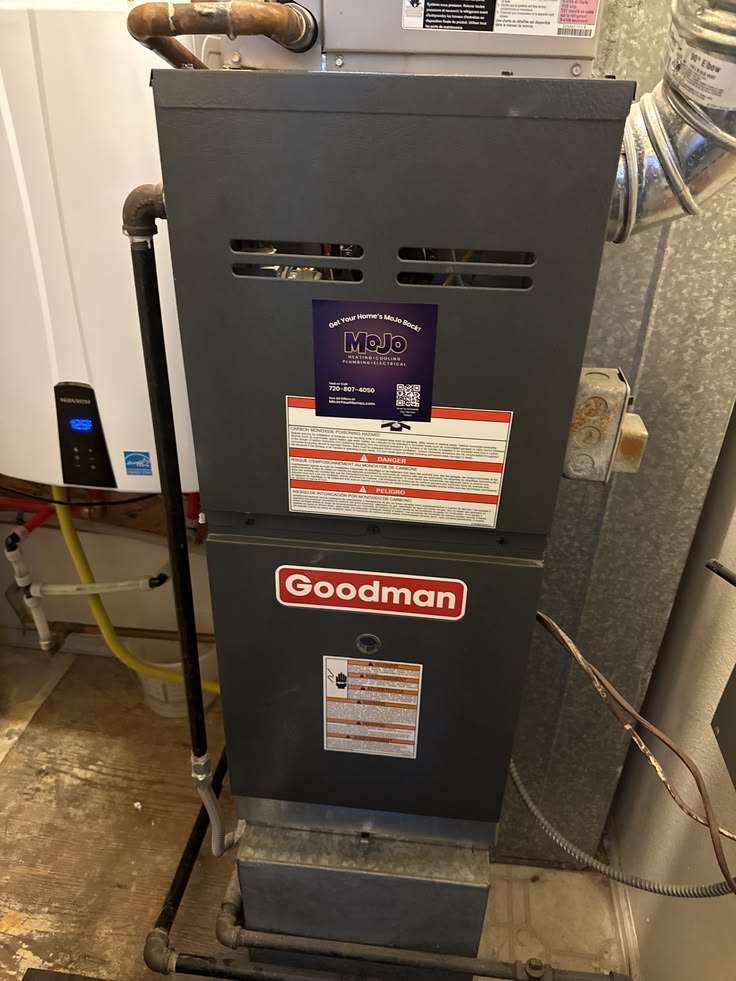
A whole-house humidifier isn't a standalone appliance — it's a component that ties directly into your existing forced-air heating system. Our technicians mount the unit on the supply or return plenum of your furnace, connect it to a cold-water line, and route a drain for excess water. It's wired to its own control called a humidistat, which works like a thermostat but for moisture: you set your target humidity, and the system adds moisture automatically whenever the air drops below it.
Because the humidifier rides on your furnace's distribution system, every room your ductwork reaches gets humidified evenly — no chasing moisture from room to room with portable units. Many modern smart thermostats can even monitor and manage humidity alongside temperature; if you're upgrading your controls, our breakdown of smart thermostats that actually save you money is worth a read before you buy.
One important note: a humidifier shares air with your filtration. Running it alongside a clean filter and a healthy air-handling setup keeps the whole system efficient. If your filter is clogged, airflow suffers and so does humidifier performance — which is exactly why we recommend pairing this upgrade with the habits in our ultimate guide to changing and maintaining air filters.
Sizing, Cost, and Who Benefits Most
Whole-house humidifiers are rated by how many gallons of moisture per day they can add and the square footage they cover. A small bypass unit might handle a home up to around 3,000–4,000 square feet, while larger fan-powered and steam units serve bigger or leakier homes. Proper sizing matters: an undersized unit won't keep up with Denver's dry air, while an oversized one can over-humidify and cause condensation on windows. This is why we always size based on your home's actual square footage, construction tightness, and window count rather than a one-size-fits-all guess.
Here are realistic installed cost ranges for the Denver Metro Area:
Bypass humidifier: roughly $400–$800 installed — the budget-friendly workhorse for most homes.
Fan-powered humidifier: roughly $500–$1,000 installed — more output for larger homes.
Steam humidifier: roughly $1,200–$2,500+ installed — premium performance and precision.
So who benefits most? Honestly, nearly every Denver homeowner does, but the upgrade is especially valuable for families with young children or older adults, anyone with asthma, allergies, eczema, or frequent respiratory infections, homes with hardwood floors or fine wood furniture, musicians protecting instruments, and owners of older homes in neighborhoods like Park Hill or Capitol Hill where dry air can stress aging woodwork. A whole-house humidifier is a core part of a complete indoor air quality solution, and our team installs and services them as part of our humidifier and UV light services across the metro.
Maintenance: Keeping Your Humidifier Healthy
A whole-house humidifier is low-maintenance, but it isn't no-maintenance — and skipping upkeep can turn a healthy upgrade into a source of mold or mineral buildup. The single most important task is replacing the water panel (evaporator pad) at least once per heating season, and more often if you have hard water, which much of the Denver Metro Area does. Mineral scale from our water can clog the pad and choke output.
Beyond that, annual service should include flushing the drain line, inspecting the humidistat calibration, cleaning the unit, and checking the water valve and connections for leaks. The good news: this fits neatly into your regular fall furnace tune-up, so our technicians can service the humidifier in the same visit. Bundling it with your seasonal HVAC maintenance keeps both your heating system and your humidity dialed in before Denver's coldest months hit.
Set your humidistat thoughtfully, too. Aim for the 30–50% range, but on the coldest days you may need to dial it back toward 30% to prevent condensation from forming on your windows. If you see fogging or frost on the glass, that's your cue to lower the setting slightly.
Your Local Indoor Air Quality Partner in Denver
Denver's bone-dry winter air isn't just a comfort nuisance — over a season it can crack your skin, irritate your lungs, damage your hardwood floors and furniture, and quietly push up your heating bills. A properly sized, professionally installed whole-house humidifier solves all of that automatically, all winter long, with very little effort on your part.
For more than 16 years, MoJo Home Services has helped Denver Metro families breathe easier and stay comfortable through every season. As a NATE-certified, EPA-certified, and BBB-accredited team, we'll assess your home, recommend the right humidifier type and size for your space and budget, and integrate it seamlessly with your existing furnace and air quality setup.
Ready to put an end to dry-air winters? Contact MoJo Home Services today to schedule your whole-house humidifier consultation, and enjoy healthier, more comfortable air throughout your home all winter long.

Sources & References
U.S. Environmental Protection Agency - Care for Your Air: A Guide to Indoor Air Quality, EPA, 2024
U.S. Department of Energy - Humidifiers and Dehumidifiers, Energy Saver, 2023
ENERGY STAR - Heating & Cooling Guidance, U.S. EPA / DOE, 2024
ASHRAE, ANSI/ASHRAE Standard 55: Thermal Environmental Conditions for Human Occupancy, American Society of Heating, Refrigerating and Air-Conditioning Engineers, 2023
Mayo Clinic - Humidifiers: Ease Skin, Breathing Symptoms, Mayo Foundation for Medical Education and Research, 2023
Need expert whole-house humidifier service in Denver? MoJo Home Services provides professional indoor air quality and heating solutions throughout the Denver Metro Area. Contact us at 4000 Newman St, Wheat Ridge, CO 80033 or call (720) 807-4050 for same-day service.
Frequently Asked Questions
Do I really need a whole-house humidifier in Denver?
For most Denver homes, yes. Our semi-arid climate at 5,280 feet drives indoor winter humidity down to 10–20%, far below the healthy 30–50% range the EPA recommends. That extreme dryness causes cracked skin, bloody noses, static shocks, and damage to hardwood floors and furniture. A whole-house humidifier installed into your furnace restores moisture to every room automatically, all winter long. While portable units can help a single room, only a whole-house system can keep an entire Denver home comfortably humidified through our long heating season — which often runs from October into April.
What humidity level should I keep my home at in winter?
Aim for relative humidity between 30% and 50%, which the EPA identifies as the healthy comfort range. In Denver's coldest stretches, you may need to set your humidistat closer to 30% to prevent condensation or frost from forming on windows. If you notice fogging on the glass, lower the setting a few percent. A properly installed whole-house humidifier with a quality humidistat manages this automatically, adjusting moisture output as outdoor conditions and your heating cycles change throughout the day.
What's the difference between bypass, fan-powered, and steam humidifiers?
A bypass humidifier is the simplest and most affordable, using your furnace's blower to move air across a water panel. A fan-powered (power) unit adds its own fan for higher output, making it a good fit for larger homes. A steam humidifier electrically boils water to inject sterile steam, delivering the highest, most precise output and working whether or not the furnace is heating. Bypass units cost the least; steam units cost the most but offer the best performance and control for big homes or sensitive respiratory needs.
How much does a whole-house humidifier cost to install?
In the Denver Metro Area, expect roughly $400–$800 installed for a bypass humidifier, $500–$1,000 for a fan-powered unit, and $1,200–$2,500 or more for a steam system. Final pricing depends on your furnace type, home size, ductwork, and water and drain access. Because the unit ties into your existing forced-air system, installation is usually straightforward for an experienced technician. Many homeowners find the comfort, health, and potential heating savings well worth the one-time investment.
Can a whole-house humidifier actually lower my heating bill?
Indirectly, yes. Properly humidified air feels warmer at the same temperature because moisture slows the rate your body loses heat. Many Denver homeowners find they can comfortably lower their thermostat a degree or two in winter once their home is properly humidified, which can trim heating costs over a long Front Range heating season. The savings vary by home, but the comfort improvement is immediate — you stop feeling that chilly, drafty edge that bone-dry air creates even when the thermostat reads a warm number.
How often does a whole-house humidifier need maintenance?
Plan on at least once-per-season service. The key task is replacing the water panel (evaporator pad) every heating season, or more often given the hard water common across the Denver Metro Area. Annual service should also flush the drain line, check humidistat calibration, clean the unit, and inspect for leaks. The easiest approach is to bundle humidifier service with your fall furnace tune-up so our technicians handle both in one visit, ensuring your system is ready before Denver's coldest months arrive.
Related Resources