TL;DR
AC Troubleshooting
When your air conditioner will not turn on at all, many of the causes are simple and safe to check yourself. This guide walks through the steps in order, from the thermostat and tripped breakers to the outdoor disconnect, condensate float switch, and air-handler power switch, and explains when the problem calls for a professional.
It's a hot Denver afternoon, you walk over to lower the temperature, and nothing happens. No hum from the outdoor unit, no cool air from the vents, just silence. When your air conditioner won't turn on, it's frustrating, but the good news is that many causes are simple, safe-to-check issues you can rule out in a few minutes before you ever pick up the phone.
Here's the short answer on what to check first: start at your thermostat (confirm it's set to COOL and the temperature is set below the room reading, then replace the batteries), then check your electrical panel for a tripped breaker, and finally look at the outdoor disconnect box next to the condenser. Those three checks resolve a large share of "AC completely dead" calls. The remaining culprits, like a tripped condensate float switch, a blown control-board fuse, or a failed capacitor, are worth understanding too, and we'll walk through all of them in order below.
At 5,280 feet, Denver homes face unique stress on cooling equipment. Our dramatic temperature swings, dry air, and the summer monsoon power flickers that roll through neighborhoods like Wheat Ridge and Arvada can trip breakers and surge-sensitive components more often than you'd expect. Add in the older electrical panels common in those areas, and a dead AC is a regular summer occurrence here. Let's get yours diagnosed.
Step 1: Check the Thermostat First
It sounds almost too simple, but the thermostat is the number-one reason a perfectly healthy AC "won't turn on." Before assuming the worst, confirm three things on the thermostat itself:
Mode: Make sure it's set to COOL, not OFF, HEAT, or fan-only. It's easy to bump the mode without noticing, especially on older manual units.
Setpoint: Set the target temperature at least 3 to 5 degrees below the current room temperature. If the room is 74 and the thermostat is set to 75, the system has no reason to start.
Batteries: Many digital and smart thermostats run on AA or AAA batteries. A dead battery can leave the screen looking fine while quietly cutting the call for cooling. Swap in fresh batteries before anything else.
If your thermostat screen is blank, batteries are the likely fix. If you've recently installed a smart thermostat and the AC stopped responding, double-check the wiring and scheduling, our guide on smart thermostats that actually save you money covers common setup snags. A correctly programmed thermostat is also the foundation for efficient cooling, which we break down in our overview of programmable thermostats for Denver homes.
Step 2: Look for a Tripped Breaker in the Electrical Panel
If the thermostat checks out, head to your main electrical panel. A central air conditioner typically has its own dedicated 240-volt circuit, shown as a double breaker. A tripped breaker often sits in a middle position, not fully ON and not fully OFF.
To reset it safely, push the breaker firmly all the way to OFF first, then back to ON. If it holds, your AC may simply have tripped during a power surge, which is common during Denver's summer monsoon season when afternoon storms cause brief voltage flickers. If the breaker trips again immediately, stop. A breaker that won't stay reset is protecting your home from a real electrical fault, an overloaded circuit, a short, or a failing component, and forcing it repeatedly is a fire risk.
This is especially relevant in older Denver neighborhoods. Many homes in Wheat Ridge, Arvada, and parts of Capitol Hill still run on aging 100-amp panels that struggle under the combined load of modern appliances and an air conditioner working hard in the heat. If your breakers trip often, that panel may be near its limit. For a deeper look at sudden, total cooling failures, our Denver emergency AC troubleshooting guide walks through what to do next.
Step 3: Check the Outdoor Disconnect Box
Right next to your outdoor condenser unit, mounted on the exterior wall, you'll find a small metal or plastic box called the disconnect. It's a safety switch that cuts power to the outdoor unit for service. Sometimes it gets bumped, left out after maintenance, or pulled by a previous technician and never fully reseated.
Open the box and confirm the switch or pull-out block is fully engaged in the ON position. Some models use a lever; others use a removable block that must be pushed in firmly with the correct orientation. If you see scorch marks, melted plastic, or a burnt smell inside the disconnect, do not touch it, that's a sign of a serious electrical problem that requires a licensed professional.
While you're at the outdoor unit, take a quick look at the condenser itself. Cottonwood season and Denver's dust can clog the coil and reduce airflow, which makes the system overheat and shut down on its safety controls. Keeping the area clear is part of good seasonal upkeep, something we cover in our 2026 guide to pre-season cooling.
Step 4: Inspect the Condensate Float Switch and Drain Line
Here's a sneaky one that surprises a lot of homeowners. Your air conditioner removes humidity from the air, and that moisture drains away as water. To prevent water damage, most systems include a condensate float switch, a small safety device that shuts the AC off completely if the drain pan fills up.
If your drain line clogs, the pan fills, the float rises, and the system refuses to start, exactly the "AC won't turn on" symptom, even though nothing is electrically wrong. In Denver's dry climate we get less condensate than humid regions, but algae, dust, and debris still clog drain lines, particularly on systems that haven't been serviced in a while.
You can often clear a partial clog yourself. Locate the white PVC condensate line near your indoor unit, and use a wet/dry vacuum at the outdoor end to pull out the blockage. Some homeowners pour a cup of distilled white vinegar into the drain access port to keep algae down. If the pan is full or the line is fully blocked, it's best to have a technician clear it and confirm the float switch is working correctly, since a misbehaving switch can leave you without cooling on the hottest days. Persistent clogs are one of the warning signs we flag in our list of 5 signs you need air conditioner repair.
Step 5: The Furnace or Air-Handler Power Switch
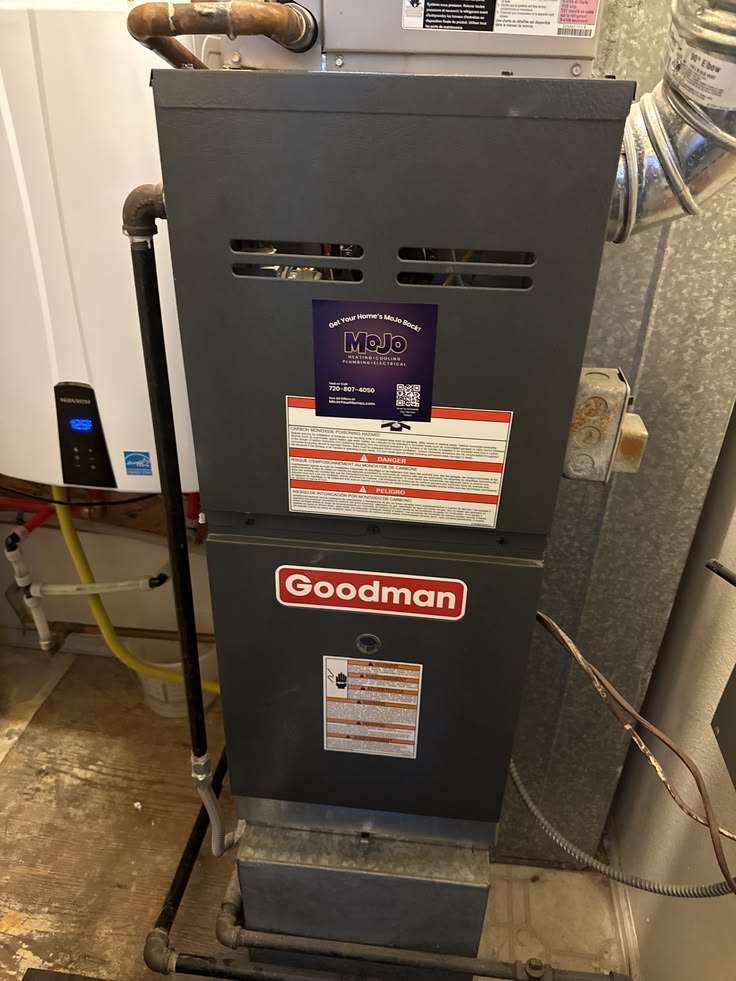
Many Denver homeowners don't realize their central AC relies on the indoor furnace or air handler to run the blower and circulate cool air. That indoor unit has its own power switch, and it often looks exactly like a standard light switch mounted on or near the furnace in the basement or utility closet.
It's surprisingly common for this switch to get flipped off by accident, by a curious kid, during cleaning, or after a service visit. If the switch is off, the entire system goes dark, including your AC. Flip it back on, wait a minute, and try the thermostat again.
While you're there, check the furnace filter. A severely clogged filter chokes airflow and can trigger safety shutdowns or cause the indoor coil to freeze, which mimics a no-start condition. Replacing a dirty filter is one of the easiest DIY wins for any homeowner, and our guide to changing and maintaining air filters shows you exactly how and how often.
Step 6: When It's the Fuse, Capacitor, or Contactor (Call a Pro)
If you've worked through the steps above and your air conditioner still won't turn on, the cause is likely an internal electrical component, and this is where DIY ends and a licensed technician takes over. These parts carry stored or live high voltage and can cause serious injury if handled without training.
Blown control-board fuse: The furnace control board usually has a small 3- or 5-amp blade fuse. When it blows, the system loses its low-voltage control signal and won't start. A technician will diagnose why it blew before replacing it, since a blown fuse is usually a symptom of another fault.
Failed capacitor: The capacitor gives the compressor and fan motors the jolt they need to start. A bad capacitor often shows up as a humming or clicking outdoor unit that won't actually spin up. Capacitors store a dangerous charge even when the power is off, this is strictly a job for a professional.
Burned contactor: The contactor is the relay that sends power to the condenser when the thermostat calls for cooling. Pitted, stuck, or burned contacts will prevent the unit from energizing entirely.
At Denver's altitude, components run a little harder during our intense, high-sun summer afternoons, and the rapid temperature swings between day and night add thermal stress that wears these parts faster. Our NATE-certified technicians carry common capacitors, contactors, and fuses on the truck, so most of these repairs are same-day. If your unit is short-cycling or simply won't kick on, our team provides fast, reliable AC repair throughout the Denver Metro Area, and routine AC maintenance is the best way to catch a weak capacitor or fuse before it strands you in July.
Your Local Partner for Same-Day AC Repair in Denver
Working through these checks, the thermostat, the breaker, the disconnect, the float switch, the drain line, the indoor power switch, will resolve a surprising number of "my AC is dead" situations without a service call. But when the problem points to a fuse, capacitor, or contactor, calling a professional isn't just easier, it's safer. Electrical work inside an HVAC system is not the place to take chances.
For 16-plus years, MoJo Home Services has helped homeowners across Aurora, Lakewood, Wheat Ridge, Arvada, and the rest of the Denver Metro Area get their cooling back fast. As a NATE-certified, EPA-certified, and BBB-accredited team, we diagnose the real root cause rather than just swapping parts and hoping. When the temperature climbs and your AC won't respond, you shouldn't have to wait days for relief.
If you've tried the safe checks above and your air conditioner still won't turn on, contact our team today to schedule fast, same-day service. We'll get your home comfortable again and make sure your system is ready to handle the rest of Denver's wild summer.

Sources & References
U.S. Department of Energy - Central Air Conditioning, Office of Energy Efficiency & Renewable Energy, 2024
ENERGY STAR - Central Air Conditioner Maintenance Checklist, U.S. EPA, 2024
Carrier, Why Is My Air Conditioner Not Turning On? Troubleshooting Tips, Residential HVAC Resources, 2024
Air Conditioning Contractors of America (ACCA), Homeowner Guidance on HVAC System Operation and Maintenance, 2023
Xcel Energy Colorado, Summer Energy Use and Cooling Efficiency Resources, 2024
Need expert AC repair in Denver? MoJo Home Services provides professional heating and cooling services throughout the Denver Metro Area. Contact us at 4000 Newman St, Wheat Ridge, CO 80033 or call (720) 807-4050 for same-day service.
Frequently Asked Questions
Why won't my AC turn on even though the thermostat is on?
A lit thermostat doesn't guarantee the AC is getting power. The most common reasons are a tripped breaker on the air conditioner's dedicated 240-volt circuit, an outdoor disconnect switch that's been bumped off, or a tripped condensate float switch that shuts the system down when the drain pan fills. The furnace or air-handler power switch indoors can also be flipped off by accident. Work through each of these one at a time. If the breaker trips again right after you reset it, stop and call a professional, that signals a genuine electrical fault that needs diagnosis.
Should I keep resetting my breaker if my AC keeps tripping it?
No. A breaker that trips once may have been caught by a harmless power flicker, common during Denver's summer monsoon storms, and a single reset is fine. But if the breaker trips again immediately or repeatedly, it's doing its job by protecting your home from a short circuit, an overloaded circuit, or a failing component like a seized compressor. Repeatedly forcing it back on is a fire hazard and can cause further damage. At that point, turn the system off and schedule a licensed technician to find the underlying cause before running the AC again.
Can a clogged drain line really stop my AC from turning on?
Yes. Most modern systems include a condensate float switch as a safety feature. When the drain line clogs and the pan fills with water, the float rises and cuts power to the AC to prevent water damage to your home. The result looks exactly like a dead unit, even though nothing is electrically broken. You can often clear a partial clog with a wet/dry vacuum at the drain's exterior outlet, and a cup of distilled vinegar in the access port helps control algae. If the pan stays full, have a technician clear the line and verify the float switch.
Is it safe to replace an AC capacitor myself?
We strongly recommend against it. A capacitor stores a high-voltage electrical charge even after the power is completely shut off, and contact with that charge can cause serious injury. Capacitor failure is one of the most common reasons an outdoor unit hums or clicks but won't start, so it's a frequent repair, but it's strictly a job for a trained professional with the right tools to safely discharge and test the component. Our technicians carry common capacitors on the truck, so replacement is usually same-day once the diagnosis is confirmed.
Do older Denver homes have more AC startup problems?
Often, yes. Many homes in established neighborhoods like Wheat Ridge, Arvada, and Capitol Hill still run on older 100-amp electrical panels that can struggle under the combined load of modern appliances and an air conditioner running hard at 5,280 feet. That makes nuisance breaker trips more likely, especially during summer monsoon power flickers. If your breakers trip frequently or your panel feels overloaded, it may be undersized for today's demands. A professional load assessment can tell you whether a panel upgrade would solve recurring AC startup issues.
When should I call a professional instead of troubleshooting myself?
Handle the safe checks yourself: thermostat settings and batteries, a single breaker reset, the outdoor disconnect position, the indoor power switch, the air filter, and clearing a light drain-line clog. Call a licensed professional the moment you see scorch marks or smell burning near the disconnect or panel, a breaker that won't stay reset, a humming unit that won't start, or any need to open the electrical compartments housing the fuse, capacitor, or contactor. These involve live or stored high voltage. In Denver's intense summer heat, same-day repair also matters for comfort and safety, so don't wait on a system that's fully down.
Related Resources