Welcome, Neighbors of
Castle Pines
Furnace Repair in Castle Pines, CO
Castle Pines sits up on the pine covered ridge where the suburbs finally run out, high enough that winter lingers here after the city has thawed. The homes are large and the heating system rarely gets a quiet month. We are family owned, licensed and insured, and have served this area since 2009.
5-star rated · Local & Family-owned since 2009
Licensed & Insured
Family Owned
NATE Certified
EPA Certified
BBB Accredited
Serving Denver Metro

See your neighbor deals
MoJo Home Services
Furnace Repair
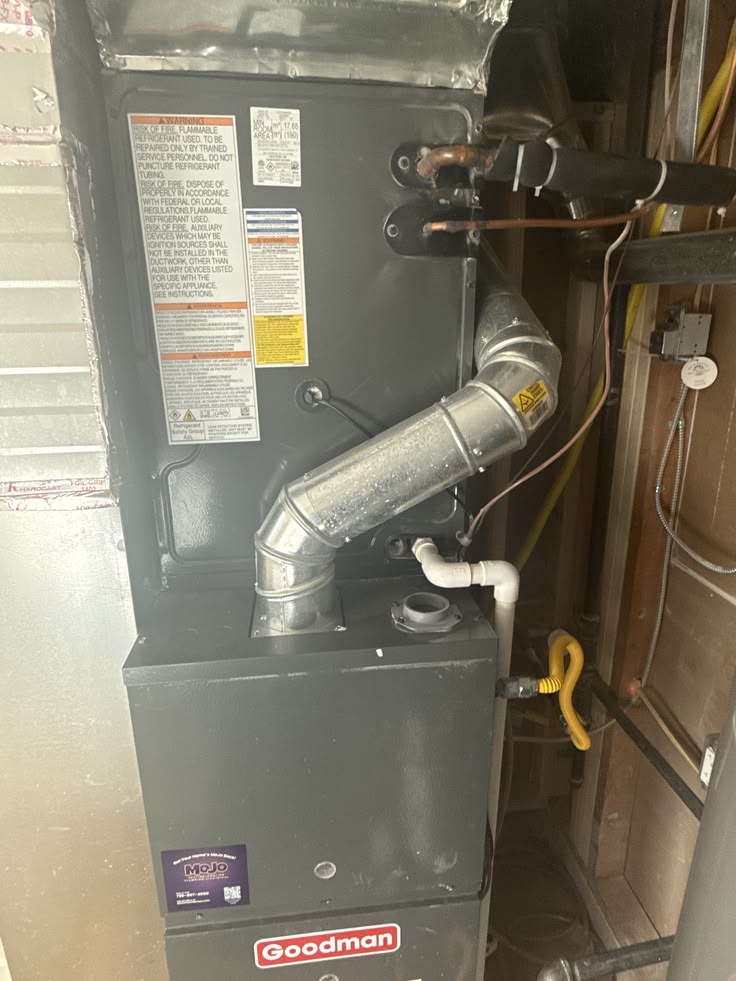
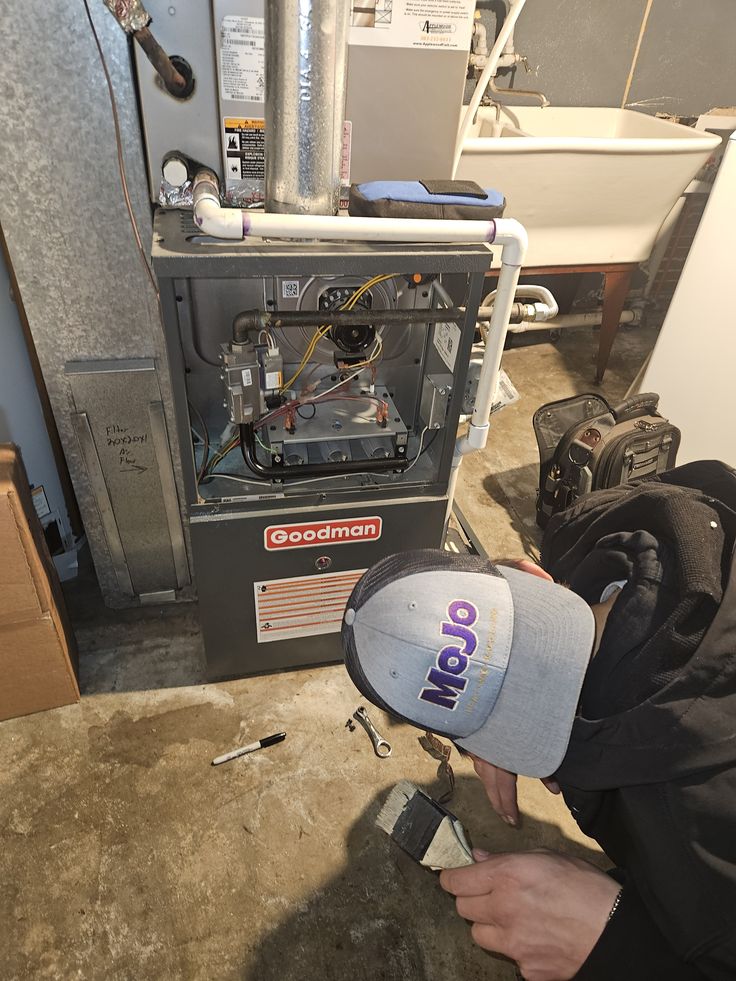
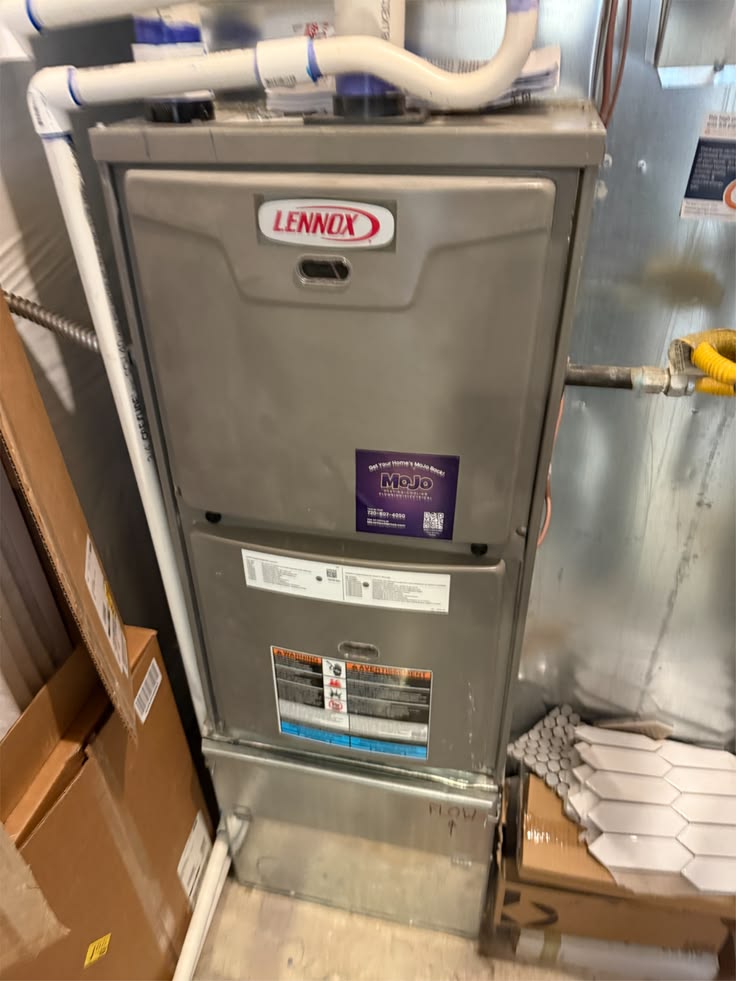
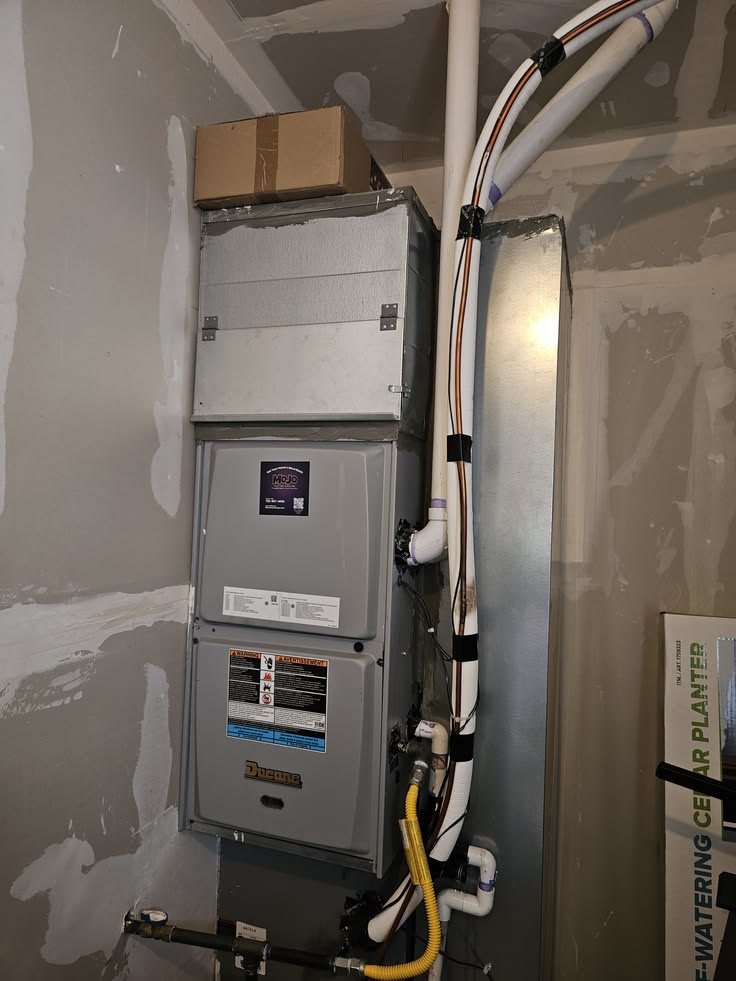
Gas Furnace Repair in Castle Pines, CO
Castle Pines sits at 6,558 feet, higher than any other incorporated city MoJo Home Services covers, and gas appliances there give up 18.2% of their rated input to the altitude. A furnace with 100,000 BTU per hour on the label is really firing about 81,800. That is not a rounding error, and in a community of 3,614 people it is the single fact that decides whether a Castle Pines furnace is broken or simply asked to do something it was never sized to do. Reach a licensed, insured technician at 720-807-4050.
What does an 18.2% derate do to a 100,000 BTU furnace in Castle Pines?
Take the derate off the input first: 100,000 becomes 81,800 BTU per hour actually burning. Then apply efficiency. At 80% AFUE about 65,400 BTU per hour reaches the supply plenum instead of the 80,000 the label implies. At 95% about 77,700 arrives rather than 95,000. Nearly 15,000 BTU per hour has gone missing on the high-efficiency unit and nearly 15,000 on the mid-efficiency one, before anything is wrong with the machine. Every Castle Pines diagnosis starts by separating that expected loss from a genuine fault.
How should a replacement furnace be sized at 6,558 feet?
Backwards from the derated output, never from the nameplate. A Castle Pines home with a 55,000 BTU per hour design heat loss needs input divided by both the efficiency and the 0.818 altitude factor. In a 95% condensing furnace that is about 70,800 BTU per hour of nameplate input; in an 80% unit it is roughly 84,000. Residential furnaces are commonly sold in 20,000 BTU steps, so the real choice is an 80,000 or a 100,000. The 80,000 delivers about 62,200 usable BTU per hour here, a sensible margin over 55,000. The 100,000 delivers about 77,700, which is more than 40% surplus. Picking the larger box because the altitude sounds intimidating is how Castle Pines furnaces end up short-cycling.
Why does short-cycling get worse when the furnace is made bigger?
The oversizing spiral runs like this. A homeowner finds the house slow to recover on a cold night, a replacement is quoted two nameplate sizes up, and the shortfall on design days disappears. But design days are a handful of hours a year. On the other several hundred heating hours the oversized furnace satisfies the thermostat in three or four minutes, shuts down before the heat exchanger has reached steady state, and repeats. Cycle count, not run time, is what fatigues heat exchangers and wears ignition components. A Castle Pines furnace sized honestly against 18.2% will run longer burns and outlive one that was sized against fear.
Do modulating and two-stage furnaces still make sense in Castle Pines?
They make more sense here than lower down, provided the numbers are read after the derate. A modulating furnace that turns down to 40% of a 100,000 BTU nameplate is firing 40,000 on paper, about 32,700 after the Castle Pines derate, and roughly 31,100 delivered at 95% efficiency. That is a genuinely gentle output for a mild evening and it is exactly what stops the short-cycling described above. The trap is judging the top end by the label: the same furnace's full fire is 77,700 usable, so the modulation range in Castle Pines runs from about 31,100 to 77,700, not from 38,000 to 95,000.
What fails first on furnaces at Colorado's higher city elevations?
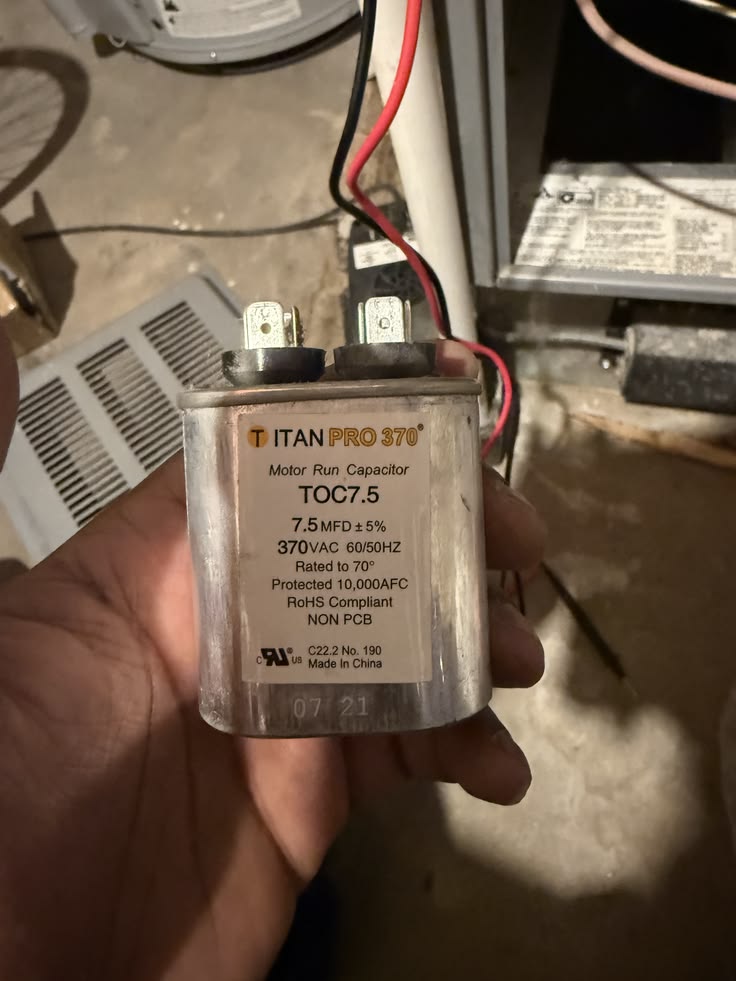
Ignition components and anything that counts cycles. Hot surface igniters, flame sensors, pressure switch diaphragms and inducer motors all wear per start rather than per hour, and an oversized Castle Pines furnace starts far more often than its designer assumed. Burners still carrying sea-level orifices run rich in air that holds roughly 18% less oxygen per cubic foot, which shows as a lazy yellow-tipped flame, soot on the burner face, or a soft thump at light-off. Any of those is worth a same-day call rather than a spring tune-up.
How does Castle Pines compare with the towns around it?
Castle Rock is 334 feet lower and derates 16.9%, a 1.3-point difference that is enough to change which column of a manufacturer's altitude table applies. Lone Tree at 15.8% and Highlands Ranch at 14.7% are lower again. A furnace moved on paper from a Highlands Ranch heat-loss worksheet to a Castle Pines house is short by 3.5 percentage points of input before anyone opens a toolbox, which is why we carry high-altitude orifice sets on Douglas County calls rather than ordering them afterwards.
Other Castle Pines-area pages
We work furnace repair in Castle Rock, furnace repair in Lone Tree, furnace repair in Highlands Ranch out of the same dispatch.
If it is the other system acting up instead, start at AC repair in Castle Pines.
See furnace repair for the service itself, or everything in Castle Pines for everything we do there.

Castle Pines
Home Of The $39 Diagnosis
Book your diagnostic today!
The $39 diagnostic service is a professional troubleshooting visit performed by a certified MoJo technician to identify the root cause of an HVAC issue.
Frequently Asked Questions
How much output does a furnace lose at Castle Pines elevation?
Castle Pines is 6,558 feet up, 4,558 feet above the 2,000-foot baseline, so the standard 4%-per-thousand deduction gives an 18.2% derate — the steepest of any incorporated city we serve. A 100,000 BTU per hour furnace fires about 81,800 here, and an 80,000 unit about 65,400. At 95% efficiency the 100,000 delivers roughly 77,700 usable BTU per hour.
What size furnace does a Castle Pines home actually need?
Divide the home's design heat loss by both the efficiency and 0.818. A Castle Pines house losing 55,000 BTU per hour on a design night needs about 70,800 of nameplate input in a 95% condensing furnace, or roughly 84,000 in an 80% unit. In practice that points at an 80,000 nameplate rather than a 100,000, because the larger box overshoots by more than 40% and short-cycles.
Why does my oversized Castle Pines furnace still leave the house cold?
Because oversizing fixes the wrong problem. At 18.2% derate the shortfall appears on design nights, but an oversized furnace satisfies the thermostat in three or four minutes on ordinary nights, never reaching steady-state output and leaving rooms far from the thermostat unheated. The result is a house that feels uneven and a heat exchanger accumulating cycles far faster than its designer planned for.
Is a modulating furnace worth it at 6,558 feet?
Often yes, if you read the range after the derate. A modulating 100,000 BTU furnace turning down to 40% fires about 32,700 BTU per hour in Castle Pines and delivers near 31,100 at 95% efficiency, which suits a mild evening without cycling. Its full fire is about 77,700 usable, not 95,000, so the usable band here runs roughly 31,100 to 77,700.
Does a Castle Pines furnace need a high-altitude conversion?
Residential furnaces are certified as shipped only to 2,000 feet, and Castle Pines is 4,558 feet past that, so manufacturers publish separate orifice sizes and manifold settings that apply here. A unit installed with factory sea-level orifices is over-fired for air carrying roughly 18% less oxygen per cubic foot. Reading the orifice stamp and setting manifold pressure against the high-altitude column is a short check with a decade of consequences.
MoJo Home Services
A note for our neighbors
Castle Pines is the kind of place where people compare notes, and we have ended up on several streets here because one household mentioned us to another. We do not take that for granted. Honest heating repair and being spoken well of afterward is really the whole of our business, and always has been.

Furnace Repair
In
Castle Pines
Share Your Experience
Thank you for supporting our local family business. If we did right by you, we'd love to hear about it on any site you use.
- Write a Google reviewQuick & easy
- Find us on YelpRead what neighbors said
- Review us on FacebookShare with friends
- Recommend us on NextdoorTell your neighbors


Your referrals and reviews not only mean so much to us, they also help the community know who to trust to Get their Home's MoJo Back!
Honest feedback is what we're after, good or bad. If something fell short, call us at the office first and we'll make it right.