Welcome, Neighbors of
Stonegate
AC Repair in Stonegate, CO
Stonegate is a planned community where the homes came up together and the weather swings hard from a mild morning to a blazing afternoon. That swing is exactly why a system set up on the wrong sort of day never feels right. Family owned, licensed and insured, since 2009.
5-star rated · Local & Family-owned since 2009
Licensed & Insured
Family Owned
NATE Certified
EPA Certified
BBB Accredited
Serving Denver Metro

See your neighbor deals
MoJo Home Services
Out in your neighborhood · Denver Metro
Air Conditioning Repair in Stonegate, Colorado
A large share of weak-cooling complaints in Stonegate trace back to a refrigerant charge that was set once, in cool weather, and never verified under a real summer load. Charging is not a one-time event that survives every season afterwards, and the conditions it was done in decide whether the numbers meant anything. MoJo Home Services covers this community of 8,962 at 5,876 feet. Licensed, insured, EPA-certified: 720-807-4050.
Why does the weather on the day of charging matter in Stonegate?
Because most manufacturer charging charts are only valid above roughly 65 degrees outdoor ambient. Below that, head pressure falls, refrigerant backs up in the condenser, and superheat and subcooling readings stop describing the actual charge. An install or a repair finished on a cool spring morning has to be charged by weighing refrigerant in against the nameplate value plus the line-set allowance, then verified later when the weather cooperates. That verification visit is the step that gets skipped, and the shortfall only shows up in July.
How is a Stonegate charge verified properly?
Airflow comes first, always. Total external static pressure and delivered airflow get measured before a gauge goes on, because a restricted indoor coil drives suction pressure down and imitates an undercharge convincingly. Then the method depends on the metering device: subcooling against the target printed on the outdoor unit for a system with a thermostatic expansion valve, superheat compared against a chart of indoor wet bulb and outdoor dry bulb for a fixed-orifice system. Using the wrong one of those two produces a confident, wrong answer.
Does 5,876 feet change what the gauges read?
Slightly, and in a way worth understanding. A service gauge reads pressure relative to local atmosphere, and atmospheric pressure in Stonegate is about 24.1 inches of mercury, near 11.8 psi absolute, against 14.7 at sea level. So the same gauge reading corresponds to roughly 3 psi less absolute pressure here, which shifts the saturation temperature taken off a pressure-temperature chart by around a degree. That is small next to the airflow correction, but it stacks on top of every superheat and subcooling calculation on the job. The larger altitude effects remain heat rejection and air mass.
What does 5,876 feet do that 5,869 feet does not?
Nothing at all. Stonegate sits 7 feet above Parker, which is a rounding error in any HVAC calculation. Both need about 477 CFM per ton, both carry a 15.5% gas derate, and both work in air roughly 16.1% thinner than sea level. Anyone selling Stonegate a different specification than Parker on altitude grounds is inventing a distinction. What genuinely differs is the housing: Stonegate is a community of 8,962 built inside a comparatively narrow window, which concentrates equipment types and installation habits in a way a larger, older town does not.
What repeats across a community built in one window?
Patterns worth tracking. Where a few equipment lines were installed across hundreds of homes in a handful of years, the same components reach end of life in the same seasons, the same line-set routing decisions recur, and the same commissioning shortcut, including the cool-weather charge, tends to repeat address after address. That is genuinely useful on a service call: a fault already confirmed twice in Stonegate gets checked early on the third call rather than late, and confirmed with readings rather than assumed from the pattern.
How can a homeowner tell the charge is wrong rather than the system being tired?
By the shape of the symptom. A system low on refrigerant typically still cools, just not enough, produces a temperature drop across the coil narrower than it should, and may frost the suction line near the outdoor unit. A system with an airflow restriction shows a wide temperature drop with weak air volume at the registers. A system that is simply worn out shows normal readings and poor results. Those three feel identical to a homeowner in August and diverge completely on a meter.
Can a spring tune-up confirm the refrigerant charge in Stonegate?
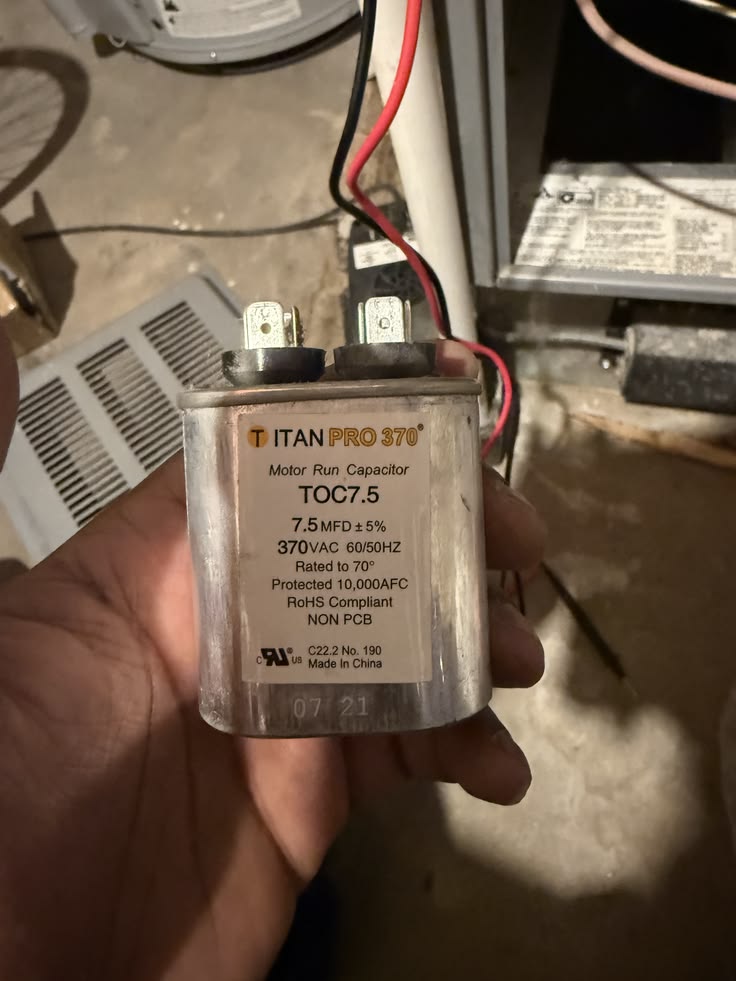
Only partly, and it is worth knowing which parts. A March or April visit can measure capacitor values, amp draw, contactor condition, static pressure, delivered airflow, coil cleanliness and the condensate path, and every one of those readings is valid regardless of outdoor temperature. What it cannot do is verify superheat or subcooling, because below about 65 degrees outside the charging charts do not apply. A tune-up that reports the charge as correct in early spring is reporting something the conditions did not allow it to measure.
Nearby Douglas County service
We work Parker immediately south, Lone Tree to the west, and Foxfield across the county line.
Nearby towns we cover
We work AC repair in Parker, AC repair in Foxfield, AC repair in Lone Tree, AC repair in Pheasant Run, AC repair in Ponderosa East, AC repair in Roxborough Park, AC repair in Sedalia, AC repair in The Pinery out of the same dispatch.
The opposite season has its own failure list: furnace repair in Stonegate.
More on the service itself: AC repair.

Stonegate
Home Of The $39 Diagnosis
Book your diagnostic today!
The $39 diagnostic service is a professional troubleshooting visit performed by a certified MoJo technician to identify the root cause of an HVAC issue.
Frequently Asked Questions
Can an air conditioner be charged correctly in cool weather in Stonegate?
Only by weight. Manufacturer charging charts generally require outdoor temperatures above about 65 degrees, so a spring or autumn job has to be charged by weighing in the nameplate quantity plus the line-set allowance. The superheat and subcooling verification then has to happen once outdoor temperatures rise. Skipping that second step is why many Stonegate systems underperform in midsummer.
Does Stonegate's elevation change refrigerant pressure readings?
A little. Atmospheric pressure at 5,876 feet is around 24.1 inches of mercury, close to 11.8 psi absolute rather than 14.7, so a gauge reading corresponds to roughly 3 psi less absolute pressure than the same reading at sea level. That moves the saturation temperature by about a degree. The bigger altitude effects in Stonegate are airflow and condenser heat rejection.
Is Stonegate higher than Parker?
By 7 feet. Stonegate is at 5,876 feet and Parker at 5,869, which is far too small a difference to change any sizing, airflow or capacity figure. Both communities need roughly 477 CFM per ton and both carry the same 15.5% derate on gas equipment. Differences between the two on a service call come from housing stock and installation history, not elevation.
How do I know if my Stonegate AC is low on refrigerant?
Low charge usually cools weakly rather than not at all, gives a narrower than expected temperature drop across the indoor coil, and can frost the suction line at the outdoor unit. Restricted airflow produces the opposite pattern, a wide drop with little air volume. Because these look identical from inside the house, airflow gets measured before any refrigerant judgement is made.
Why should airflow be measured before the refrigerant charge?
Because a restricted indoor coil lowers suction pressure and mimics an undercharge closely enough to fool a gauge-only diagnosis. Adding refrigerant on that evidence raises head pressure and shortens compressor life. In Stonegate, where about 477 CFM per ton is needed rather than the tabulated 400, airflow shortfalls are common enough that measuring first is simply the correct order.
MoJo Home Services
A note for our neighbors
Stonegate neighbors seem to swap recommendations constantly, which is either the best advertising there is or the worst, depending on how your last job went. We are grateful ours have gone well enough that people keep passing our name on for AC repair. Thank you for the kind words we never see.

On the job
In
Stonegate
Share Your Experience
Thank you for supporting our local family business. If we did right by you, we'd love to hear about it on any site you use.
- Write a Google reviewQuick & easy
- Find us on YelpRead what neighbors said
- Review us on FacebookShare with friends
- Recommend us on NextdoorTell your neighbors


Your referrals and reviews not only mean so much to us, they also help the community know who to trust to Get their Home's MoJo Back!
Honest feedback is what we're after, good or bad. If something fell short, call us at the office first and we'll make it right.