Welcome, Neighbors of
Central Park
Furnace Repair in Central Park, CO
Central Park went up on the old Stapleton airfield in waves, so whole blocks share the same build year and the same original heating equipment. Neighbors here have a habit of needing us in the same winter. Family owned and five star rated, serving Denver since 2009.
5-star rated · Local & Family-owned since 2009
Licensed & Insured
Family Owned
NATE Certified
EPA Certified
BBB Accredited
Serving Denver Metro

See your neighbor deals
MoJo Home Services
Furnace Repair
Furnace Repair in Central Park, Denver
Central Park is a Denver neighborhood built out on the former Stapleton airport site, and that history creates something unusual for furnace work: a very large number of homes whose heating equipment was installed within a few years of each other, to similar specifications, by a small number of builders. At 5,289 feet the neighborhood's gas furnaces derate 13.2%, the mildest figure in this group of pages. MoJo Home Services repairs gas furnaces throughout Central Park and reads the pattern across the neighborhood rather than treating each call as an isolated event. Call 720-807-4050.
Why do Central Park furnaces tend to fail around the same time?
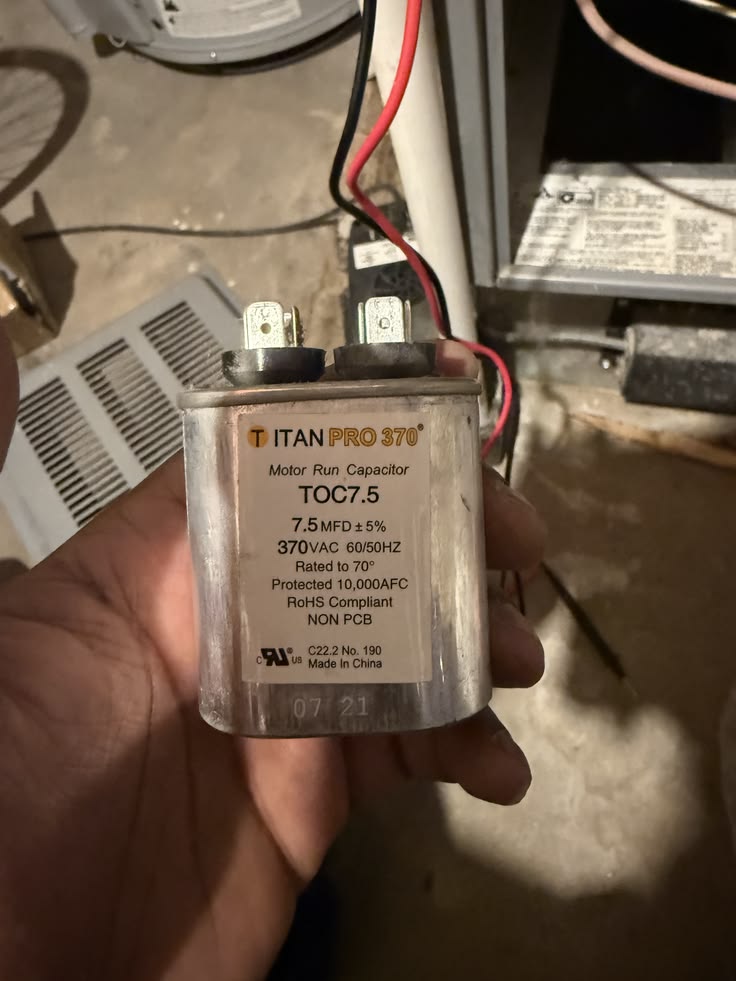
Because they started at the same time. When a neighborhood is developed in phases rather than accumulated house by house over a century, its mechanical equipment forms a cohort. Igniters, inducer motors, pressure switches and control boards all have a service life measured in cycles, and identical furnaces in identical floor plans running identical thermostats accumulate cycles at close to the same rate. The practical result in Central Park is that a failure your neighbour had last winter is a reasonable prediction of yours, which makes preventive part replacement a far better bet here than it is in a mixed-age neighborhood.
How much does 5,289 feet actually take off a Central Park furnace?
The neighborhood sits 3,289 feet above the 2,000-foot baseline, so the derate is 13.2%. An 80,000 BTU per hour furnace — a common size in a Central Park home — fires about 69,400 BTU per hour, and at 95% efficiency delivers roughly 66,000 to the ductwork. The percentage is modest by Colorado standards, but it is applied to equipment that was frequently selected from a builder's standard package rather than a room-by-room heat loss, and a modest derate on a marginally sized furnace still produces a house that cannot recover on a cold morning.
What goes wrong with condensing furnaces in this neighborhood?
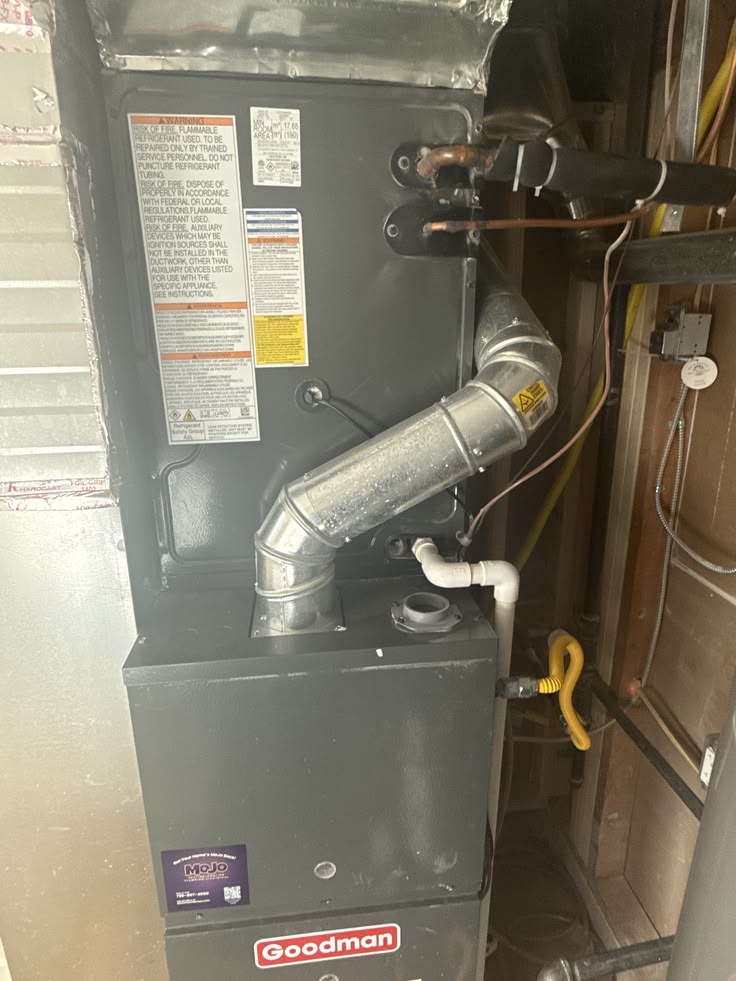
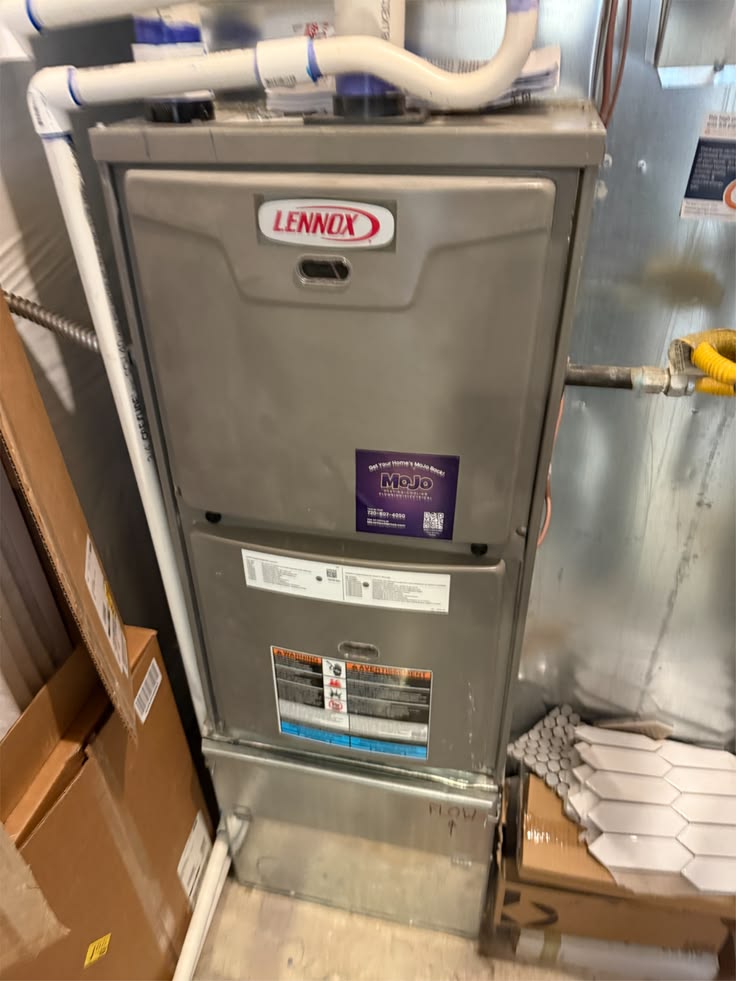
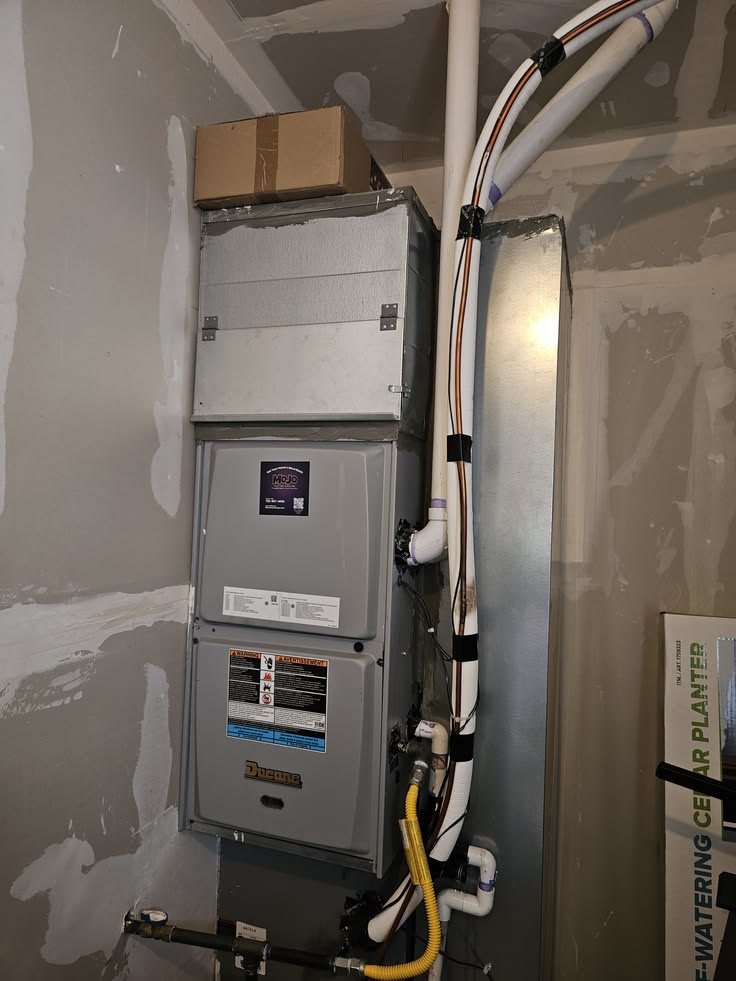
Central Park's build era means high-efficiency, sealed-combustion furnaces with PVC intake and exhaust and a condensate drain, and the failures follow from that design. Condensate traps silt up and back water into the pressure switch hose. Drain lines running through unheated space freeze at the worst possible moment. Intake terminations outside get blocked by snow drift or by screening that was never meant to stay in place. Secondary heat exchangers corrode from the condensate they are built to produce. None of these is exotic — they are simply the failure set that arrives when an entire neighborhood runs the same generation of equipment.
Why does a 13.2% derate matter on a furnace that was never oversized?
Builder-package sizing usually leaves a smaller safety margin than a custom design would, and the altitude spends that margin. Dividing one by 0.868 gives 1.152, so a Central Park furnace needs 15.2% more burner minutes than the same appliance would at sea level. Where the margin was generous, that shows up as nothing more than longer, quieter burns. Where it was thin, it shows up as a furnace running almost continuously through a cold snap and a thermostat that never quite reaches setpoint — a complaint that is genuinely about sizing, and cannot be fixed with a part.
What should a Central Park furnace diagnosis include?
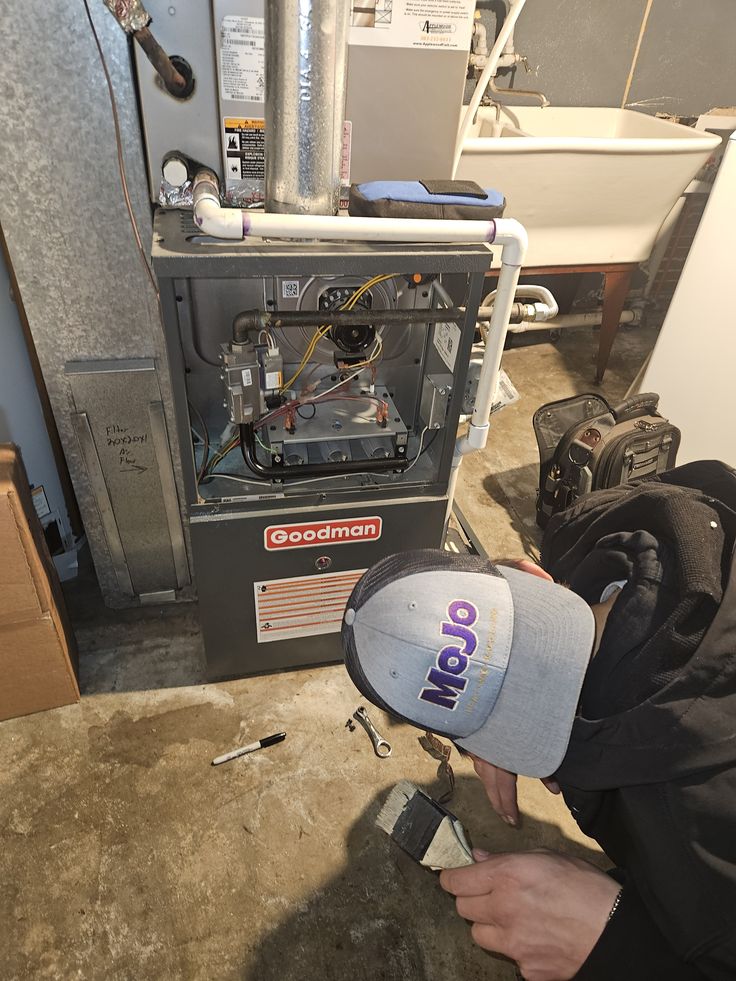
A flame sensor microamp reading, manifold pressure checked against the manufacturer's altitude table, static pressure across the air handler, temperature rise against the nameplate band, and — specific to this equipment generation — the condensate path traced from the secondary exchanger through the trap to its termination, plus both PVC terminations inspected outside. On a sealed-combustion furnace the outdoor terminations are part of the appliance, and skipping them is how a technician ends up replacing a pressure switch that was reporting a real problem.
Where else in Denver does MoJo work?
Central Park is one of several Denver neighborhoods we cover with their own elevation figures. Park Hill sits 46 feet higher at 13.3%, Montbello is 16 feet higher and shares the 13.2% figure, and Denver overall works out at 13.1%. Those differences are too small to change an orifice selection, which is a useful contrast with the Douglas County cities where a few hundred feet genuinely does. Furnace replacement anywhere in Central Park is permitted through the City and County of Denver.
Other Central Park-area pages
The crews that cover Central Park also run furnace repair in Park Hill, furnace repair in Montbello, furnace repair in Denver.
If it is the other system acting up instead, start at AC repair in Central Park.
See furnace repair for the service itself, or everything in Central Park for everything we do there.

Central Park
Home Of The $39 Diagnosis
Book your diagnostic today!
The $39 diagnostic service is a professional troubleshooting visit performed by a certified MoJo technician to identify the root cause of an HVAC issue.
Frequently Asked Questions
What is the furnace altitude derate in Central Park, Denver?
Central Park sits at 5,289 feet, which is 3,289 feet above the 2,000-foot certification baseline, giving a 13.2% derate at 4% per thousand feet. An 80,000 BTU per hour furnace fires about 69,400 here and delivers roughly 66,000 at 95% efficiency. It is the mildest derate in this group of service areas, but it still needs to be in the sizing math.
Why did my neighbour's furnace fail the same way mine just did?
Central Park was developed in phases on the former Stapleton site, so a large share of its furnaces were installed within a few years of each other in similar floor plans. Parts that wear per cycle — igniters, inducer motors, pressure switches, boards — reach end of life at similar times across the neighborhood. That makes a neighbour's failure a genuinely useful prediction and preventive replacement more worthwhile than usual.
Why does my Central Park furnace lock out after a snowstorm?
Sealed-combustion furnaces of the generation common here draw combustion air through a PVC pipe terminating outside. Drifted snow, ice or blocked screening at that termination starves the burner and opens the pressure switch, producing a lockout with no obvious fault indoors. Clearing the terminations is often the whole repair. A frozen condensate drain line running through unheated space causes a similar lockout.
Does a 13.2% derate really affect a Central Park home?
It does when the furnace was chosen from a builder's standard package rather than a room-by-room heat loss calculation. The derate means 15.2% more burner minutes to deliver the same heat, which is harmless on a generously sized system and obvious on a marginal one. A Central Park furnace running almost continuously through a cold snap without reaching setpoint is usually a sizing issue, not a broken part.
Who permits furnace replacement in Central Park?
Central Park is a Denver neighborhood, not a separate municipality, so a furnace change-out is permitted through the City and County of Denver — the same authority covering Park Hill and Montbello. Component-level repairs generally are not permitted work. Because the equipment here is sealed-combustion, the inspection covers the PVC venting and condensate termination as well as the appliance itself.
MoJo Home Services
A note for our neighbors
Word moves quickly in Central Park, and a good many of our calls begin with somebody posting a question online and a neighbor answering with our name. That answer is how a family owned team ends up handling your furnace repair, and we are grateful every time somebody types it.

Furnace Repair
In
Central Park
Share Your Experience
Thank you for supporting our local family business. If we did right by you, we'd love to hear about it on any site you use.
- Write a Google reviewQuick & easy
- Find us on YelpRead what neighbors said
- Review us on FacebookShare with friends
- Recommend us on NextdoorTell your neighbors


Your referrals and reviews not only mean so much to us, they also help the community know who to trust to Get their Home's MoJo Back!
Honest feedback is what we're after, good or bad. If something fell short, call us at the office first and we'll make it right.